Showing posts with label High and low bullshit. Show all posts

Friday, 23 September 2016

Review: The Watchmaker of Filigree Street

Another gorgeous cover, though.
You know when you want to love a book? You know when you look at it and go, "Well, this is clearly Angelmaker level stuff and I'm going to fall blissfully in to it, and everything will be great?"

Never ends well, does it?

Look. I didn't hate this book. I had to read it twice to make sure of that.

Parts of it are bits from a really, really good book. Thaniel is adorbs and Matsumoto might be a type, but he's a very fine and engaging example of that type. The initial plot is tightly set up and interesting and there are people whose emotions and struggles I care about. It's just that, every time it looked like it was about to soar off in to wonderous places, every time I'd feel myself softening and leaning forward and about to fall in love, it would just... stop.

The Watchmaker of Filigree Street is not a bad novel, but it is a self-conscious one. It covers up its sentimentalism with quite unnecessary brutality, but cannot quite commit to that. It's a steampunk novel that absolutely detests the idea of being a steampunk novel. This is a book that involves a clockwork octopus, clairvoyance, and a rebellious Lady Scientist exploring quantum-mumble-something-I'm-not-a-scientist, but with a writer very keen to impress upon us that everyone hates steam trains, the Lady Scientist is not a Suffragist and that we are totally not getting our airships here.

Honestly, I can live without the air-ships. It's the writer I'm worried about.

To make the inevitable comparison to Harkaway, I would have to admit that Pulley is probably the better writer - but Harkaway writes the better novel. He is gloriously, gleefully trashy, and applies his considerable intelligence and talent to that without reservation. Weighed down by a need to be better, Pulley's prose is glistening, but her plot is stilted, doubting. There is something resigned and perfunctory about it, as though she second guessed herself at every turn. She gets bogged down in the bruising details and dismisses the rather more interesting problems with a throwaway ending.

It almost feels as though Pulley wanted to pass this off as magical realism because her critique group felt that a rattlingly good spy story about forbidden love, magical clockwork and precognition wasn't Literary enough, and the novel that we hold is the tragic result of their interference. Or perhaps I'm just projecting. We went to the same university - sometimes its hard to tell.

Also, I did not like Keita Mori. I know that like-ability is not key to good character structure, but Mori crossed a line for me. I got the feeling he was supposed to be more sympathetic that he ever seemed to me. What's more, to make him appear more pleasant, it felt as though Grace was defamed unjustly - something which made her seem a little two dimensional and really beyond the pale. All of this made the ending deeply uncomfortable. This felt to me less like another attempt Literariness than an unfortunate consequence of the novel's earlier flaws.

Will I come back to this book? Yes - very probably. It bothers me, and books that bother me tend to get me to reread them more those I enjoyed without reserve. And I'll probably look out Pulley's next novel, although not with any urgency. I want to see how her writing develops.

But would I reccomend that you read it?

Let me think on that one.

Friday, 12 August 2016

Review: Sophie and the Sibyl by Patricia Duncker

I made even more of a mess than usual with this photo...
I was honoured - blessed even - to have Duncker as a lecturer in my first year at UEA, and it is entirely due to her passion about the early Gothic to which I owe my own need to trace the genre back to its roots, and treat Ann Radcliffe as something more than the punchline of Northanger Abbey. Her attitude - frank, incisive and without snobbery - was an inspiration to the 18 year old know-it-all brat that I was then.

No, I didn't ask her to sign my copy of The Deadly Space Between. In those days, encountering writers whose books I liked was enough to send me running in the opposite direction in terror of my own complete inability to behave passably in front of someone whose good opinion I value. These days, I'd just muscle it out until they're convinced I'm a total idiot. Experience must be worth something, eh?

Anyway, Sophie and the Sibyl!

I have often been charged with an unfair dislike of realism, of flipping the writing class truism on its head and crying, "Yes, but what does the abscence of any supernatural element actually bring to the story?" and using, "This book wasn't for me," as a translation of, "There were no ghosts" But I maintain (to flip another truism) that of course you can write a book without supernatural elements, provided you prove yourself capable of writing something with them as well.

(Yes, I was very popular in my Creative Writing classes. Why do you ask?)

Oh, Gods, though, this book was gorgeous. Just a delightful character study, a beautiful historical novel that had me turning pages in enraptured glee. Revelling in its love of Literature, it is the perfect product of an analytical mind wedded to the demands of a keen reader. It's a book to make you think and make you feel.

Perhaps there was nothing seminal about it, but it was intelligent, engaged and absorbing. It just goes to show, that I have nothing against realism per se, only provided it is done well.

Friday, 19 December 2014

Review: Pharos by Alice Thompson

Sorry about the crap photo, though
I love this cover
What to make of Pharos, eh?

I picked this one up at my fabulous local library who have - I think - forgiven me for what I did to their Algernon Blackwood and are happy to let me borrow books again. And it's winter, so I want ghost stories and this one looked very interesting.

Yes. Yes, and it was. Set in the early years of the nineteenth century, Pharos is the story of a young woman shipwrecked upon the shore near a remote lighthouse. Having lost her memory, the keepers take her in, but her presence on the quiet island soon uncovers dreadful secrets and a terrible, haunting.

Thompson is a very skilful writer. Her use of ellipsis through the novel gives you bright glimspes in a way that clearly calls to mind the sweep of a lighthouse beam across a dark sea, the sudden bursts of comprehension in a mind darkened by amnesia, or (of course) the way the tellingly named Lucia shines into the dark places of the lighthouse itself. Other images are drawn through the novel in a way that is pleasing to untangle, creating a plot that moves slowly, that broods and builds in menace, that threatens wonderfully.

It's a novella of atmosphere, rather than character or narrative, and that was at once its weakness and its strength. It made wonderfully uneasy reading, but when examined its resolution was too simplistic. To my mind, the strength of a ghost story tends to reside in its enduring mystery, but Thompson ties down the twisting threads of the first two thirds of the book into a clear pattern of cause and effect. Yet, had she not done this, the earlier chapters would have drifted unmoored, beautiful to read but frustrating. Indeed, she ran rather close to this risk as it was.

At the same time, I appreciate it; a work of the Literary Gothic that does not hide away behind realism, but embraces the supernatural as an integral part of the form, and indeed the world. This is not a ghost story without a ghost, but rather a ghost story which uses the supernatural as its literary device to explore questions of knowledge, identity and culpability. In its literary qualifications it is excellently realised, my complaint would be with its somewhat heavy-handed resolution of the supernatural. So, yes. Very good, but no Woman in Black.

(And, as I won't post again until after the mince pie fest, Merry Yule!)

Friday, 22 August 2014

What I've Been Reading: The Goldfinch, Donna Tartt and Bad Dreams, Kim Newman

It appears there has been some controversy about this month's book group selection. No, not the more interesting kind of controversy where people get very shouty and use words like 'immorality', more the sarcastic and passive-aggressive controversy that confines itself to the literary establishment. If you yawned and missed it:

While some heralded The Goldfinch as the literary smash hit of last year, it has left some member of the ancien regime rather less convinced. For the hardline snobs, the novel is "further proof of the infantilization of our literary culture", it is a simplistic, hackneyed, unremarkable book. It lacks that certain special something (*ting*) which separates popularist, middle-brow, genre-dross from Art.

And, well, high handed and out-of-touch as such a condemnation might be... I kind of agree with them.

Don't get me wrong, The Goldfinch isn't a bad book. I quite enjoyed parts of it, even though it wasn't really my thing. Yet, while I don't think any less you if you found it one of those worldbendingly fabulous novels that reaches inside your head and rearranges things, it failed to satisfy. To damn it with faint praise, it was okay. Readable, but not compelling; the characters weren't uninteresting, but it never moved me. It was probably a bit longer than it needed to be. It was a little predictable.

You see, here's the thing that I and the head-in-fundament, genre defying Literary types have in common; we don't always feel books should have a payload, a message, a reveal. We know that plot, that compulsive readability is not the mark of quality. We know that sometimes artistry, or exquisite craftspersonship, can be an end in itself. They just make the mistake of assuming a marker of this is slavish realism.

The Goldfinch falls into the rather sizeable crack between our world-views. In terms of 'Art', of Literarty accomplishment, it is lacking. Its subtext is swamped by plot before being finally hammered out in tedious exposition. It slots together too neatly for a literary novel, but for a genre novel the plot is insufficiently realised to make this moment like the pleasing assembly of jigsaw pieces. It felt a little careless, gave the impression of a writer with literary spurs genre-slumming. It missed on both counts.

And here comes the sting, you see, because so many of my favourite authors have been doing what this book attempts for years, without being given the mainstream legitimacy that Tartt takes for granted. If The Goldfinch is neither fish nor fowl, then the works of John Crowley, Poppy Z. Brite and Robert Holdstock (to name but three) are glorious chimeras. Yet, outside of genre circles, you don't see their work heralded as 'Book of the Year'.

Okay, that turned into something of a rant. Now, for something shorter, sharper and sweeter, if - to pinch a metaphor - a peach on the brink of rotting can be called sweet. Genre time, and that genre is horror of the finest, gross-out variety.

 Published in 1990, Bad Dreams isn't a Newman novel I'd encountered before, and while parts of it have dated somewhat, much of it is depressingly relevant. An indictment of the '80s establishment and its exploitative denizens, much of it will seem familiar to those who've read Newman's other work - vampiric entities, left-wing principles, pop culture and vicious satire. Some of the names used appear in later novels, too, (notably, Jago) and the character of Anna Nielson channels both Geneviève and Katie Reed. While it isn't as accomplished as the better Anno Dracula novels, it's well worth a look in its own right. A tightly plotted, skilful little novel, it strikes hard and viciously in all the right places. Great fun.

Friday, 25 July 2014

What I've been reading: The Count of Monte Cristo.

*Checks date*
Still here, I'm afraid.

Eeek. Sorry.

So, I'm on the home stretch with this, and this post this contains spoilers. Also, much SQEEEEEEE!

Where have we got to? Well, the Count of Morcerf has shot himself (YAY!), Valentine is languishing from strychnine poisoning (which has at least cleared her of murder) Albert is adorable (but not particularly bright), the footnotes were written by an idiot and Maximilian Morrel is frankly a bit of a dick.

Oh. And Eugénie is a lesbian. In case you hadn't noticed. Or if you'd forgotten.

 Seriously, if I had one complaint with this novel (besides the chronic idiocy of the editor) it was the sheer iron-bar quality with which Dumas handles Eugénie's sapphism. Because we get it. REALLY. WE GET IT.

Other than that, it's fan-fucking-tastic. After a slow middle bit (blah, gradual bankruptcy, blah, medical details of minor characters we don't really care about, necessesary foundation laying for this bit, blah, Maximillian bloody Morell...) it's all kicked off. Four (count 'em, four) challenges to duels, three deaths by poison, two attempted suicides by honour and AT LAST, someone blows their own brains out from feelings of shame!

Oooooh! And, while we're at it, the honour code in this! All the clenched fists and the deathly pale expressions and the choice of weapons at some place of your choosing! All the fainting and the thrown gloves and sudden reversion to calling your friend, "sir" like it's an insult....It's so delicious, so sharp and complicated and brilliant...

And Haydée, Haydée.... Is she actually the first portrayal of a sexual submissive in literature? Because I am shipping so hard...

So, yeah, this is basically such sheer, sexy, ego packed brilliance that I have been grinning for the last 24 hours. It's better, even, that Three Musketeers. And Dumas is such fun! 

That's one thing I never really realised back when the only copy I had was an abridgement. Sorry to hammer on this theme, but the biggest crime of the abridged versions is how they cut all this to the bone. The important bit is that Dantès shames Fernand, so that's all they give you. They don't give you Albert's anguish, his dilemma, his pride. They don't show him almost chucking his glove at Dantès in a crowded opera house while his friends hang around him with, "Don't do it, Morcerf, really, not smart." (And, seriously, that is a wonderful piece of pacing and building tension, even for someone who knows what happens next.) Oh, you get that Haydée is beautiful and submissive, but you don't see her taking the initiative, you don't see her shouting down her opponent in court. You don't see her bear herself like a queen. Without this, she is a child with a creepy crush, not someone in what is a prototype D/s relationship.

So, after slashing away all this wonderful stuff, you get cardboard cut-outs racing around as much plot as you can fit into 300 pages (a plot whose elegance and complexity is utterly muddled by these cuts) and, reading this, generations of idiots have the audacity to call Dumas a cheap cliché-ridden hack.

And, yeah, it's a bit melodramatic, it's a thing of bold, broad strokes, but there is also subtlety and real passion there. Last night, I read a scene of such breathtaking and tragic intensity that I suspect it will be joining Renfield's desperate plea of sanity  (Doctor Seward's diary, 1st October, 4am, Dracula, Chapter 18) as one of the scenes I murmur aloud in breathless, heartfelt tones every time I read it...  This damn fool of an editor thinks Dumas is condemning Mercédès here, but she shines! She burns like falling star! Oh, these feelings, so lost, so painful, so buried beneath years of torment but strong enough to control them and.... Ah! Perfect. Perfect.

This is everything I ever want in book. This is just....

Actually, it's probably the reason I'm using so many exclamation marks. 

So, go on. Clear your reading diary and have some fun. It's the holidays.

Friday, 20 June 2014

What I've been reading: The Count of Monte Cristo and Fables: March of the Wooden Soldiers

They...

They killed...

Okay, I'm not writing this just now. Let's do the other book I've been reading, because that makes me happy.I'm together. I promise.

So. The Count of Monte Cristo, or as it should be known, "Stop cutting lumps out of my novels!" I get it, I do, I really do. They are intimidating tomes. My copy of Monte Cristo could probably be used as an offensive weapon but really? Seriously? The trouble I went to trying to get a copy of this that was complete and unabridged was ridiculous. Many translations don't even bother telling you that they've whacked great chunks off the word-count, just, "here, have a shorter novel. No need to thanks us for it."

*Growls*

Is it because they thing Dumas wrote children's novels? Is it because we still think of his work as 'trash', despite its enduring popularity? Are we just missing the entire point of the genre in which he was writing?

Look, I'm on chapter 37 of 116 and I love this book. It's got everything I want in a novel - fighting, fencing, torture, poison, true love... Well, sort of. The first thing that always astonishes me about Dumas is that, the second you forget that you are holding a veritable doorstop, you are swept up in the pace, the character, the wit, the dialogue. The second thing that surprises me about Dumas is his realism. Yes, okay, not realism-realism, but psychological realism, political realism. This is probably because our understanding of him is filtered through abridgements, through film and television adaptations that take at face value Dumas' claim as a moral authority, that give us clean jawed, morally upright heroes and excise all those nasty, dirty bits. Abridgements and adaptations that pay into the conception of the Historical Romance as trash inhabited by stock characters.

Look, we know Dumas was a hack. We know he wrote at a terrifying speed but has it occurred to you that his perennial popularity has less to do with the swash and the buckle, and more to do with the fact that he was damned good at this? We are told, again and again, that this is a novel of providence, a novel where Dantès is transformed into its agent. It seems to me that it is more a novel written against naïveté, against the idea of an impassive, providential force. The characters who believe their virtue will protect them, will justify them, are doomed to fail. It is only those who take fate into their own hand who will succeed. God offers no justice, it is left to mankind to take vengence, to reward virtue and to punish wickedness. That the near-blameless Abbé Faria is twice foiled in his attempts to escape on the very eve of their accomplishment should convey this. That, after foresight, intelligence and labour fail, Dantès then escapes through mere opportunism and base cunning should suggest that fate does not favour those who work hard, that providence does not support virtuous. In a cold and Godless universe, The Count of Monte Cristo tells us that mankind is the highest authority, and that it is a race of crocodiles.

Truly, excellent stuff. What's more, that Edmond Dantès is a bit of a dish, isn't he? (here we go again)


Lovely covers.
Alright, alright, I can do this now. Fables: March of the Wooden Soldiers is the fourth trade paperback in Bill Willingham's Fables and has art from Mark Buckingham, Steve Leialoha, P. Craig Russel and Craig Hamilton. The premise of the series is that the characters of all stories have been driven out of their homelands by the forces of a creature called The Adversary, and that the survivors have sought refuge in our 'mundane' world, and have settled in an area of New York known as 'Fabletown'. 

The main thrust of the series focuses on the modern day, political situation in Fabletown, especially the characters of Snow White and Bigby Wolf and the title story takes up shortly after where volume three (Storybook Love) leaves off. After it's slightly fragmentary predecessor, March of the Wooden Soldiers is a comic that has very much found its feet. It has developed into a strong, sardonic and powerful mix of detective story and fantasy adventure. The main characters are really hitting their pace as engaging, interesting figures with story arc that is separate from their fairytale origins. Good stuff.

The real power, though, is in the conception. The very basis of Fables is that your imaginative landscape has been laid to waste, that all the varied and magical lands of narrative have been torn up, pillaged and destroyed, leaving a few impoverished survivors to make a desperate living in a mundane, hostile world. To a reader, a storyteller, this will always be painful, and this is where Fables finds its real wings. They take the investment, the magic, the hope that you as a reader have placed in these characters, they take everything they represent to you and they...

They...

They killed Tam Lin.

Wednesday, 30 April 2014

Addressing the High/Low bullshit

There's been a lot of talk lately about the difference between high and low fiction, between commercial and literary fiction, or literary and genre. I figured it was about time to weigh into the debate.

I don't read a lot of Literary fiction. Regulars to this blog may have noticed a rather sceptical attitude to what I like to call 'High/low bullshit'. This isn't because I don't think there's a difference in the way genre and literary writers tend to write, or structure their work. It's because I believe this difference is no more significant than the differences between the way (for example) horror writers and SF writers structure their work. It may be more pronounced, but it is not more important. Fact is, any genre has its own way of doing things and, to my mind, the fun comes when writers decide to trample those boundaries in every plausible direction. For writers, genres should be a shrug, should be a Captain Barbossa, "They're more like guidelines, anyway." If they aren't, they very quickly become a straight-jacket, a noose.

No, genres are not for writers. Genres are for readers. Genres establish a certain set of expectations. As well as setting and plot cues (space operas, HEAs, quests) they give you some idea as to the kind of mood you'll be in when you've finished reading. And that's all great. Honestly, it's really helpful. If I want feel life-affirming stuff with desirable main characters and bit of wittiness between fiesty people and brooding ones, I check out chick-lit, romance and Georgette Heyer. If I'm more in the mood to be kept awake all night by a sense of squirming terror and being unwilling to go downstairs to get a glass of water, then lead me to the horror section. Genres are signposts. Even the terminally lost like myself appreciate their utility.

 But the signpost of Lit fic is rather more difficult to define than that of - say - urban fantasy. The expectations I get from the designation of Lit fic relate more to theme, tone and diction rather than plot and action. From Lit fic, I would expect stories that do not tie together too neatly, novels that have an epiphany and just sort of stop rather than an 'ending' per se. I expect questions unanswered, trailing threads that will haunt me, images that will ring in my mind for months.

And actually, when I put it like that, I read tons of Lit fic. It just tends to be the kind you find in the SF, fantasy and horror sections of your libraries. And here comes the problem. If we define the difference between genres as qualitative, but not hierarchical, we cannot justify the automatic privilege that Lit fic receives. If it is just a way of pointing readers in the direction of what they are looking for, why then does describing a work as literary (with or without that capital 'L') make it automatically more serious, more worthy, more valid?

If literary were used merely as a moderator, as a way of further classifying within a genre, this would be less problematic, and this is how some use the term. But, to many, Literary fiction tends to imply a work that is founded in, or is a reaction against, the life-as-it-is novel. Magical realism can be literary but magic cannot. Romance is fine, provided it has a capital 'r'.  It's an exclusive club, and anything 'genre', anything 'commercial' is going to have to work a lot harder to get in.

And speaking of hard work, we are prepared to work harder for Literary fiction. Our cultural expectations tell us that, by definition, Lit fic it is better, it is more profound, more formally challenging. When we read a book marked with those signposts, our expectations guide us and there is the danger we will see insight where there is only pretension, genius where there is self-indulgence, and inventiveness in what is an unstructured mess.

Yet, some books are harder than others, some require more work from us. I stopped exactly halfway through Wilson Harris' incredible Carnival trilogy - actually halfway through The Infinite Rehearsal, a book that was moving and astounding me with every sentence - because I have kids and I was getting interrupted so much I couldn't follow the grace of the prose. Much as I admire her, if I read too much Doris Lessing I start getting a headache. Umberto Eco is easier, but still, I need to be on the ball. The tag of Lit fic is useful, it can give one a head's up: clear your diary before reading this.

What's more, it can guide us, because without the understanding that a book is trying to challenge, trying to unsettle and bend what is familiar to us, we run the risk of inverting those assessments, dismissing beautiful, intelligent stuff as "too much like hard work" and, "trying to be too clever."

Yet the assumption that harder books are necessarily Lit fic, and Lit fic is by definition 'harder' is no unsatisfactory. Something being difficult to read is not necessarily and endorsement, challenging =/= quality. Besides, other things that merit the capital 'L' can be read in the bath in one sitting: Angela Carter, George Orwell, Gabriel García Márquez... These books aren't any less clever, don't remain with you any less, don't change your world to a smaller extent simply because the very act of reading them is not a hammer applied to your grey cells. They are no less formally inventive, narratively challenging, verbally brilliant - they are just easier to read. 

On a similar note, genre novels aren't necessarily 'easy'. The number of times I've had to put down Banks' SF novels and massage my temples for a couple of moments while my brain cooled down are beyond counting, the number of friends who have returned Mythago Wood half-read depressing. Doing 'the clever stuff' is not the preserve of conventional, realist Lit fic, nor, for that matter, is Literariness. 

There is a double standard at work here. Lit fic - however middle brow, however simplistic - is given a legitimacy denied to other genres. Genre work is automatically 'not as accomplished', not permitted to make you work as hard. So, again, my copy of Little, Big comes back with an, "Honestly? I think he's trying to be too clever."

So, to get around this, we employ the strangest distinctions. We have the hundred times I hear the squirming self-justification of, "Yes, it's a comic book, but it's not a comic book-comic book". Because, of course, if a work of genre fiction gives the lie to the assumptions about that genre, that's because it's no longer really a work of genre fiction. No, it is elevated by dishonest little terms like 'Speculative Fiction', or 'graphic novel', it is given a half accepted place that does not quite have literary's cachet, that must always by preceded by excuses.

Yet to do this is to make life more complicated, make it harder to find a good book. In terms of book-shop organisation, it is literally to move the signposts. It is to reinforce the idea that anything,  'in genre' is, by default, incapable of being literary. It is to negate the worth of labels that have served us well, have guided us. It is to break down the links between books, the 'if you enjoyed x, then you might like..." If Shikasta is not SF, what of First and Last Men? If we let Stapleton across, then what of the works they inspire that do not quite meet the standard? As a reader, where do I go if I want dream-visiony, spiritual SF?

Terms like 'graphic novel', like 'genre slumming' are loaded with the implication that things which 'aren't' encompassed by those privileged works are even worse. Indeed, they serve to negate even those privileged works themselves. If we are put of by the 'graphic', we are reassured that this is a novel. The textual element, the 'acceptable' part, are receives plaudits, the visual element is overlooked. We ignore the fact that a comic is not simply a 'novel with graphic elements', it is an interaction between the two that should work to the enhancement of both. If we are alarmed by the 'genre', we are reassured by the 'slumming'. Yet why should we be reassured by the fact that the writer neither respects nor understands the genre in which xie is working?

I like good books. In my experience, good books are made by good craftspeople and to be a good craftsperson, one needs to respect, to understand one's tools. Good books are made by good artists, who have a passion, a vision, a drive. To set up false distinctions, to over privilege one mode of doing something, does not encourage craft in those less privileged places. It pays into the belief that certain readers are undiscerning, that certain types of fiction are, and can be, 'off the peg'. It encourages bad writing, it cultivates niches that do not wish to interact with the wider world of readers and experiences. And to someone who just likes to be nice about excellent books, this is very sad thing indeed.

Monday, 3 December 2012

What the Dickens?

I have a feeling I've written before about missing the fucking point. Surely it must have come up, at least once in this blog, that far from being the respectable face of Literature, Shakespeare was a filthy minded bastard writing for a group of people who were considered little better than whores? That theatre, far from being an institution, was something known to contemporaries as 'The Anti-Christ's lewd hat'1?

This actually hasn't come up?

Nah, it must have done.

So, I shan't bang on about tidying up the past, about assuming things were simpler and more respectable than they were2. I shan't make a fuss about the mistaken concept that those really pretty clothes confer some kind of moral value upon a time period, I will simply say that I get it.

Honestly, I do get it, this need to romanticise the past. I get that if we don't romanticise something we might as well give up now. On a day-to-day basis, this ability to imagine is sometimes what makes it worth getting out of bed in the morning.

So, by all means – enjoy your fiction about Lords and Ladies, lusty gamekeepers, great artistic genius, the Golden Age of chivalry or whatever it is that floats your boat. But two small requests? Bear in mind it had fuck all basis in reality. And, please, please don't make my sense of irony jump down my throat and drown me in my own misspent bile.

This is particularly relevant when it comes to books, and to writers. There is a significant and important line between “dreamy eyed fan fic” and “what is actually going on in the fucking novel”. Of course, Henry Tilney is the perfect man, and life would be a much so much duller if I... *ahem*, I mean one... couldn't indulge in the odd teenage style daydream complete with anachronistic attitudes to gender and pre-marital sex. However, one really should remember that – while it is about marriage - Northanger Abbey is far more satire than romance. Have as many wet dreams as you like about Fitzwilliam Darcy but do take care to remember that Austen was an acerbic and potentially cynical woman. And don't buy this. Please, don't buy this: http://www.etsy.com/listing/115163054/honoring-jane-austen-this-pillow?ref=v1_other_2

However that particular travesty of literary interpretation is not the reason for this little rant. Not even slightly. No, this weekend past I found myself back in my old stomping ground of North Kent and managed, somewhat against my intentions, to wander into the centre of Rochester in the middle of its Dickensian Christmas extravaganza.

Now, Rochester is very proud of Dickens and, while he's not my personal cup of tea, I do think it's nice that a local writer gets the full treatment of adoration and civic display3. So, for one weekend only, Rochester turned out into its Victorian best. Crinolines abounded. The odd Gothic minded young women did a passable (and potentially inadvertent) impression of a demi-mondaine. Soldiers wore those terribly impractical but wonderfully smart red uniforms4, and one wanker missed the point entirely and turned up with a pair of goggles on his topper5.

Okay, there were very few rickets. There was no ostentatious penury, infant mortality or displays of brutality. There were not even the plimsolled, soot-faced waifs that frequent May's Sweeps' Festival6. And, yes, omitting all these is to downplay Dickens' role as a writer pushing for social reform but, I'll concede that good clean fun and late 19th Century conditions of deprivation are perhaps mutually exclusive. Then I saw it. Letters three feet high, blazoned across a refreshment marquee:

Miss Havisham's Tea Tent.

You... you don't mean that?

Right?

Wanker with the goggles? Come back. All is forgiven.


2Or, indeed, grimier and more miserable.
3Actually, I'd rather we did it rather more often, only with less of the attendant nationalism, but you know...
4And pith helmets, which was a little unexpected outside of the colonies (and no, it wasn't a Home Service helmet.) but maybe they were supposed to be on leave.
5Actually, I love steam-punk, but that is now the OMT for steam-punk garb at an historical event.
6Well, it was a bit chilly and certain agencies would complain if the council pushed historical accuracy to its fullest.

Sunday, 30 September 2012

Review: Varney the Vampyre, or The Feast of Blood

So that's that, then. For those who have followed me on my epic, twitter sarcasm spree, I stand before you, the only person living who has read the whole of Varney, The Vampyre.

I don't say that lightly. As far as I'm aware, most versions only bother to print up to chapter 96 or so, and just leave the rest of the tome blank. Even the scholarly preface in my edition mentions nothing which occurs after Volume II. Alone. I am alone.1 The rest of you quit weeks ago.

If I'm honest, I can't say I blame you. As a novel, this does not hang together. I guess it's only human to give up when it becomes clear that not even the author had any real clue what was going to happen next, nor, indeed, what had happened previously. It's only human, after all, to want a story with a cohesive plot, a small cast of characters who each have clear goals, drives and motives. There is no place in modern literature for enormous, meandering doorstop tomes that allow themselves to indulge every little whim and silly joke that takes their fancy. Hand on heart, I can see your point entirely.

You fucking lightweights.

It rocks. Once you stop worrying about such trifling concerns as plot, character consistency, or direction it is enormous fun to read. In fact, it is 1166 pages of perfect delight. Let me reiterate. 1166 pages of AWESOME. Plus, the character arc of Sir Francis is fascinating. Okay, I will concede that, like the character arc of the Doctor in the classic series, it does need to be back engineered by a diligent fan, but still...

Actually, classic series Doctor Who is what this most resembles. Take one innovative, brilliant idea, (Time travel, for example, or Vampires) and enigma of a main character (say, The Doctor or Sir Francis) an initial problem (perhaps two schoolteachers getting kidnapped by an irascible time traveller, or an ancient family being stony broke) and GO. It will take you all kinds of places, raise all kinds of issues, have micro-stories within it (some of which have insane loose ends, others of which could do with a bit of pruning) create contradictions, paradoxes, and have the most charming, changeable, quixotic and prevaricating main character you will ever encounter.

Stick with it and you'll come to see the guiding principle, nay, the sheer bloody joy of Varney, the Vampyre has fuck all to do with a novel as we currently understand it. It's not about vampires, not really, it's about people and the silly things we do, and how easy we are to manipulate. And what it does,  in the simplest and purest form is by take every possible permeation of the vampire genre that you have ever encountered and run with it.

That's what I say; there has been nothing original since this. Not ever. Not at any point2.

So, go on, give it one more chance. We can do this together. In the next couple of weeks I'll be posting The Hitch-hiker's Guide to Varney the Vampyre, breaking it down into its distinct episodes in order to encourage and amuse the intrepid Varney reader. It may have many omissions, contain much that is apocryphal, or at least wildly inaccurate, but it will tell you highlights, central cast, genre and all the marvels of this much maligned novel - and all for less than thirty Alterian Dollars a day.

It'll be like Spark Notes, only sweary.

Don't forget your towel.

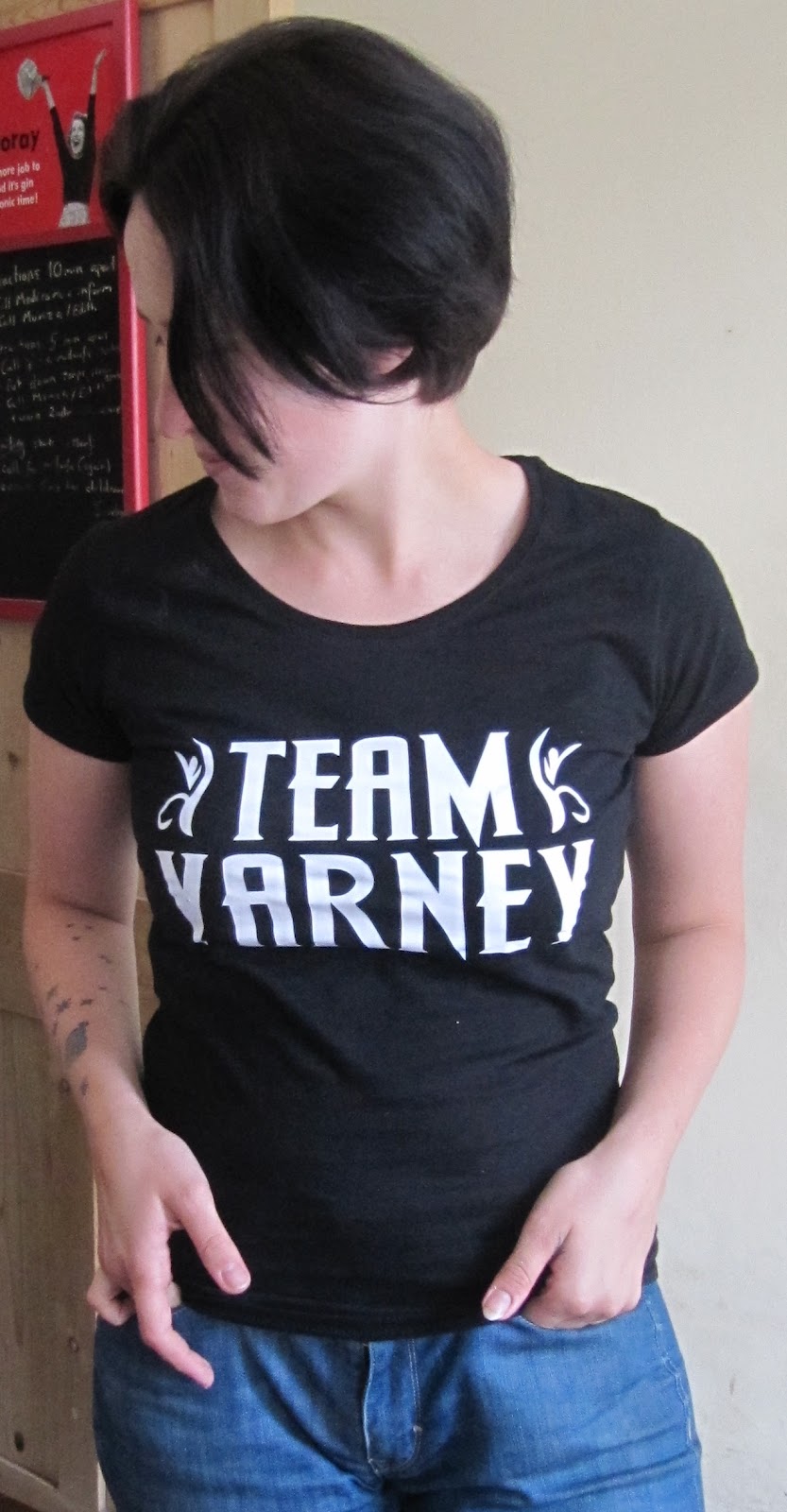
1If you have actually read the whole shebang, then do say so in the comments. We rule. We should have T-shirts. Actually, we do have t-shirts. See?
2Okay, I'll admit it, Sir Francis never actually sparkles, but... blah. Had to nit-pick, didn't you?

Tuesday, 31 May 2011

'Mobilis in Mobili': A Historical Perspective on Submarines, Swashbuckling and Rodents

Hello, my name is Alys and I like 19th Century trash fiction.

There, it's out in the open. My shameful little secret. They say admitting it's the first step.

“But what do you mean by 19th Century trash?” I hear you cry. Well, what I'm doing there is making a statement about 'high' and 'low' art and I'm being deliberately provocative. After all, tell someone you're reading a comic book, and there is a good chance they will look at you as if you are illiterate scum. Tell someone you're reading a novel by Dumas they will probably nod as if it's the most natural thing in the world. Some of them will even say, “how brave of you”.

Idiots.

As a culture, we seem to have a fear of the weighty tomes produced in the last century. Some people say it's the length that intimidates us, others the diction. I'm going to go out on a limb and say the defining factor is time. Give it a century or two and any old 'trash' can become 'literature'.

My intention here is not to criticise the 'trash', but to mock the people drawing the line. There is nothing inferior about a good comic, just as there is nothing inferior about Dumas. It is very easy to forget that, in Shakespeare's day, theatre was considered 'low' art. It is very easy to forget that 'novel' used to be an insult. The reason we forget is that the establishment appropriates these things because they are good. But some of us refuse to forget that, in their day, these things were scorned as appealing to the lowest common denominator.

And that's just what they do. It's why they are so bloody good. In order to grab attention they are fast paced, rip-roaring good yarns. They have wild adventures and exotic locations. They are full of witty dialogue and cheap laughs. They are immensely enjoyable. And, all too often, they have what the current Literary establishment would consider flaws. All the heroes are handsome and strong willed, all the heroines are beautiful, occasionally feisty and generally prone to fainting. These are not novels for the pompous - if you have a problem with so-called Mary-Sues, I might advise avoiding them. They are escapism. Truth be told, they are trash. But that's not an insult; it's one of the best things about them.

So, from an repentant AA type beginning, I find myself becoming an enabler. It's pretty easy to get hold of 19th Century trash – charity shops and second hand book stores are good sources. Do check and see that they're unabridged, though. If you have an e-reader, there is also the wonderful Project Gutenburg (http://www.gutenberg.org) which will give them to you for free.1

But... well. Before you begin, a couple of warnings.

19th Century trash requires a certain selective cultural blindness. There will be words and attitudes espoused by otherwise progressive authors that make any liberal reader wince. The trick is to whisper again and again, “they didn't know it was wrong.” In time, with willpower, the effect diminishes.

Then there's the problem of science. As we are often assured, hindsight is 20/20, and you would not have known any better then but... well, it can get a little tiresome to be assured that the properties of magnets, or electricity, or steam will lead to this, that or the other in the foreseeable future. Likewise, hearing phrenology and physiology described as 'sciences' without a 'pseudo' prefacing it, can strike one as odd. There will also probably be an endless stream of slightly dubious information underlying the plot. Abandon your pedantry all ye who enter here.

Perhaps from my tone you can tell I consider myself an old hand at this game. Still, it's possible to be taken by surprise.

In line with my addiction, I've just read '20,000 Leagues Under the Sea' (Jules Verne.) I had been meaning to read it for a while and I enjoyed it immensely. It had everything I could have desired: some seriously outlandish science (but check out that Nautilus, man!), more slightly dubious info on marine biology than I could ever hope to use, and the kind of anti-hero who can make girls like me go a little bit silly.

What's more, by the standards of the time, it's really quite enlightened. The narrator laments the greed which has endangered the whale, or that viciousness which clubs innocent sea-cubs. In the latter half of the book, Nemo consistently draws attention to mankind's hypocrisy, cruelty and tyranny. But the good Captain cannot stop man's man Ned Land from spending most of his time killing (or thinking about killing) things, nor the narrator for admiring that very characteristic.

Now, as I've said, I'm a seasoned reader of these things. Just as I did not let the word “endangered!” cloud my enjoyment of Hector de Sainte-Hermaine's tiger hunt in 'The Last Cavalier'. I tried not to get too discouraged when stout Ned shoots a sea otter for sport even though the narrator has admitted that they are practically extinct. And so, of course, I tended to read parts that involved Ned Land – or, indeed, any other human interaction with nature - with a fixed, but wry, smile upon my face. “It's just the time it was written” I reminded myself. “They didn't know any better.”

Then I read this:

“for Nature's creative power is far beyond man's instinct for destruction.”

After I'd read it, I stopped, blinked and read it again.

Nope, it was still there. That assertion, no matter what we do to nature, it can always repair itself. Verne's narrator states it as a matter of simple fact, as if it were obvious. Such innocence. Such naïvety.

And I, in my 21st Century way, had been quite cheerfully assigning the label of 'arrogant bloody Victorians' (well, okay, Verne was French and, Victoria only came to the throne in... oh, you know what I mean!) Essentially, I had condemned them as being wilfully wrong-headed and ignorant rather than just lacking the dubious benefit of my experience (over fishing, mass extinction, climate change.)

Essentially, I had become the kind of person that I hate.

Because I get so annoyed when people start talking about the past as though it's not only a foreign country, but another planet. I get fed up of wannabe historians describing all life before the Industrial Revolution as an endless stream of fear, sickness and poverty. Fed up of descriptions of the whole populace huddled around meagre fires in leaking hovels or draughty castles, dressed in rags and warding off starvation with a few handfuls of barley. Fed up of the idea that for whole centuries everyone was mad with superstitious fear and terrified of being burned for saying one wrong word. I'm fed up with people telling me life in the past was so totally different that we can have no conception of the inner life of our ancestors. In short, I'm fed up with stories of Poor Starving Peasants.

Because I read. And the thing is, when you read the literature of these people, hear what survives of their stories and their songs, look at their public buildings (mostly churches, I admit), they stop looking like poor, miserable waifs hanging on for the Enlightenment (and failing that, the Renaissance). They strike you as people, just like you and me, making the most of their time on this planet and asking the kind of questions we would ask about morality, religion and sex.

Still, it's easy to forget how much your environment shapes your assumptions. Still, it's easy to be taken by surprise.

Another thing I've read recently is the reissued first volume of 'The Pan Book of Horror Stories' (2010, Pan Books, first published 1959.)

Horror is another one of my things, and it was another brilliant read. It also illustrates my point perfectly. Most of the stories in there are still so fresh, so contemporary, that it seems implausible they were written over fifty years ago and many of them are earlier than that. One of my favourites was Hazel Heard's Lovecraftian The Horror in the Museum.

By this point, I had forgotten the age of the book, had forgotten the relative age of the story. This, to me, was set in the bustling metropolis of the early 21st Century. The characters were people I might know, the tone was contemporary, ironic, powerful. Then, once again, it happens:

“Rogers had once boasted that – for 'certain reasons' as he said – no mice or insects ever came near the place. That was very curious yet it seemed to be true.”

What? No mice? I should bloody hope not.

Now, I've not been sheltered as far as rodents are concerned. I've known of plenty of people who have mice in their lofts, or rats in their compost heaps, but, correct me if I'm wrong, is it not commonly accepted that most people no longer have rodents living in their wall space? Is not the Tom and Jerry style mouse hole a thing of the past?

The past. Yes.

We share so much common ground but, who, now, would think of mentioning that, “Oh by the way, I live in a rodent free house.” And who, two hundred, a hundred, even sixty years ago, would have bothered to comment upon a few mice. No, it is their absence - “very curious yet it seemed to be true.”

It doesn't occur to us to question our assumptions until someone faces us with something like that, something that seems to be an outright contradiction of good sense – not from the standpoint of bigotry or morality but of normality. Of expectation, even.

Because things have changed, and they continue to change. A couple of weeks ago Ian Birrell, former deputy editor of 'The Independent' described Rwanda's president, Paul Kagame as “despotic and deluded” on Twitter. As he included the necessary @, Kagame was able to reply and did so. In text speak.

In 1999, who could have predicted this? Text speak was a thing known only to those with mobile phones, and the internet was not even that prevalent (at least in my social milieu). Anyway, we were all far too worried that the Millennium bug was going to destroy computers forever to be thinking about such advanced communications technology. That was only twelve years ago. Yet when we think about it, don't we think of ourselves as the same people? Our world as, essentially, the same? Doesn't some part of us insist that nothing has really changed?

But it has done, and society with it. Rather more scary is the thought that, if we succeed in not wiping ourselves out, it will continue to change and that all the vaunted cultural assumptions we have will lose their force. “It was 21st Century” they will whisper. “They didn't know any better.” Perhaps Jules Verne was being more insightful than he knew. It is only by abandoning society and all its trappings that we can see its constructs as beliefs rather than truths. And it is only Captain Nemo who can turn his mirror upon humanity and show us what we are.
1Local copyright laws permitting...