Rough couple of weeks, eh? I swear, in this time I've kicked about the ideas for so many angry, analytical blog posts, the kind where I set myself at a tangent to everybody and wring some sense out of my confused feelings regarding the dreadful stuff happening in the world and a narrative critique of it. I could do that right now. I've woken up every morning with a little burn of anger in my stomach that has been hit with a thousand comment pieces or new bits of god-awful every time I check into social media, or chat to friends, "Did you hear about...?"
Things are dark out. It's January, a tired, dirty month. We've had enough of winter, of injustice and violence. I could scream out against those things, say the necessary and bring another little patina of hopelessness to your day.
But for all my pretensions of politics, this is a blog about books. Stories, at their best, are the little lights we kindle against this dark, they are sanctuaries into which we can fold ourselves, temporal anomalies where we can play our favourite times over and over again, worlds closed off from decay and pain.
I read a lot and this is the place where I write about it. Still, a whole stream of my reading tends to get bypassed on this blog - the webcomic. I check them in the mornings, when I wake up at the weekend, or getting back from the school-run in the week. A single screen shot of story; fantasy, comedy, superhero or erotica. It's just a moment that lifts me out of diurnal drudgery, a gift from someone I've never met. There is so much to be angry at, to be saddened by that today I just want to celebrate a daily moment of pleasure, of joy taken in creativity, to thank those who make it and to pass it on.
So, here's the stuff I read, in no particular order. NB: I'm only putting in comics with an ongoing storyline.
Namesake by Isabelle Melançon and Megan Lavey-Heaton
Updates Tuesday, Thursday, Saturday
The Beginning / Most Recent Update
Let's start with my favourite shall we? Namesake is a fantasy adventure comic, suitable for a YA audience.
It's the story Emma Crewe, a young woman who discovers an ability to visit fictional worlds. This is the power of a Namesake - a person who shares the name of a protagonist and must complete their quest - but what is Emma's story? And why have her powers carried her to the wrong one?
Pros: Wonderfully written, engaging, large cast piece. Brilliant characters. Lots of sub-plots. Very clever handling of a premise. Beautiful artwork. Totally YA friendly, SFW. And, er, Flawless Warrick.
Cons: Addictive. Quite a big undertaking. Linear narrative
Girls With Slingshots by Danielle Corsetto
Updates Monday-Friday
The Beginning / Most Recent Update
And to the other end of the spectrum. Girls With Slingshots is a real world comedy webcomic aimed at adults. It follows the misadventures in life, love and alcohol poisoning of surly writer Hazel Tellington and her exuberant best friend Jamie 'The Rack' McJack. Romance detectives, ghost cats and a talking cactus feature in the perfectly realistic and ordinary lives of 20-30 something American women. Generally funny, occasionally hilarious. It can be read from the beginning as a single arc, or you can dip in at any point into the ongoing story.
Pros: Funny, thoughtful and occasionally very touching, another one with a brilliant cast of characters, lots of mini-arcs and a wonderfully rakish handling of a tired premise. SFW.
Cons: It's ending this year *sob*. Despite being SFW, it is quite rude in places - this might be a problem for some people.
Something Positive by R. K Milholland
Updates Monday-Friday
The Beginning / Most Recent Update
Another real-ish world webcomic that occasionally crossovers with GWS. Slightly darker in comic tone, it follows the tribulations of misanthropic geek, Davan and his smilingly maladjusted friends from malacious irresponsibility to reluctant adulthood. There is some very moving stuff in some of the arcs, but also some truly wicked laughs. Again, it can be read from beginning to end, or picked up from the more recent strips.
Pros: A story that really grows as it was told, a webcomic that is currently firing on all cylinders. Also, scroll down for 'The Last Trick or Treater' watercolours.
Cons: The early comics are a little uneven in quality and tone. At times, not for the faint hearted. The suspicion that liking it makes you a bad person.
Chester 5000 XYV by Jess Fink
Updates with depressing irregularity
The Beginning / Most Recent Update
Steam-punk erotica about love, loss and robotics. Unable to satisfy his wife, inventor Robert creates a mechanical gigolo, Chester 5000 XYV. But love is more powerful than programming in this sweet, wordless, pornographic comic.
Pros: Astonishing artwork, so expressive that the text is not missed at all. A real capturing of the aesthetic of late 19th/ early 20th pornography.
Cons: NSFW - if you hadn't already gathered that. Very NSFW. Seriously. Also, it doesn't update often.
Blindsprings by Kadi Federuk
Updates Tuesdays and Thursdays
The Beginning / Most Recent Update
Gorgeous webcomic that's really only just getting going. YA pitched but politically astute, it's a tale of a magical power struggle between authoritarian Academists and the hereditary Orphic Witches. Following a revolution in which the tyrannical Orphic aristocracy were deposed, anti-Orphic feeling is high. Marginalised and discriminated against, they form a tenuous resistance. Into this unstable situation is brought the naive Tamaura, a lost, Orphic Princess hidden for centuries as part of a deal with the ambiguous Spirits. Freed by a renegade Academist, she offers the key to a return of the old magics - but at what cost?
Pros: Gorgeously drawn, clever and thought provoking piece. YA friendly and SFW.
Cons: As it's still quite early in the run, not sure where this is going yet.
Center Of Somewhere by Luke Foster
Updates Mondays, Wednesdays, Fridays
The Beginning / Most Recent Update
Sweet and strange, a quirky comedy-webcomic set in perfectly ordinary small-town America, with everything you'd expect to see there: delusional fish, boy-detectives, bad tempered blue jays who live with neurotic squirrels... Can be read either as a single arc, or picked up from a more recent strip. It takes a bit of getting into,but there's something very charming about this one.
Pros: SFW, YA friendly, playful and occasionally hilarious.
Cons: Can feel a little episodic at times. Very difficult to spell correctly if you are English.
Moon Freight 3 by Luke Foster
Complete Arc
The Beginning
This is actually the first webcomic I read. Another comedy webcomic based on the time-honoured premise of a bunch of guys stuck in space and bored witless. The art is pretty shocking at the beginning, but does smooth out to tell a pleasingly-off-the-wall story workplace skiving. A slightly more adult focus than Center of Somewhere, but equally YA friendly.
Pros: SFW, YA friendly, silly and entertaining, bit of a Red Dwarf vibe to it.
Cons: Somewhat unsteady in quality.
The Young Protectors by Alex Woolfson, Adam DeKraker (pencils) and Veronica Gandini (colours)
Updates Saturdays (and Wednesdays as a bonus).
The Beginning
Kyle (aka, Red Hot) is a young superhero struggling to come to terms with his sexuality and to come out to the other members of his team (The Young Protectors). Early in the comic begins a covert relationship with Duncan (aka, The Annihilator), one the planets more dangerous super-villains. Equal parts world-saving adventure and emotional narrative, The Young Protectors is a refreshing take on the superhero form. One of the nicest things about it is the lack of objectification in the artwork. While pitched at all readers, the 'gaze' is decidedly homosexual and male, and therefore inhabits the characters as subjects while presenting them as desirable, meaning that nearly everyone wears proper clothes and stands in natural poses. As a woman, it's very restful not to see bodies like mine aggressively sexualised, leaving me to enjoy the story without rage-gasms.
Pros: Excellent story-telling, engaging and moving. Mostly SFW. A really quality webcomic.
Cons: Not YA friendly, while excellent at representation in some ways, a little lacking in others. Also the website does not automatically take you to the most recent post which gets a touch annoying.
Mystery Babylon by Val Hochberg
Updates Mondays
The Beginning / Most Recent Update
Set in a post-apocalyptic world where - it is implied - superheroes are worshipped as Gods, Mystery Babylon (aka Kick Girl) is charged with keeping the seal to The Pit intact, and the other demons trapped beneath it. Angry and cynical she takes few things seriously; not the cultists who revere her, and certainly not Zero, the Vestal Priest who claims a angel bestowed a vision upon him that will lead them back The Pit and prevent it being opened.
Pros: Very interesting and original adventure narrative. SFW.
Cons: Quite long, and needs to be read from the beginning.
Alice and the Nightmare by Misha Krivanek
Starts February 14th
I'm a little awkward about putting this one in here as there's nothing up at the minute. Alice and the Nightmare ran last year only to go on hiatus in the summer. It's now restarting on Valentine's Day. Taking it's cue from Carroll's Alice in Wonderland, it was shaping up to be an fascinating story of intolerance, compassion and eerie danger, told with beautifully cutesy art-work. I suspect the reboot will be all of these things, but we shall see.
Pros: The first run was looking to be very good.
Cons: Not enough info as yet.
So, there you are - the narrative webcomics I currently read. Any suggestions (including your own) are more than welcome in the comments below.
Enjoy. x
Wednesday, 21 January 2015


Wednesday, 31 December 2014
A year in Books: 2014
So, this year has been a rather good year for reading and (!) I've manage to blog between about half and two thirds of my general reading list this year, something that astonishes me. So (mostly) from this list, I shall present you with my pick of 2014 reads, the good, the bad and the downright peculiar. So, what to seek out, what to avoid and what to gaze upon in awe and wonder.
 Best Book: Shirley Jackson, We Have Always Live in the Castle
Despite being up against some pretty stiff competition - even in the same week - and a last minute contender of The King in Yellow giving it a run for the finish line, the prize has to go to this neglected classic of murder and neurosis, of the sly ambiguous Merricat and her terrible days.
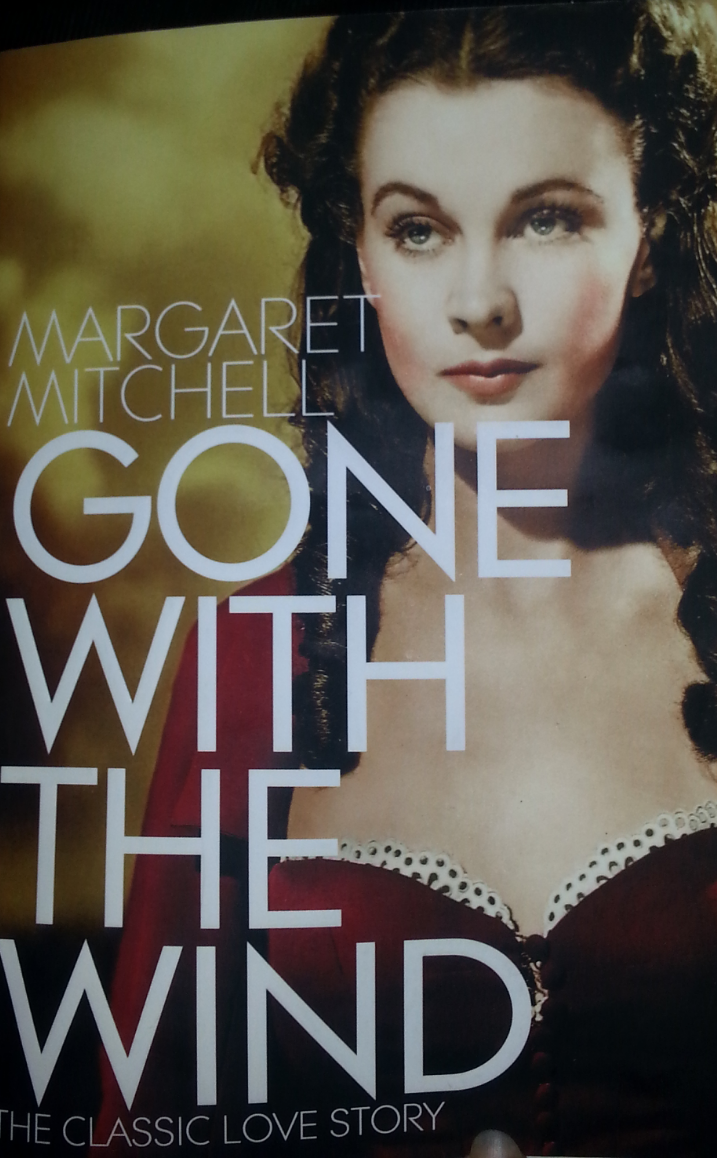 Worst Book: Margaret Mitchell, Gone With the Wind
This also had some competition from Dan Simmons' horrifically racist, Song of...
No. Wait. There was no competition. Simmons' orientalism is left staggering on the track asking, "Was it a bird? Was it a plane? No! It was a horrifically misogynist novel that makes light of two acts of genocide?"
Best Re-Read: Gabriel García Márquez, One Hundred Years Of Solitude

This prize does not go to a re-read of the, "I'm ill, sod life, I'm climbing into a bath with Howl's Moving Castle" stripe, but rather the, "Jesus, has it been over ten years since I read that? Philistine." kind. One Hundred Years of Solitude is basically the blue-print for that regret. Since he passed away in April this year, I realised how much I had been neglecting his work and felt appropriately awful. Gloriously written, heartbreaking and archetypal, it is one of the most important books for the twentieth century. The sole advantage of leaving it far too long was that it was fresh to me again. Worth every moment of the hype you have read everywhere else. I didn't blog it because I didn't really feel my voice had anything to add. If you haven't yet, put it on your list for next year.
 The New Release of JOY! Prize: Paul Cornell, The Severed Streets
Aka, the Justified Fangirling Award. Utterly brilliant magical-police-proceedural/ horror novel from the alway wonderful Mr Paul Cornell. Don't read it quite as fast as I did (or, if you do, reread it afterwards), and check out London Falling first.

The "Neil Who?" award for Writers Who I Now Like: Nick Harkaway, Angelmaker
Remember that moment before you had heard of your favourite writer? When their name meant nothing to you except that it was printed on the jacket of a book you were about to start reading? Remember that feeling when you suddenly realised that this wasn't the only thing they had writen? Or that they had a new book coming out in six months?
Well, the "Neil Who?" is given to writers who capture something of that feeling. It has a few rules - they must still be alive, and the book must be relatively recent (last ten years.)
So, whilst honourable mention must go to Max Barry's superlative Lexicon, it is Nick Harkaway's back catalogue after which I shall be chasing in the new year.
And finally....
 The Captain Bluebear Award for Appreciable Weirdness goes to Walter Moens for The Thirteen and a Half Lives of Captain Bluebear. If I get a chance to reaward this prize next year, I shall be a very happy pink bear of medium size.
Many thanks to all the wonderful writers who are out there creating fabulous stuff either in the past of present for not volunteering to take part in the Alys Earl Book Awards 2014. To all the non-writers out there: Read more books.
Happy New Year.
Best Book: Shirley Jackson, We Have Always Live in the CastleDespite being up against some pretty stiff competition - even in the same week - and a last minute contender of The King in Yellow giving it a run for the finish line, the prize has to go to this neglected classic of murder and neurosis, of the sly ambiguous Merricat and her terrible days.
This also had some competition from Dan Simmons' horrifically racist, Song of...
No. Wait. There was no competition. Simmons' orientalism is left staggering on the track asking, "Was it a bird? Was it a plane? No! It was a horrifically misogynist novel that makes light of two acts of genocide?"
Best Re-Read: Gabriel García Márquez, One Hundred Years Of Solitude
This prize does not go to a re-read of the, "I'm ill, sod life, I'm climbing into a bath with Howl's Moving Castle" stripe, but rather the, "Jesus, has it been over ten years since I read that? Philistine." kind. One Hundred Years of Solitude is basically the blue-print for that regret. Since he passed away in April this year, I realised how much I had been neglecting his work and felt appropriately awful. Gloriously written, heartbreaking and archetypal, it is one of the most important books for the twentieth century. The sole advantage of leaving it far too long was that it was fresh to me again. Worth every moment of the hype you have read everywhere else. I didn't blog it because I didn't really feel my voice had anything to add. If you haven't yet, put it on your list for next year.
Aka, the Justified Fangirling Award. Utterly brilliant magical-police-proceedural/ horror novel from the alway wonderful Mr Paul Cornell. Don't read it quite as fast as I did (or, if you do, reread it afterwards), and check out London Falling first.
The "Neil Who?" award for Writers Who I Now Like: Nick Harkaway, Angelmaker
Remember that moment before you had heard of your favourite writer? When their name meant nothing to you except that it was printed on the jacket of a book you were about to start reading? Remember that feeling when you suddenly realised that this wasn't the only thing they had writen? Or that they had a new book coming out in six months?
Well, the "Neil Who?" is given to writers who capture something of that feeling. It has a few rules - they must still be alive, and the book must be relatively recent (last ten years.)
So, whilst honourable mention must go to Max Barry's superlative Lexicon, it is Nick Harkaway's back catalogue after which I shall be chasing in the new year.
And finally....
Many thanks to all the wonderful writers who are out there creating fabulous stuff either in the past of present for not volunteering to take part in the Alys Earl Book Awards 2014. To all the non-writers out there: Read more books.
Happy New Year.
Friday, 26 December 2014
Review: The King in Yellow
What is it about nineteenth century genre fiction that's just sweeties to me?
I was browsing in the sizeable horror section of my local indie bookstore (LOVE being able to type those words) and I come across a volume with a cool cover and a title that immediately has me humming this:
So, I pick up this book and flips it over it's a "blend of horror, science fiction, romance and lyrical prose" (check), that it deals with a dangerous, forbidden book (check) and that it was a major influence on a certain Howard Philips Lovecraft (...check).
Well, good little shopper I am, I toddle over to the gentleman at the till and asked him if he would recommend it. His answer was that it was great (check), but that I should be warned, Chambers had been a fin de siècle artist in bohemian Paris, and his prose had never quite got... over... it....
That sound? That's me shouting, "Oh, JUST TAKE MY MONEY."
And, seriously?
Sometimes you get that sense that a book was written just for you, like it was dropped into your pocket by the author with a little whisper in your ear to look at it when you get home, or like a kiss upon the cheek that someone has sent half-way across the globe and through a hundred years of time just for it to brush against you, here, now.
This is a book that whispers its horror, not one that screams it. A book that throws shade into subtle and unsettling patterns. Yes, Chamber's prose is rather soaring at times, his pace not modern, but for me that is a long way from a criticism. Uneasy, beautiful, haunting, he is not so committed to otherworldly awfulness to prevent him giving a few whispers of hope, of reconciliation. There are even moments of humour (I've never laughed so much about a cactus.) I shan't harp on about the Carcosa mythos, because many words have been expended upon that by others and justly so. Besides, what made more impression upon me was the way Chambers captured the the soft tragedy of the folk tradition, the way that the volume is like a piece of music that continues playing in your head long after you have finished it.
And I found myself asking if we had adopted lost Carcosa, rather than dread Cthulhu as our rallying cry, if the forbidden text that haunted us were the chilling, seductive King in Yellow, rather than the cold, instructional Necronomicon, would geek culture have taken something of a different path?
Because Chambers' narrators are not generally anaemic, neurotic young men descending into madness from terror of the unknowable, but full, even healthy, personalities who brush against strangeness, madness and despair, whether it be supernatural or otherwise. There are no simplistic absolutes here, no sense of false, cringing lights in the Universe's uncaring abyss, but a seething, unsettling place of questionable moralities, violence, tenderness, politics, sex. Faced with the Other, Chamber's narrators will empathise even while they exploit. What's more, Chambers was not bound by his genre. His supernatural is not a thing apart, howling in its madness. The madness is within us, as is the love, the hope, and the evil. Beyond all this he moved, writing of the future and the past, the real and the impossible while speaking of the same things - power, innocence, knowledge and loss.
Sublime.
I was browsing in the sizeable horror section of my local indie bookstore (LOVE being able to type those words) and I come across a volume with a cool cover and a title that immediately has me humming this:
So, I pick up this book and flips it over it's a "blend of horror, science fiction, romance and lyrical prose" (check), that it deals with a dangerous, forbidden book (check) and that it was a major influence on a certain Howard Philips Lovecraft (...check).
Well, good little shopper I am, I toddle over to the gentleman at the till and asked him if he would recommend it. His answer was that it was great (check), but that I should be warned, Chambers had been a fin de siècle artist in bohemian Paris, and his prose had never quite got... over... it....
That sound? That's me shouting, "Oh, JUST TAKE MY MONEY."
 |
| You can see from the cover it's already well loved. |
Sometimes you get that sense that a book was written just for you, like it was dropped into your pocket by the author with a little whisper in your ear to look at it when you get home, or like a kiss upon the cheek that someone has sent half-way across the globe and through a hundred years of time just for it to brush against you, here, now.
This is a book that whispers its horror, not one that screams it. A book that throws shade into subtle and unsettling patterns. Yes, Chamber's prose is rather soaring at times, his pace not modern, but for me that is a long way from a criticism. Uneasy, beautiful, haunting, he is not so committed to otherworldly awfulness to prevent him giving a few whispers of hope, of reconciliation. There are even moments of humour (I've never laughed so much about a cactus.) I shan't harp on about the Carcosa mythos, because many words have been expended upon that by others and justly so. Besides, what made more impression upon me was the way Chambers captured the the soft tragedy of the folk tradition, the way that the volume is like a piece of music that continues playing in your head long after you have finished it.
And I found myself asking if we had adopted lost Carcosa, rather than dread Cthulhu as our rallying cry, if the forbidden text that haunted us were the chilling, seductive King in Yellow, rather than the cold, instructional Necronomicon, would geek culture have taken something of a different path?
Because Chambers' narrators are not generally anaemic, neurotic young men descending into madness from terror of the unknowable, but full, even healthy, personalities who brush against strangeness, madness and despair, whether it be supernatural or otherwise. There are no simplistic absolutes here, no sense of false, cringing lights in the Universe's uncaring abyss, but a seething, unsettling place of questionable moralities, violence, tenderness, politics, sex. Faced with the Other, Chamber's narrators will empathise even while they exploit. What's more, Chambers was not bound by his genre. His supernatural is not a thing apart, howling in its madness. The madness is within us, as is the love, the hope, and the evil. Beyond all this he moved, writing of the future and the past, the real and the impossible while speaking of the same things - power, innocence, knowledge and loss.
Sublime.
Friday, 19 December 2014
Review: Pharos by Alice Thompson
 |
| I love this cover |
I picked this one up at my fabulous local library who have - I think - forgiven me for what I did to their Algernon Blackwood and are happy to let me borrow books again. And it's winter, so I want ghost stories and this one looked very interesting.
Yes. Yes, and it was. Set in the early years of the nineteenth century, Pharos is the story of a young woman shipwrecked upon the shore near a remote lighthouse. Having lost her memory, the keepers take her in, but her presence on the quiet island soon uncovers dreadful secrets and a terrible, haunting.
Thompson is a very skilful writer. Her use of ellipsis through the novel gives you bright glimspes in a way that clearly calls to mind the sweep of a lighthouse beam across a dark sea, the sudden bursts of comprehension in a mind darkened by amnesia, or (of course) the way the tellingly named Lucia shines into the dark places of the lighthouse itself. Other images are drawn through the novel in a way that is pleasing to untangle, creating a plot that moves slowly, that broods and builds in menace, that threatens wonderfully.
It's a novella of atmosphere, rather than character or narrative, and that was at once its weakness and its strength. It made wonderfully uneasy reading, but when examined its resolution was too simplistic. To my mind, the strength of a ghost story tends to reside in its enduring mystery, but Thompson ties down the twisting threads of the first two thirds of the book into a clear pattern of cause and effect. Yet, had she not done this, the earlier chapters would have drifted unmoored, beautiful to read but frustrating. Indeed, she ran rather close to this risk as it was.
At the same time, I appreciate it; a work of the Literary Gothic that does not hide away behind realism, but embraces the supernatural as an integral part of the form, and indeed the world. This is not a ghost story without a ghost, but rather a ghost story which uses the supernatural as its literary device to explore questions of knowledge, identity and culpability. In its literary qualifications it is excellently realised, my complaint would be with its somewhat heavy-handed resolution of the supernatural. So, yes. Very good, but no Woman in Black.
(And, as I won't post again until after the mince pie fest, Merry Yule!)
Wednesday, 17 December 2014
What Price Fantasy? Consent and the policing of desire
This is sort of a follow-up to Alys' Addiction to Villains, dealing as it does with that fraught line between the fictional and the real.
"Romance novels are also examples of what love and sex should look like in the real world."
I ignored the flinch. I flinch a lot.
But as the article charged on breathless to its rebuttal of rape culture, the little bit of me that flinched wriggled around a bit, pulled and nagged at my mind, and before I knew it I had my arms crossed over my chest and there was that nasty little whisper that used to keep me awake at night, "Just what is wrong with you?"
Ouch.
I thought I'd kicked that one. I thought I'd accepted the kinky mess of my brain, thought I'd settled with myself that dark thoughts and darker desires were not incompatible with self-worth, that I knew what I really needed and deserved, and what was just fun to think about. I thought I was over this.
But you're never over it. And it never takes much to bring it back again. Just some sweeping comment from a misogynist, just some below-the-line comment from an intellectual lightweight trying to save me from myself.
Or a thoughtful, intelligent, necessary article from someone I'd be proud to call an ally.
My shipping, my head-canon, the erotica I write (that you chaps are seriously never reading) would this be judged by others as "examples of what love and sex should look like in the real world", when it's not, and it isn't intended that way, and for goodness sakes, aren't we all aware of that by now?
I'm done berating myself about this. I got angry.
Politically, I am left of centre.
Actually, I'm left of centre by quite a long way.
In fact, I probably couldn't see the centre with a telescope, but that's immaterial. As an unrepentant lefty, I would like to think that I am ethical. As such, I want an end to all the ways that people use power to hurt each other. I want an end to rape. I want, desperately, for every kind of non-consensual sexual activity eradicated from our world. I want our conversations around sex to become unambiguous and free from shame. I would like all abusive tosspots to learn how to be decent human beings and, frankly, while we're at it, I'd like an anarchist utopia.
That's what I pray for, after all: people being decent to each other not because of law, custom or fear, but because it's the decent thing to do.
But just because I want these things, doesn't mean I'm not allowed to read books that glamorise vicious feudal societies. Just because I'm anti-murder does that mean I must resist the charm of We Have Always Lived in the Castle. Just because I am a pacifist, am I not allowed to enjoy Preacher?
So, yeah, I'm anti rape. But does that mean I have to bar non-con from my fantasy life as well?
I have heard arguments from erotica writers and readers that this is how it should be, that non-con should always be framed as fantasy within the construct of a story. So, any scene where a questionable act is eroticised it is necessary to reveal it as a consensual activity where all participants are engaging in a mutual game of make-believe. We may see something vicious, even violent, but when the lens pans out we see the mutual laugh and hug afterwards, the safe-word and the quick release restraints. In a longer story, we see these safe guards working, we see that this is all consensual and that, however intense, it is all in the name of good fun.
BDSM gives us as neat a get-out clause in fiction as it does to real life. We can go to these places without ever bringing our ethics into question.
But when we're reading a novel or a story we already have a framing device which tells the reader that nothing that follows is really real. A work of fiction is, of itself, a consensual, mutual game between the reader and the author. If a reader likes the idea of a forceful hunk sweeping them up to the bedroom over their half-hearted protestations, then a book is a place they can have that without the ensuing emotional scars. If at any point something unsettles them, triggers them, hurts them, they can say a non-negotiable "no", and put down the book. Stopping reading is the best safe-word in the world.
What is more, most adults are capable of this distinction between reality and fiction. We know what we're reading isn't real - any crimes committed are not real crimes, the blood shed disappears with the next turned page. To add to this wonderful game a second disclaimer would be almost like a massive subtitle on the dangerous bits of an action film which state "These explosions are a special effect! Stunt doubles were used and not harmed!"
When one reads - especially when one reads erotica - one suspends one's disbelief in order to get one's jollies. One does not want to come back to earth with a thump. We get it. It's a construct. If you aren't conversant with that, you really shouldn't be playing the game - you are still scrabbling at the backs of wardrobes seeking passage to Narnia, still walking into walls between platforms at King's Cross.
So I could get scornful here, vicious against the people who fail to understand that, just because I entertain questionable notions in my head, doesn't mean I am ever going to act upon them in real, non pre-agreed reality.
Likewise, while I know that writers have no particular responsibility to their readers as a moral force, I am also aware of the part they play in creating cultural discourses and normative modes in the media. And these discourses - for all they are created in that 'harmless' realm of paper an ink - can cause real-world suffering, real world pain. I'm not talking about Harry Potter being the slippery slope into Satanism, I'm talking about semiotics. I'm talking about yet another strand of media excusing sexual assault, normalising it, glorifying it.
In short, I'm talking about rape culture. Faced with that, to say, "It's only fantasy, I won't self censor, sod the consequences" is to show either blinding privilege or borderline malice.
But I know, too, that if a story is told often enough to become our mode of understanding a thing it can do incalculable harm. I know if a person's, particularly a woman's, "No" comes to signify only token resistance, then we live in a society that excuses rape. And I am a hundred percent certain that this is wrong.
So I can't reach an answer. The line between fiction and reality is nothing like so definite as the line between enthusiastic consent and everything else. The boundary of what is too close to the bone changes from reader to reader, author to author, person to person. What's more, in a society that has so much shame, so much obfuscation around desire, too many people find themselves unable to communicate, to give or to ask consent. So, yes, we certainly need discourses which show us the words to do this, but as fiction reflects reality, we also need words which reflect back the pain of that inability, words for that struggle, for that uncertainty.
How much do writers owe to ethics? To reality? At what price do our fantasies come? I wish there were a rubric that I could get behind, a pocket guide to acceptability because with the cost so high in human suffering, I could do with one.
All I know for certain is this; I am a Gothic writer, a teller of fucked up little narratives with ambiguous moralities, and I am not always sure that I am doing the right thing.
Sex scenes and Consent:
A while ago, I read this fantastic article on the importance of consent in fiction by literary agent Laura Zats. The reason it's brilliant is because she's right. Consent is necessary, and hot and, y'know, the line between fun-times and sexual assault. Yet while the majority of my brain was cheering on this home-run of good sense and ethical sexy times in romance novels, I read this sentence and a tiny part of me flinched."Romance novels are also examples of what love and sex should look like in the real world."
I ignored the flinch. I flinch a lot.
But as the article charged on breathless to its rebuttal of rape culture, the little bit of me that flinched wriggled around a bit, pulled and nagged at my mind, and before I knew it I had my arms crossed over my chest and there was that nasty little whisper that used to keep me awake at night, "Just what is wrong with you?"
Ouch.
I thought I'd kicked that one. I thought I'd accepted the kinky mess of my brain, thought I'd settled with myself that dark thoughts and darker desires were not incompatible with self-worth, that I knew what I really needed and deserved, and what was just fun to think about. I thought I was over this.
But you're never over it. And it never takes much to bring it back again. Just some sweeping comment from a misogynist, just some below-the-line comment from an intellectual lightweight trying to save me from myself.
Or a thoughtful, intelligent, necessary article from someone I'd be proud to call an ally.
My shipping, my head-canon, the erotica I write (that you chaps are seriously never reading) would this be judged by others as "examples of what love and sex should look like in the real world", when it's not, and it isn't intended that way, and for goodness sakes, aren't we all aware of that by now?
I'm done berating myself about this. I got angry.
Fiction is another word for fantasy.
Even the most real-world, blow by blow account of an ordinary day is a fabrication, a falsity. And yeah, while I agree that we need a world that does not normalise sexual assault via media, can we not accept that some things are an escape? That some people like to think about things that - in real world terms - would constitute serious criminal acts?Politically, I am left of centre.
Actually, I'm left of centre by quite a long way.
In fact, I probably couldn't see the centre with a telescope, but that's immaterial. As an unrepentant lefty, I would like to think that I am ethical. As such, I want an end to all the ways that people use power to hurt each other. I want an end to rape. I want, desperately, for every kind of non-consensual sexual activity eradicated from our world. I want our conversations around sex to become unambiguous and free from shame. I would like all abusive tosspots to learn how to be decent human beings and, frankly, while we're at it, I'd like an anarchist utopia.
That's what I pray for, after all: people being decent to each other not because of law, custom or fear, but because it's the decent thing to do.
But just because I want these things, doesn't mean I'm not allowed to read books that glamorise vicious feudal societies. Just because I'm anti-murder does that mean I must resist the charm of We Have Always Lived in the Castle. Just because I am a pacifist, am I not allowed to enjoy Preacher?
So, yeah, I'm anti rape. But does that mean I have to bar non-con from my fantasy life as well?
Especially when we get kinky, it's all about consent.
It's probably about time I mentioned BDSM. This is, after all, as much as a fictional framing device as erotic fiction. However 24/7 a relationship, it is still has its limits, however extreme the actions, they are always bound by consent. BDSM allows people to hurt or be hurt at one remove, not to experience power but to play at it. Just because someone someone indulges in interrogation play does not mean they want to be interrogated. BDSM is a safe space for fantasies, it is a yes-but-not-really.I have heard arguments from erotica writers and readers that this is how it should be, that non-con should always be framed as fantasy within the construct of a story. So, any scene where a questionable act is eroticised it is necessary to reveal it as a consensual activity where all participants are engaging in a mutual game of make-believe. We may see something vicious, even violent, but when the lens pans out we see the mutual laugh and hug afterwards, the safe-word and the quick release restraints. In a longer story, we see these safe guards working, we see that this is all consensual and that, however intense, it is all in the name of good fun.
BDSM gives us as neat a get-out clause in fiction as it does to real life. We can go to these places without ever bringing our ethics into question.
But when we're reading a novel or a story we already have a framing device which tells the reader that nothing that follows is really real. A work of fiction is, of itself, a consensual, mutual game between the reader and the author. If a reader likes the idea of a forceful hunk sweeping them up to the bedroom over their half-hearted protestations, then a book is a place they can have that without the ensuing emotional scars. If at any point something unsettles them, triggers them, hurts them, they can say a non-negotiable "no", and put down the book. Stopping reading is the best safe-word in the world.
What is more, most adults are capable of this distinction between reality and fiction. We know what we're reading isn't real - any crimes committed are not real crimes, the blood shed disappears with the next turned page. To add to this wonderful game a second disclaimer would be almost like a massive subtitle on the dangerous bits of an action film which state "These explosions are a special effect! Stunt doubles were used and not harmed!"
When one reads - especially when one reads erotica - one suspends one's disbelief in order to get one's jollies. One does not want to come back to earth with a thump. We get it. It's a construct. If you aren't conversant with that, you really shouldn't be playing the game - you are still scrabbling at the backs of wardrobes seeking passage to Narnia, still walking into walls between platforms at King's Cross.
So I could get scornful here, vicious against the people who fail to understand that, just because I entertain questionable notions in my head, doesn't mean I am ever going to act upon them in real, non pre-agreed reality.
But this attitude is rather glib.
Because that isn't what this is about. Because even though books are safe spaces, even though they are the finest of fetish clubs, even I draw back from too much realism in my villain. One might be fine with the idea of an elf-lord dreamboat pinning one's hands and ripping one's bodice, but when the setting is a market town in Surrey and the ravisher in question is a stockbrocker then no matter how much emotionally escapist bliss comes into play, to me that's going to sound like date rape.Likewise, while I know that writers have no particular responsibility to their readers as a moral force, I am also aware of the part they play in creating cultural discourses and normative modes in the media. And these discourses - for all they are created in that 'harmless' realm of paper an ink - can cause real-world suffering, real world pain. I'm not talking about Harry Potter being the slippery slope into Satanism, I'm talking about semiotics. I'm talking about yet another strand of media excusing sexual assault, normalising it, glorifying it.
In short, I'm talking about rape culture. Faced with that, to say, "It's only fantasy, I won't self censor, sod the consequences" is to show either blinding privilege or borderline malice.
There should probably be a conclusion here
But there won't be. Because I know that people can't be held accountable for their fantasies provided those fantasies remain fiction (in whatever form). Because I know that reading about non-con, however horrific or scary, and getting off on it is not the same thing as wanting it to happen. I know that, as people, we need to challenge the dark bits of our minds, to embrace them and enjoy them if we can do that without harming people. I know that devotes of the macabre, fans of the kinky among us shouldn't have to feel like freaks, shouldn't need to be ashamed that they get a frisson from things a bit beyond the beaten track. The stigma against these things is strong enough as it is; let's not shame people further.But I know, too, that if a story is told often enough to become our mode of understanding a thing it can do incalculable harm. I know if a person's, particularly a woman's, "No" comes to signify only token resistance, then we live in a society that excuses rape. And I am a hundred percent certain that this is wrong.
So I can't reach an answer. The line between fiction and reality is nothing like so definite as the line between enthusiastic consent and everything else. The boundary of what is too close to the bone changes from reader to reader, author to author, person to person. What's more, in a society that has so much shame, so much obfuscation around desire, too many people find themselves unable to communicate, to give or to ask consent. So, yes, we certainly need discourses which show us the words to do this, but as fiction reflects reality, we also need words which reflect back the pain of that inability, words for that struggle, for that uncertainty.
How much do writers owe to ethics? To reality? At what price do our fantasies come? I wish there were a rubric that I could get behind, a pocket guide to acceptability because with the cost so high in human suffering, I could do with one.
All I know for certain is this; I am a Gothic writer, a teller of fucked up little narratives with ambiguous moralities, and I am not always sure that I am doing the right thing.
Friday, 12 December 2014
Review: The Quarry, Iain Banks
I've been putting off reading this.
There's a scene in Y, The Last Man where Yorrick goes to the monument raised to the memory of all the men that have died, there he meets Rose, a young woman who - when asked who she is mourning - answers, "Mick Jagger."

That's how I feel. If we had an event along those lines, of course I would mourn my family and friends, naturally I would suffer all emotions a functional, compassionate human would feel, but the writers would be what broke me.
I will still choke up with tears when I am suddenly struck by the memory that there will never be another Cherstomanci book. Still.
And in the same way, I will never again read a brand new Iain Banks novel for the first time.
So, yeah. I've been putting it off.
 What can I really say? That I've been measuring it to a different standard because it's the last one? That I didn't want it to end. That if I air any kind of criticism (because, no, it isn't perfect) I'm somehow being disloyal.
This is ridiculous.
I am being ridiculous. I am making this personal, and part of my grieving and it has not damned thing to do with me.
So, the book? Well, the book is excellent. It felt good, it felt powerful to have this last novel not as ambivalent and non-committal, but with Banks firing on all cylinders, kicking back against this inhumane travesty of a ruthless government and the way that it corrupts and brutalises. He is a better man than any of them.
It's just a pity he hasn't outlived them. He deserved at least that.
Appropriately, almost ironically, it is a book about loss, about death, but it is a shout against those things and it's a good thing that it's a shout. It makes me angry at death, angry at injustice, angry at finality. Iain Banks always makes me feel that way, and he always makes me hope, too. The universe he paints is merciless, violent, unkind, but it is not despairing. It is godless, but not cold.
I'm grateful for that.
So, if you've been putting it off, stop. Read it. It's worth your time, now. You'll have to let it go in the end, have to accept you're going to mourn.
RIP, Mr Banks.
There's a scene in Y, The Last Man where Yorrick goes to the monument raised to the memory of all the men that have died, there he meets Rose, a young woman who - when asked who she is mourning - answers, "Mick Jagger."
That's how I feel. If we had an event along those lines, of course I would mourn my family and friends, naturally I would suffer all emotions a functional, compassionate human would feel, but the writers would be what broke me.
I will still choke up with tears when I am suddenly struck by the memory that there will never be another Cherstomanci book. Still.
And in the same way, I will never again read a brand new Iain Banks novel for the first time.
So, yeah. I've been putting it off.
This is ridiculous.
I am being ridiculous. I am making this personal, and part of my grieving and it has not damned thing to do with me.
So, the book? Well, the book is excellent. It felt good, it felt powerful to have this last novel not as ambivalent and non-committal, but with Banks firing on all cylinders, kicking back against this inhumane travesty of a ruthless government and the way that it corrupts and brutalises. He is a better man than any of them.
It's just a pity he hasn't outlived them. He deserved at least that.
Appropriately, almost ironically, it is a book about loss, about death, but it is a shout against those things and it's a good thing that it's a shout. It makes me angry at death, angry at injustice, angry at finality. Iain Banks always makes me feel that way, and he always makes me hope, too. The universe he paints is merciless, violent, unkind, but it is not despairing. It is godless, but not cold.
I'm grateful for that.
So, if you've been putting it off, stop. Read it. It's worth your time, now. You'll have to let it go in the end, have to accept you're going to mourn.
RIP, Mr Banks.
Friday, 5 December 2014
Review, N0S 4R2 by Joe Hill

But let's not talk about sad things! Let's talk about horror novels!
When Joe Hill published N0S 4A2 in the UK he was forced to modify the title to N0S 4R2 because the eponymous pun on that notorious German word was lost somewhere over the Atlantic. I've been meaning to read it since it was released around this time last year, and I finally managed it. So:
I liked this book (I know I say this a lot, but it's true) and I am really taken by Hill's blending of emotional depth and real darkness. His characters are fuck-ups; they make mistakes, they hurt people, they do and say things that are obscenely ugly; but they are also capable of great love, of self-sacrifice. There is very little judgement in Hill's world-view, because even as he shows us the ways in which we have messed up irrevocably, he also presents us with the possibility of healing, of redemption. His characters are broken by life, beaten up and knocked down, but they are never incapable of being their best selves. That was all there in N0S 4R2, and that was all to the good.
The storytelling is ace, as well. Terse, brutal and winding, Hill is casual with atrocity, laying down his cards with an unsettling rapidity, leaving ugly images that will grip your guts for days to come. Maybe it isn't scary - he hasn't had me jumping at shadows since Heart-Shaped Box - but it is horrifying. You will ache with a need for everything to come out okay, and you will weep at the prospect that it won't. You will weep for his characters, too, knowing no happy ending can fully repair the damage done to them by the narrative and by themselves. And the ending? Startling and unexpected - despite my protests - it worked in the manner of an denouement that slots perfectly into place.
But in this otherwise wonderful book, there is a flaw. Or perhaps it isn't a flaw.
The heart of novel is the monstrous character of its villain, Charlie Manx. He alone failed to convince. Don't get me wrong, he was engagingly warped. His diction was elevated, making his talk of innocence, his euphemisms wry, self-mocking. The quiet, forceful bitterness with which he promulgated his bigoted interpretations of the world called to mind a 'type' I recognise from English Literature, the world-weary, high-status villain - erudite, amusing and coldly wrong-headed. He struck me as someone who knew the evil that he did, but continued more from a vindictive precision than any real commitment.
Yet the sympathetic characters referred to him as 'dumb', as a hick, as good-ol'-boy-gone-wrong. They claimed that he 'really believed' in what he was doing. Cue cognitive dissonance. It felt as though I was being shown one thing, yet told another. In a bad writer, I would feel that this was a refusal to surrender the premise of an earlier draft, the insistence of forcing the teller's meaning upon the reader's perception - but I think Hill is a better writer than that.
What I believe was occurring was a cultural misunderstanding. English - as spoken in the UK - is a language of puns and evasions. It is entirely possible that an adult might twist a euphemism in front of a child ["fiddling with his fiddlestick"] as a private joke without any suggestion of vulgarity or barnyard bad manners about it. We have elevated innuendo for to an art-form, a game enjoyed by educated. Simply listen to any radio broadcast of I'm Sorry, I Haven't a Clue. Or my dad's Father of the Bride speech.
By reading this into Charlie Manx, I was assuming that this was the case everywhere. Perhaps what I understood as sly mockery was merely childish avoidance of 'dirt', his broad statements of slightly ironic entitlement merely the right-wing mumblings of the misinformed. Perhaps what I was being given were indicators of another type, one which - with my different set of references - I did not recognise.
It is possible, after all, that it was not merely the punning title that was twisted out of shape on that Atlantic crossing.
Subscribe to:
Posts (Atom)