Showing posts with label fangirling. Show all posts

Wednesday, 22 June 2016

Thunder in her Veins - the sacredness of geekdom


Some bits of childhood never do make sense.

Look: I grew up in a village with an unreliable bus service and two shops - that became one shop, and then none, and that's where it's settled. It was the sort of place where there were enough people who wore petticoats for the expression "Charlie's dead" to be part of my childhood lexicon. My elder sister was the first - the only - girl on the school's football team. It was a place where 'comic' meant the Dandy and the Beano, or - if you were really lucky - an old copy of Bunty*.

So how I ever came to read Marvel's Thor line is something of a mystery to me. I think I had a Spiderman annual once, and there was the X Men and the Fantastic Four on telly on a Saturday morning, but… Thor? Seriously? I might have been able to get it at the comic book store in the nearest town (seven miles and, apparently, a twenty year timeslip away) but, well, I always knew places like that weren't made for people like me**.

All the same, Thor I did read. A fair few, actually. Mostly the early ones, with Donald Blake in them. I remember being caught by something about them - the disabled man whose vocation was easing others' pain, his walking stick actually the hammer Mjolnir. I still can't really express why, but something about them felt very beautiful, very true.  Maybe it was the overtones of the Fisher King? Maybe it was just the myth connection.

Because I was a myth junkie, devouring folklore and fairytale. If a story was old and epic and glorious, then it was my kind of story. I grinned at the pranks of tricksters, railed at monsters, wept for Prometheus chained to his rock. Raised as both an Anglican and a Baptist (don't ask) I was used to God being male, ineffably right and absorbingly loving. My contact with the grim, problematic stories of the Bible was one sanitised by a Sunday school framing which repackaged them into a reassuring scholasticism where faith (read:goodness) was rewarded, and the wicked (read: unbelievers) were punished.

Used for review purposes
Noble failure...
Myths weren't like that. In myths, all bets were off. And that made for grandeur and for tragedy. It made for fatal flaws and noble failure. It made for Gods who were tricksy, passionate, even petty. They could be deceived, could deceive. They could be wrong. 

And yet despite all that, they were honourable, powerful, righteous.

It's probably fair to say that I found myself through reading Norse legends. Yes, I was too young, too uncertain, to call it 'faith', yet all the same something in me ran to those myths with a more intuitive open-heartedness than my parents' religion could ever call from me. More, they seemed to understand me. I craved them, the way you crave salt when dehydrated: dread, beautiful Freyja; bright, lost Baldur; Loki - quick, cunning, dangerous; and Thor.

Of course, Thor.

I always feel faintly ridiculous using the word 'sacrilege' in anything other than ironic hyperbole. All the same, there does need to be a word for that hurt that is located somewhere against your heart, behind your ribs, when the things you hold sacred are treated slightingly. As a Pagan who honours certain Norse deities, there is something wrong in seeing the stark, terrible beauty of your mythic landscape re-envisaged into slick, commercial print, complete with hulking villains and so. much. spandex.

Thus it was that, for years, I was embarrassed by the association. Marvel's Thor was not my Thor, their Odin not my AllFather. Drawing that distinction was important, remains important still. But scorning the former overlooks something vital, something powerful, something old. The memory of it came back to me with the release of the MCU film. A sense of struggle, of soaring glory, of a rightness at the very base of something. And, yes, it was more slickly packaged, and sexier than a fireside story about Sir Gawain, but it spoke of something grandiose and sweeping on that same, gut-deep level.
Used for review purposes
Something sweeping and grandiose

People tend to associate the numinous with a sense of peace, of silent wonder, but sometimes it is more a sense of your heart being pried apart with grinning exuberance. Sometimes, it is that twisting, cathartic need that comes with the raunchiest choruses of folksong, the catchiest reels of the Morris. Sometimes it was what we feel when we hear stories about heroes, about people in extremity, about villains we love to hate, and sometimes just love, despite ourselves.

And that feeling is sacred. Some narratives speak to something deep in us, something more real than anything we enounter in our daily lives.When they are slighted, undermined, mocked, we feel that little wince that cries out 'sacrilege!'. It is one of the reasons why feelings are running so high around this 'Hydra Cap' debacle. Some heroes should be held high, above baseness, above the taint of cynicism.

Yet, collectively, we disown these stories. Heroism, self-sacrifice, betrayal, need - the bright, bold colours of traditional stories - are things we insist upon shutting out as we become 'grown-up', 'critical', 'literary'. But these things are still nestled in us, occupying a space in what I can only call our soul.

My engagement with this comic was not adult. It was not smooth, questioning, probing. It was not the 'refined' tastes that I have spent years cultivating. No. It was the wild joy that got me into stories in the first place. It made me air punch, made me grin, made me arch my feet and press my eyes together. I cared from a place of total, unironic absorpsion. I felt this book, felt the way I once felt as I tore around the playground pretending to be the Human Torch.

(Flame on!)

But, as such, an actual review is beyond me. Is Mighty Thor: Volume 7 great art? Will it change the shape of Literature as we know it?

Is the story any good, even? Should you read it?

I have no fucking clue. Sorry.

I had to whittle this down to one awesome picture. THERE ARE SO MANY.
Also: Malekith the Accursed - just too FABULOUS for your morality.
There are some books out there that make you realise the futility of reviewing books, that make you see there is no helpful, universal rubric to define whether something is worthwhile. Yes, you can analyse craft and effect and technique, but sometimes a story speaks to something that is too pronounced and personal, its power over you too great to allow you to reach for your wonted pose of critical objectivity.

I have to admit that, while I tend to enjoy what I read, I'm not especially immersed in Marvel 616 stuff. As an adult reader, it's rare they provide me with more than an entertaining stopping post for an insatiable bookworm. Mighty Thor: Thunder in Her Veins went so far beyond that faint praise that there is no comparison - but those feelings are so subjective that I cannot extend to any of you.

As such, I really can't recommend it. Do you like stories about honour and righteousness, about family and longing, about war and good and evil, and some things that you just can't categorise? Then maybe read it. You might get something from it.

But, while we're on the subject of recommenations, what I have to say is that  it isn't really this comic you need to read. No. Don't seek out a specific story or book, don't listen to anything else. Instead, shrug off your irony. Ignore the cheap, headline grabbing shots, the 'risky' takes appealing to the part of you that wants to tarnish and tear down.

No. Reach into your heart and find those embarrasing remnants of unmitigated joy - however commerical, low brow or melodramatic they may be. Find your heroes - your glorious and impossible heroes - and cling to them. Celebrate them.

We are readers. We are better than that.

-----------------------------------------------------------------------------------------------------------------------------
*What? The stories were better.
** Shout out to 'The Grinning Demon' and 'Whatever Comics' of Maidstone, which (when I finally plucked up the courage to slip inside) were absolutely lovely. But you know what I meant.

Wednesday, 24 September 2014

Functions of Fantasy, or, Alys's Addicition to Villains

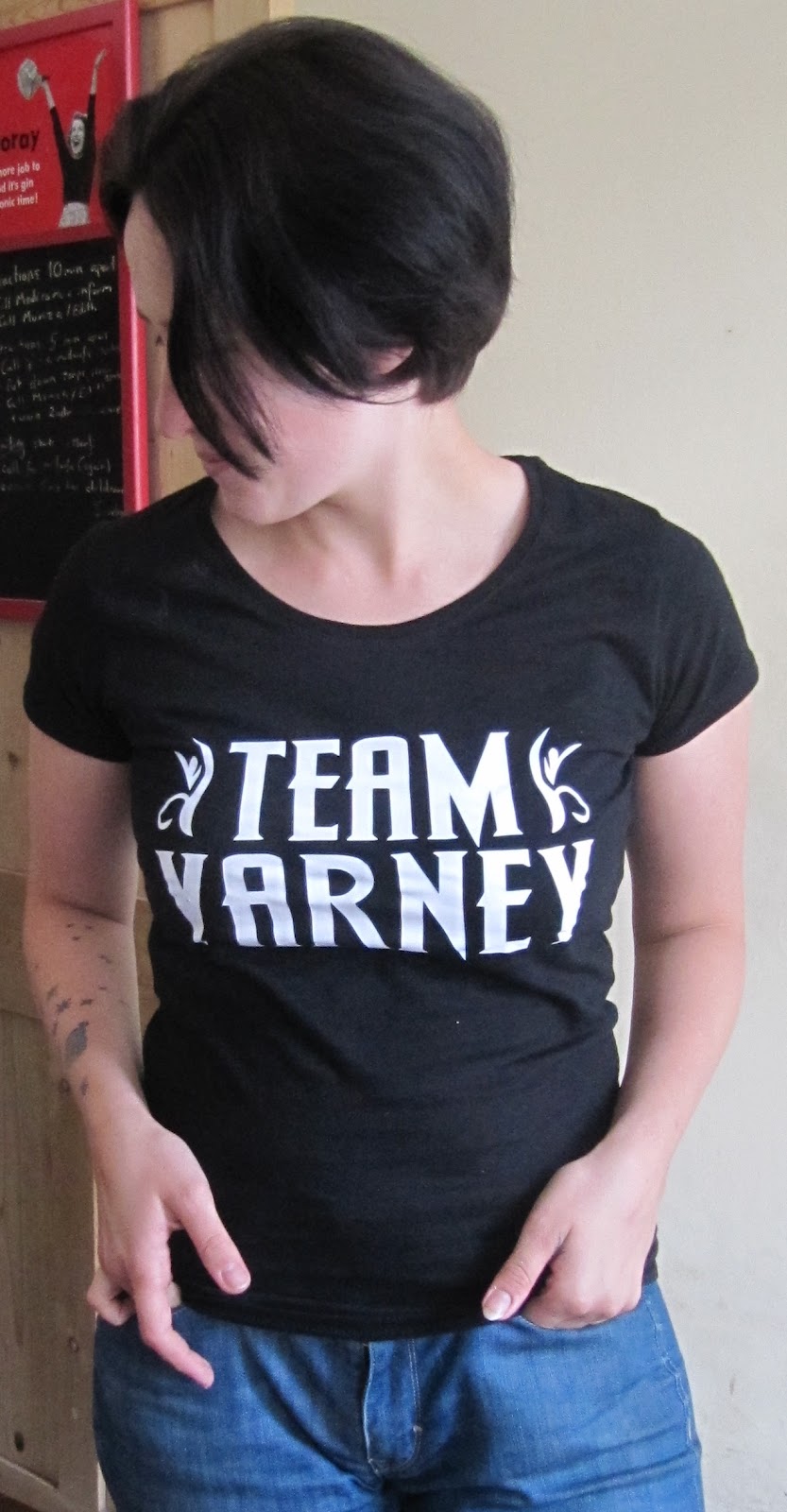
It appears I have mentioned in passing something of a predilection for fictional bad guys and characters so morally grey that they could be used as camouflage on the dark night of no moon. Give me cads, rogues, and schemers of all types. Give me a character who is something of a bastard, who is ruthless, conniving, swaggering, manipulative, and the chances are I'll swoon and maybe put his name on some kind of t-shirt.

No. I am not joking. Yes. This is the way my mind works.

I read Fantasy novels and Adventure novels, I read Horror, and Historical Fiction full of sweet, charming, beautiful men and women. People who are honorable and upstanding, who are intelligent, kind, devoted and if I have to list the fiction heroes who get my heart racing, it stands at Wilhelmina Murray, Percy Blakeney and that's your lot.

I don't get crushes on heroes. Anti-heroes, maybe. Morally questionable, domineering types on a redemption arc, sure. Flat out, total bastards? Well, duh.

Used for review purposes.
Okay. Maybe not all interest.
This is not Draco in Leather Pants. Sure, a bit of emotional complexity, a little bit of grayscale does not go amiss, but I do not want these characters redeemed. I do not want them to be any less evil and bastardy. I do not think they can be saved by the Love of a Good Woman.

If they were saved, I would lose all interest in them.

Yes, Edmond Dantès is sweet, and lithe and kind of pretty to think about, but it's only when he emerges as the socially aggressive and unprincipled Count of Monte Cristo and people start mistaking him for a vampire that I begin swooning in this ridiculous fashion. Frankly who would take a night with one of Shakespeare's vaguely insipid romantic leads if there was the offer of a night with Oberon? Sure, you'd regret it in the morning! Does that mean you shouldn't do it?

Well, probably, yeah. 

Actually, I wouldn't advise it at all.

But that is entirely beside the point

Were I to draft a checklist of necessary qualities to invoke my fawning and excessive devotion to a character, it would start something like: powerful, ruthless, proud, unpredictable, amoral/morally questionable, domineering. After a few thousand synonyms, I might think to include some physical characteristics (cheekbones!) but no matter how pretty a character might be, unless xie can muster a fistful of evil, I'm not interested.

I might get emotional attachment to a hero, my heart might melt for them, I might cry myself to sleep at their pain. I might love Percy Blakeney with all the passion and truth that I could muster at thirteen, but if you put him a fight against Christopher Syn (something I'd pay to see), my feelings are going to be totally on the side of the Scarecrow. 

Used for review purposes.

Mmm. Murderously ambiguous morality.


Yet I have a husband. He is not a supervillain. In fact, he is one of the sweetest, kindest, gentlest and most honorable men you will ever have the pleasure of encountering. 

Because, as far as the daily life goes, domineering bastards are obsolete. Dear Christ, can you actually imagine actually living with any of these people? Athos, with his brooding man-pain and his alcoholism? Sir Francis Varney and all the theft, the molestation, the jumping-on-chair-backs shenanigans?  

None of this is real:

Being the submissive floozy of some supernatural baddie is nice for one's head-canon, but in real-world emotional terms it isn't exactly sustainable. Frankly, I don't see Jareth bringing me a cup of tea in the morning because I can't be bothered getting up. I don't see Nathaniel Crozier offering any sympathy if I get myself involved in a flame war and need a hug. Those among my literary crush stable who aren't actually malevolent tend to be emotional wrecks. Besides, they aren't exactly pleasant to be around. Villains, remember? 

Used for review purposes
Difficult themes through metaphor
Their lack of flat-mate qualities aside, their very unreality is sanctioned by the texts in which they appear. People like this simply do not exist. Romantic highwaymen and charming vampires are a thing of fiction. And that's a good thing, by the way. Fiction is a door into a world that lets us weigh up people and actions with far more care and nuance than we can permit when dealing with flesh-and-blood individuals, with real emotions. We can explore motivations that we would not normally consider, try to understand moralities that are beyond our usual scope of acceptability, and - most importantly - ask questions the which the real-world forbids. As such, we need to create characters that do not exist, that will never exist because they allow us to explore difficult themes through metaphor. They allow us to push events in a certain way, to lead to emotions and decisions that we would not otherwise understand. 

The tension that this creates in the reader or the viewer allows feelings and attachments that our real-world selves would not countenance. In some people this creates a turmoil, a breakdown of the boundaries of reality and fiction, but most people just get over it. We find a way to frame these emotions in a form we understand. I suspect the aforementioned  'Draco in Leather Pants' trope arises from people attempting this, that the conflict between sexual attraction and the repulsiveness of the character leads people to the 'walk two moons' approach: if we only saw this from the villain's p.o.v, they would not seem so bad. Others have, simply compartmentalise, drawing a line between 'real' and 'fantasy' and leaving it at that.

 Well, that's the theory...

Which leads us to Rhett Butler

As I was making my pigheaded slog through Gone With the Wind and having one of my little kicking-the-kitchen-cupboard fits and ranting about how Rhett Butler was the most odious, manipulative, abusive bastard I had ever had the misfortune to read about, an unwelcome voice popped into my head and asked, "So why the hell don't you fancy him?"

Interesting.

I went back to the book with a more clinical perspective. Look, he's vile, overbearing and something of a bully - all strong indications. Ruthless, amoral, yep. He's even vain, which is always a plus. I came to my conclusions - Rhett Butler is essentially a shit. It really should have been a no-brainer.

So, in the thick of that literary annoyance of a book part of me was thinking, Just why the hell not? Heck, it would have made reading it more enjoyable.

Fiction allows us to go to places that reality will not take us, allows us to feel things that are not grounded in the logical world, but doing this requires a backing-away. In order to be lead into the darkest places within us, and come back more-or-less unscathed, we need to suspend some aspect of our disbelief, to recalibrate our moral compass. Even if, in real life, I would find Rhett Butler abhorrent, surely I'd fall for him in the context of the book? That's my whole thing.

No.

Why no? 

Fiction, by its very nature, simplifies and sanitises. No matter how evil a character, the people they injure bleed ink, not blood. The results of their actions do not matter in actual human terms. Their glamour is a direct consequence of this. A healthy dose of realism would destroy any one of them, or at least the charms they appear to possess. 
Used for review purposes
Go read Mystery Babylon

To go one further, the splendid, uncomplicated, ruthless evil they represent is only possible within the boundaries of that fictional world, the metaphor through which they are created. If he weren't a vampire, Sir Francis Varney would be a dirty old man, Dracula a rapist. Sans magic, Nathaniel Crozier becomes a two-bit confidence trickster and thief. By inhabiting magical, or at least fantastical, worlds, these characters become part of a whole other moral discourses that daily life cannot touch. We allow them to display both the malevolence and the grace with which real-world monsters do not trouble themselves. 

Much as it grieves me to admit it, you're never going to meet a Jareth, or a Christopher Syn, or a Milady. In the unlikely event that you did,  you would probably run a mile. I know I bloody would. They are safe only because they are remarkable, exceptional, unreal. In short, they are a fantasy. 

But you will have met a Rhett Butler

"That Rhett Butler," as Angela Carter wrote, "with his travelling salesman's lines...". You know the type, haunting the pub at University campuses, amateur philosophers with their well thumbed copy of Ayn Rand and their leer at any woman brainwashed enough to think that something is worth hearing just because it's a man saying it. Oh, Gods, have you met men like Rhett sodding Butler.  They'll spout forth about how much they like, "strong women", but if they meet one will retreat as quickly as if they've been kicked in the nuts. They have a nauseating belief that everyone, everything, has it's price, and that price is well within their remit. They will say things like, "Your girlfriend is too clever for her own good."

Speaking of fierce, beautiful challenges...
The most terrible thing about real life bastards is that they are so grubby, so mundane. Vampires, femme fatales, Goblin Kings all these represent a fierce, beautiful challenge to the established order, to one's expected beliefs. Their purpose is to disrupt, to bring about change. They force the heroes, the reader, to confront their own shadows, to face their monsters. And to face a monster is to be transformed. Literary monsters are a test of fire, even if the status quo is eventually restored. A well written villain (especially an ambiguous one) is as much a threat to the powers-that-be as any rebellious hero. Even Richelieu feared Milady.

But Rhett Butler and his ilk are too much a part of this world to unsettle it. They are too invested in the dominant, cultural paradigms. Rhett is a misogynist, a capitalist. Oh, sure, he shakes things up a bit, but only within the sanctioned means of commerce and predatory male sexuality. The disruption he causes rides the same waves of profit and speculation that caused 12.5 million human beings to be shipped across the Middle Passage like so much cargo. Had he been born fifty years earlier, he would have wound up a plantation owner. If he lived today, he'd have made a killing selling bad debt and food securities, and sod the consequences. He's an opportunist, nothing more.

The same goes to his attitude towards women. The male examples of my adored villains can hardly be held up as examples of 'feminist ally of the year', but they at least have a basic respect and understanding of a woman's potential, a fear of that potential turned against them. Jareth might smoulder, "You're no match for me", but when push comes to shove he never denies that her will is as strong as his nor her kingdom as great. Nathaniel Crozier - misogynist extraordinaire- uses his sway over women to draw out their darkest, most terrifying capabilities (capabilities which he respects even as he abuses them.) Even Athos gives credit where credit is due when during a diatribe on Milady's wickedness he admits, "it must be allowed, she supported her rank becomingly". Nor does he ever underestimate her. When they meet face-to-face, he is smart enough to keep a pistol between them.

So, what of Rhett Butler and his claims that Scarlett is too good and too clever to waste away in widowhood? 

He never seems to speak to Scarlett but to belittle her, never admits that her faculties might be on a par with his own. The women who are as smart as him (and smarter) he either flatters or avoids. He pursues Scarlett because she is not dangerous to him - she is 'gorgeous' when she is angry rather than potentially fatal.  And from this position of arms-length, unshakeable tormentor he proceeds into a kind of abuse that is horribly familiar. He isolates Scarlett from her community by manipulating the perceptions of those around them, bringing the full weight of patriarchal disapproval upon her for behaviour which he has incited. He removes her children from her custody without her consent, vanishing with them for unspecified periods of time. He forbids her from taking contraceptive measures and threatens her with violence. When she withdraws sexual favours from him, he casually asserts that if  he really wants to have sex with her, he will rape her.

There are too many men like Rhett fucking Butler. They all too real. I don't want my fantasy landscape cluttered with them as well.

Rant Aside
If you are one of those people who find his mojo alluring, then that is your fantasy life and I have no right to police it. I might hate the guy with a vengeance, but given the record of my literary crushes, any moral high-ground is currently avalanching from beneath my feet. The above few paragraphs of vented spleen are the merely the more or less logical thought processes which helped me understand my reaction. 

Which is about where we draw the line on reality.

Because real world powerful, unprincipled seducers do not believe women to be 'fine, dark death-hounds' - they bully and bluster, manipulate and abuse. For all I might get into a girlish fluster about Mr Crozier (historian, warlock, philanderer) in the real world I do what I can to make sure men like him wind up before war-crimes tribunals. Edmond Dantès might charm me senseless between the pages of a book - but if I met him down the pub, I'd probably pick a fight. 

For years, I struggled with this paradox. The scorn, the anger, the disbelief that people face when they admit such a predilection is remarkable. You will be mocked, belittled, told that your critical opinions have no worth. Often - in my experience - these verbal attacks are gendered. In terms of self-worth, it has an emotional toll. For all I said I wanted a lover, a friend, a soul mate, my mental space was packed with people who could be nothing of the kind. How could I claim to be worthy of love, respect, affection while still having a total passionate yen for utter, tyrannical bastards? 

So, I write. It's what I do. I work through it in short stories, in novels, stretching existing metaphors, setting up the problematic of the attraction, creating terrible villains who allure, and their victims who bleed... 

Well, it's still just ink, but I flatter myself that it's scarlet ink.

In my own life, though, I just drew a line. There is reality and there is pretend. Reality is where I live, and pretend is writing, is fantasy, is questions of morality the real world can not address. And, just as a child falling back in the playground, clutching their shoulder and crying, "Yah got me, pardner!" does not wish to be shot with an actual gun, neither do my escapist desires or worrying at a theme change or reframe my real-life rights and needs. The game is more complicated, but the rules remain. Pretending a thing does not make it real, but not wishing for a thing to be real does not mean that one is not permitted to pretend. 
Used for review purposes
Alan Moore, there. Nailing it.

But what Rhett Butler made me realise is that the line I have drawn is permeable, that it plunges and dives encompassing this, but not that, refusing one foible, but permitting its neighbour free reign. It does not only contain that notional space that is created when one opens a book, or watches a film, but is an ongoing conversation with the worlds of fiction and reality. It is personal, tied implicitly to how we escape, how we engage with those fantasies. It makes us uneasy.

For me to fancy Rhett Butler would be to reconcile myself with everything I detest. I cannot view him, or Gone With the Wind as anything other than a cultural artefact of genocide and misogyny. As such, he belongs to this world, to this reality. I tell myself that my creations are only fictions, but they slip this way and that, they hurt and they worry.

There is nothing empirical about unreality.

Friday, 25 July 2014

What I've been reading: The Count of Monte Cristo.

*Checks date*
Still here, I'm afraid.

Eeek. Sorry.

So, I'm on the home stretch with this, and this post this contains spoilers. Also, much SQEEEEEEE!

Where have we got to? Well, the Count of Morcerf has shot himself (YAY!), Valentine is languishing from strychnine poisoning (which has at least cleared her of murder) Albert is adorable (but not particularly bright), the footnotes were written by an idiot and Maximilian Morrel is frankly a bit of a dick.

Oh. And Eugénie is a lesbian. In case you hadn't noticed. Or if you'd forgotten.

 Seriously, if I had one complaint with this novel (besides the chronic idiocy of the editor) it was the sheer iron-bar quality with which Dumas handles Eugénie's sapphism. Because we get it. REALLY. WE GET IT.

Other than that, it's fan-fucking-tastic. After a slow middle bit (blah, gradual bankruptcy, blah, medical details of minor characters we don't really care about, necessesary foundation laying for this bit, blah, Maximillian bloody Morell...) it's all kicked off. Four (count 'em, four) challenges to duels, three deaths by poison, two attempted suicides by honour and AT LAST, someone blows their own brains out from feelings of shame!

Oooooh! And, while we're at it, the honour code in this! All the clenched fists and the deathly pale expressions and the choice of weapons at some place of your choosing! All the fainting and the thrown gloves and sudden reversion to calling your friend, "sir" like it's an insult....It's so delicious, so sharp and complicated and brilliant...

And Haydée, Haydée.... Is she actually the first portrayal of a sexual submissive in literature? Because I am shipping so hard...

So, yeah, this is basically such sheer, sexy, ego packed brilliance that I have been grinning for the last 24 hours. It's better, even, that Three Musketeers. And Dumas is such fun! 

That's one thing I never really realised back when the only copy I had was an abridgement. Sorry to hammer on this theme, but the biggest crime of the abridged versions is how they cut all this to the bone. The important bit is that Dantès shames Fernand, so that's all they give you. They don't give you Albert's anguish, his dilemma, his pride. They don't show him almost chucking his glove at Dantès in a crowded opera house while his friends hang around him with, "Don't do it, Morcerf, really, not smart." (And, seriously, that is a wonderful piece of pacing and building tension, even for someone who knows what happens next.) Oh, you get that Haydée is beautiful and submissive, but you don't see her taking the initiative, you don't see her shouting down her opponent in court. You don't see her bear herself like a queen. Without this, she is a child with a creepy crush, not someone in what is a prototype D/s relationship.

So, after slashing away all this wonderful stuff, you get cardboard cut-outs racing around as much plot as you can fit into 300 pages (a plot whose elegance and complexity is utterly muddled by these cuts) and, reading this, generations of idiots have the audacity to call Dumas a cheap cliché-ridden hack.

And, yeah, it's a bit melodramatic, it's a thing of bold, broad strokes, but there is also subtlety and real passion there. Last night, I read a scene of such breathtaking and tragic intensity that I suspect it will be joining Renfield's desperate plea of sanity  (Doctor Seward's diary, 1st October, 4am, Dracula, Chapter 18) as one of the scenes I murmur aloud in breathless, heartfelt tones every time I read it...  This damn fool of an editor thinks Dumas is condemning Mercédès here, but she shines! She burns like falling star! Oh, these feelings, so lost, so painful, so buried beneath years of torment but strong enough to control them and.... Ah! Perfect. Perfect.

This is everything I ever want in book. This is just....

Actually, it's probably the reason I'm using so many exclamation marks. 

So, go on. Clear your reading diary and have some fun. It's the holidays.

Friday, 27 June 2014

What I've been Reading: The Princess Bride, The Count of Monte Cristo

Inconceivable!
I suppose after last week's little rant about idiot abridgements, it was only natural I returned my attention to the most lauded and memorable 'good bits' version it's been my pleasure to read. I am talking, of course, of S. Morgernstern's Classic Tale of True Love and High Adventure, The Princess Bride, abridged for us lesser mortals by William Goldman. This was partly because of a recent argument I got involved in regarding the sexism that pervades said text (no matter how much I love it, it does. There is. Sob. Sorry) and partly because of the way Goldman's attitude towards adventure fiction reveals a parallel, but very different course, to my own.

The Count of Monte Cristo was written at a time when the genre lines that govern fiction were not so strictly defined. We do Dumas as much as a disservice by pigeon-holing him as a historical Romance writer as we do by perpetuating the myth that he wrote children's books. The 'Rome' section (the bit I've just read) is as pure and concentrated Gothic as Udolpho. It's all Italian banditti, Edmond-the-Vampire and slightly strained reference to Lord Byron. In fact, the novel itself follows the pattern of a Gothic beautifully,we follow our hero from pastoral (or perhaps maritime) idyllic poverty, through terror and bondage (and that word is ruined forever) into the more violent, 'primitive' places where different rules govern behaviours and men - remote islands, Italian forests, the Eternal City - only to bring that terror back with us to the stylish salons of the so-called civilised world. In fact, the evidence is that Dumas really wanted to write a Gothic in the truest sense of the word, in that he wanted to start the book in Rome, have us meet Edmond-the-vampire before we met Edmond-the-poor-but-honest sailor. Like the ambiguous, Byronic villains whose apparent supernatural origins are eventually explained away, we were supposed to be mystified by the terrifying, 'savage' honour of 'Sinbad the Sailor' before we understood the betrayal that had shaped him.

Thanks to the intervention of Auguste Maquet, however, that is not the story we have. So we, with our more rigid interpretations of genre conventions, we find ourselves expecting Napoleon, vengeance, true love and high adventure and instead get dropped in the catacombs of San Sebastiano with a bunch of Byronic bandits. 

Well I, for one, am not complaining. *Whistles innocuously*


Mmm. Edmond Dantès
But coming back for a moment to The Princess Bride, Goldman perfectly captures the savage realism and emotional challenge that novels like Monte Cristo offer to young readers. Especially denuded of the societal satire, the dirty bits and the political context, these stories are incredibly shocking beneath their veneer of 'far away and long ago.' The Three Musketeers is a tale of friendship that overcomes all odds and then just sort of... ends as the four men go their separate ways. The Count of Monte Cristo is about a man getting vengeance on his betrayers, on the man who stole his future and his wife and then, all obstacles removed, their enduring love for each other admitted, he.... goes off with someone else. The Princess Bride is about a couple who brave the the Cliffs of Insanity, the Fireswamp, torture, only for one of them to die and the other to marry another. No one even 'gets' Humperdinck!


They aren't fair, these novels. There is no Providence, no ever loving God looking out for the virtuous. And actually, come to think of it, our heroes aren't that virtuous. Goldman captures - perfectly - the frustrations of a child who has grown up with the sanitised, naive, 'happy ending' versions of these stories, only to discover in adulthood that they weren't simple or as reassuring, that the undercurrent of discomfort they created was their real legacy, their enduring power. 

After all, Who said that life was fair? Where is that written?

Friday, 20 June 2014

What I've been reading: The Count of Monte Cristo and Fables: March of the Wooden Soldiers

They...

They killed...

Okay, I'm not writing this just now. Let's do the other book I've been reading, because that makes me happy.I'm together. I promise.

So. The Count of Monte Cristo, or as it should be known, "Stop cutting lumps out of my novels!" I get it, I do, I really do. They are intimidating tomes. My copy of Monte Cristo could probably be used as an offensive weapon but really? Seriously? The trouble I went to trying to get a copy of this that was complete and unabridged was ridiculous. Many translations don't even bother telling you that they've whacked great chunks off the word-count, just, "here, have a shorter novel. No need to thanks us for it."

*Growls*

Is it because they thing Dumas wrote children's novels? Is it because we still think of his work as 'trash', despite its enduring popularity? Are we just missing the entire point of the genre in which he was writing?

Look, I'm on chapter 37 of 116 and I love this book. It's got everything I want in a novel - fighting, fencing, torture, poison, true love... Well, sort of. The first thing that always astonishes me about Dumas is that, the second you forget that you are holding a veritable doorstop, you are swept up in the pace, the character, the wit, the dialogue. The second thing that surprises me about Dumas is his realism. Yes, okay, not realism-realism, but psychological realism, political realism. This is probably because our understanding of him is filtered through abridgements, through film and television adaptations that take at face value Dumas' claim as a moral authority, that give us clean jawed, morally upright heroes and excise all those nasty, dirty bits. Abridgements and adaptations that pay into the conception of the Historical Romance as trash inhabited by stock characters.

Look, we know Dumas was a hack. We know he wrote at a terrifying speed but has it occurred to you that his perennial popularity has less to do with the swash and the buckle, and more to do with the fact that he was damned good at this? We are told, again and again, that this is a novel of providence, a novel where Dantès is transformed into its agent. It seems to me that it is more a novel written against naïveté, against the idea of an impassive, providential force. The characters who believe their virtue will protect them, will justify them, are doomed to fail. It is only those who take fate into their own hand who will succeed. God offers no justice, it is left to mankind to take vengence, to reward virtue and to punish wickedness. That the near-blameless Abbé Faria is twice foiled in his attempts to escape on the very eve of their accomplishment should convey this. That, after foresight, intelligence and labour fail, Dantès then escapes through mere opportunism and base cunning should suggest that fate does not favour those who work hard, that providence does not support virtuous. In a cold and Godless universe, The Count of Monte Cristo tells us that mankind is the highest authority, and that it is a race of crocodiles.

Truly, excellent stuff. What's more, that Edmond Dantès is a bit of a dish, isn't he? (here we go again)


Lovely covers.
Alright, alright, I can do this now. Fables: March of the Wooden Soldiers is the fourth trade paperback in Bill Willingham's Fables and has art from Mark Buckingham, Steve Leialoha, P. Craig Russel and Craig Hamilton. The premise of the series is that the characters of all stories have been driven out of their homelands by the forces of a creature called The Adversary, and that the survivors have sought refuge in our 'mundane' world, and have settled in an area of New York known as 'Fabletown'. 

The main thrust of the series focuses on the modern day, political situation in Fabletown, especially the characters of Snow White and Bigby Wolf and the title story takes up shortly after where volume three (Storybook Love) leaves off. After it's slightly fragmentary predecessor, March of the Wooden Soldiers is a comic that has very much found its feet. It has developed into a strong, sardonic and powerful mix of detective story and fantasy adventure. The main characters are really hitting their pace as engaging, interesting figures with story arc that is separate from their fairytale origins. Good stuff.

The real power, though, is in the conception. The very basis of Fables is that your imaginative landscape has been laid to waste, that all the varied and magical lands of narrative have been torn up, pillaged and destroyed, leaving a few impoverished survivors to make a desperate living in a mundane, hostile world. To a reader, a storyteller, this will always be painful, and this is where Fables finds its real wings. They take the investment, the magic, the hope that you as a reader have placed in these characters, they take everything they represent to you and they...

They...

They killed Tam Lin.

Friday, 6 June 2014

What I've been reading: The Severed Streets, Good Omens and, *sigh* Gone with the Wind

YAY!
Yay! I've been waiting for this!

So. The Severed Streets, by Paul Cornell, is the sequel to 2012's London Falling and is part of a genre that I have taken to calling the supernatural-police-procedural-set-in-London. Among this rather niche interest group, Cornell is probably my favourite as he is the darkest, most merciless, and the most likely to give you nightmares

To be more specific, both books follow the experiences of a group of Metropolitan Police Officers after the investigation of a drugs bust grants them the Sight and reveals a whole other, much scarier side, to the London they know. Their remit becomes the investigation of crimes that have 'impossible' aspects to them, 'impossible' because the suspects or motives involved concern this other, invisible London. In The Severed Streets this refers to the Ripper, a killer who travels among the protests and riots of 'The Summer of Blood', able to walk through walls, to create riots, a Jack-the-Ripper whose victims are rich, white men.

I think what I like best about these books is the powerlessness of the main characters. They are thrown into a big, terrifying supernatural world, of whose rules they know nothing, and in which the abilities they have been granted seem woefully inadequate. The real sense of fear and frustration which pervades these books makes the narrative race along with an almost hallucinatory intensity, something even more pronounced here than in London Falling. Cornell is also more openly political in this novel, clearer about his intentions and themes, better at balancing the different moods and experiences of the characters, working overall with an assurance that makes The Severed Streets far stronger than its prequel.

Still, much as I love it, I would say that the very pace of the novel can work against it. As well as telling a breakneck mystery/thriller, Cornell is constructing a very complex world - as such it is possible to get lost and confused, to miss vital bits of exposition. I would advise anyone who hasn't read London Falling to read it first, and anyone who has read it to reread it before embarking on The Severed Streets. And, if you like your crime/horror fiction intense and gruesome, I'd suggest you do so asap.

Okay, that was a long review. So, let's not talk about Gone with the Wind, suffice to say I haven't finished it yet and it doesn't look like it's getting any better. It's making me think of this parable.

Much loved, as you can see.
Indeed, on the theme of heaven and hell, there is Good Omens, an absolute masterpiece from Terry Pratchett and Neil Gaiman. If you haven't read this, all your friends are laughing at you behind your back. It tells of the end of the World, the rise of the anti-Christ, the Four Horsemen of the Apocalypse, the battle between Heaven and Hell and it's hilarious. Smart, sharp and incredibly silly, its sheer awesome has not diminished in the 24 years since its publication (although it has dated a little).

If you have read it before and you're feeling down, maybe read it again. That's what I'm doing. Lovely stuff.

Wednesday, 8 January 2014

Forget about the baby: What's really going on in the Labyrinth.


Reading G.K Chesterton's frankly biazarre introduction of The Man who Was Thursday, I came to the realisation that I'm not much of one for slavish deference to an authorial purpose in any story-form.

It's all very well for Chesterton to insist that his work is not an allegory when the text states, with all the subtlety of a bill-hook to the throat, that it is. Likewise, Mr Lewis can declaim to the heavens that his work is purely allegorical and nothing else, but... well, we'll let the text bear its own witness to that1. A text is an artefact which is mediated by many viewpoints. Of course the author's conscious intention, their decision of where to focus, what to show, guides the narrative and the reader along its path, but...

None of us exist in a vacuum. Culture, tradition, unconscious thoughts, will shape a story as much as a writer's intention. And when a narrative artefact – like a folk-song, like a screenplay - is passed through many, many hands which shape, change affect before it even reaches its audience, then, oh, then, we can get something really special.

So, a little while back, the brilliant i09 published a link to a rather ingenuous piece of back-engineering  which tried to lay to rest the sheer WTF the viewer is left with after watching that absolutely superb film, Labyrinth.

Now, before we go any further I should probably come clean about my credentials as one of those women. You know the ones, the kind who owe their sexual awakening to staring rapt at David Bowie prancing about in eye-liner, a fright wig and eyewateringly tight tights. So when I talk about Labyrinth, I have a tendency to.... um....
oooh....
Er... sorry.

Where was I?

Right!

Anyway, that article is followed in the comments by a bunch of (weighs word choices) sticklers who insist that we already knew what Labyrinth was about, that any good geek would, at some point, would have plugged into google 'wait – what the hell. What was actually happening there?' and come up with a nice neat little explanation2.

If you want that explanation, here you go: Labyrinth is a partial adaptation of Maurice Sendak's Outside Over There. It's about how Sarah has to get over her resentment of her little step-brother and start treating him properly. The breakdown of the film plot is:
  1. Sarah's actress mother abandons her to live a life of romance with a beautiful actor who bears more than a passing resemblance to a certain Mr Bowie.
  2. Devastated by this abandonment, she retreats into a fantasy world, idolising her absent mother, romanticising her affair. In the meantime, she gets involved with drama at school, being cast in a play called 'The Labyrinth' where a beautiful princess has to rescue her step-brother from the realm of the Goblin King. While doing this, she develops a crush on her drama teacher who also has a striking likeness to a particular famous musician actor with the most amazing eyes....
    .......
  3.  .... sorry. You lost me again.
  4. The Goblin King – who actually exists and is in love with Sarah – wants this child for some specific reason that is VITALLY IMPORTANT TO THE PLOT, goddammit!3
  5. Sarah is rehearsing the play in the park and having trouble remembering the last line.
  6. Dragged away from rehearsals AGAIN, Sarah fights with her stepmother, is left to babysit. Discovering one of her toys has been nicked and the baby will not stop crying, she imitates the play and summons the Goblin King to take her brother away..
  7. Enter David Bowie in a big cloak and much glitter. Terms of a mystical contest are struck.
  8. Sarah navigates the Labyrinth, befriends the Goblins and, despite dangers, trickery and discouragement, ***spoilers*** rescues the baby using the lines from the play that she had trouble remembering. Before she does so the Goblin King confesses his love and offers her an eternity of magic.
  9. Who would not want this child?
    She arrives back home, gives the baby the toy he stole earlier, packs away her Princess music box and takes down the press clippings of her mother from around the mirror. This, it is clear, is all behind her now.
  10. However, Sarah is not quite ready to leave behind all the 'good' bits of her imagination. All the goodies and baddies from the Labyrinth, minus the Goblin King, have a big party in Sarah's room.
  11. Baby Toby is safe.... however, the Goblin King will return to seize this baby that he wants SO MUCH.

Now, this makes a lovely, neat little morality tale. It's all about, oh, growing up, taking responsibility and not bargaining away your younger siblings to morally dubious supernatural entities just because they've been borrowing your teddy bears. As an explanation, however, it falls short, mostly because almost none of it's in the fucking film in the first place. It's all very well for Chesterton to exclaim, “I called it The Man who was Thursday: A NIGHTMARE! It's not supposed to be taken as anything more than that!” because, well, credit where it's due, that is actually the bloody title, but to try and control the interpretation of a film based upon stuff that isn't actually in the film? Oh, go and read some Barthes.

What makes this worse is that Labyrinth, against the film maker's best intentions, against their stated desire to tell a certain story in a certain way, Labyrinth, I tell you, persisted in being one of those white-hot, cultural-narrative, finger-on-the-pulse, don't-step-too-close-or-it-will-burn-you, vital bloody stories of which we do not have enough. Labyrinth is a story about a young woman discovering her sexuality but – again, again, oh be still my beating heart – from the inside. We see it through the young woman's flesh, the young woman's eyes. We feel the male gaze, the judging, older female gaze which tells us what we should be - “Go back to your room and play with your toys,” “You should be having dates at your age”, and we feel it scald our as-yet-untouched-skin.

And, of course, again, it is white, cis, middle class, heteronormative femininity. It isn't for everyone, it isn't inclusive, but damn it, when even the most privileged of women have to make do a scant handful of stories that show us as we actually are, they they too precious, too fucking scarce not to be celebrated. So, let's get this clear Labyrinth is a woman's story, and as one woman to anyone who's listening: Toby is the King of all McGuffins.