Showing posts with label idiots. Show all posts

Monday, 3 December 2012

What the Dickens?

I have a feeling I've written before about missing the fucking point. Surely it must have come up, at least once in this blog, that far from being the respectable face of Literature, Shakespeare was a filthy minded bastard writing for a group of people who were considered little better than whores? That theatre, far from being an institution, was something known to contemporaries as 'The Anti-Christ's lewd hat'1?

This actually hasn't come up?

Nah, it must have done.

So, I shan't bang on about tidying up the past, about assuming things were simpler and more respectable than they were2. I shan't make a fuss about the mistaken concept that those really pretty clothes confer some kind of moral value upon a time period, I will simply say that I get it.

Honestly, I do get it, this need to romanticise the past. I get that if we don't romanticise something we might as well give up now. On a day-to-day basis, this ability to imagine is sometimes what makes it worth getting out of bed in the morning.

So, by all means – enjoy your fiction about Lords and Ladies, lusty gamekeepers, great artistic genius, the Golden Age of chivalry or whatever it is that floats your boat. But two small requests? Bear in mind it had fuck all basis in reality. And, please, please don't make my sense of irony jump down my throat and drown me in my own misspent bile.

This is particularly relevant when it comes to books, and to writers. There is a significant and important line between “dreamy eyed fan fic” and “what is actually going on in the fucking novel”. Of course, Henry Tilney is the perfect man, and life would be a much so much duller if I... *ahem*, I mean one... couldn't indulge in the odd teenage style daydream complete with anachronistic attitudes to gender and pre-marital sex. However, one really should remember that – while it is about marriage - Northanger Abbey is far more satire than romance. Have as many wet dreams as you like about Fitzwilliam Darcy but do take care to remember that Austen was an acerbic and potentially cynical woman. And don't buy this. Please, don't buy this: http://www.etsy.com/listing/115163054/honoring-jane-austen-this-pillow?ref=v1_other_2

However that particular travesty of literary interpretation is not the reason for this little rant. Not even slightly. No, this weekend past I found myself back in my old stomping ground of North Kent and managed, somewhat against my intentions, to wander into the centre of Rochester in the middle of its Dickensian Christmas extravaganza.

Now, Rochester is very proud of Dickens and, while he's not my personal cup of tea, I do think it's nice that a local writer gets the full treatment of adoration and civic display3. So, for one weekend only, Rochester turned out into its Victorian best. Crinolines abounded. The odd Gothic minded young women did a passable (and potentially inadvertent) impression of a demi-mondaine. Soldiers wore those terribly impractical but wonderfully smart red uniforms4, and one wanker missed the point entirely and turned up with a pair of goggles on his topper5.

Okay, there were very few rickets. There was no ostentatious penury, infant mortality or displays of brutality. There were not even the plimsolled, soot-faced waifs that frequent May's Sweeps' Festival6. And, yes, omitting all these is to downplay Dickens' role as a writer pushing for social reform but, I'll concede that good clean fun and late 19th Century conditions of deprivation are perhaps mutually exclusive. Then I saw it. Letters three feet high, blazoned across a refreshment marquee:

Miss Havisham's Tea Tent.

You... you don't mean that?

Right?

Wanker with the goggles? Come back. All is forgiven.


2Or, indeed, grimier and more miserable.
3Actually, I'd rather we did it rather more often, only with less of the attendant nationalism, but you know...
4And pith helmets, which was a little unexpected outside of the colonies (and no, it wasn't a Home Service helmet.) but maybe they were supposed to be on leave.
5Actually, I love steam-punk, but that is now the OMT for steam-punk garb at an historical event.
6Well, it was a bit chilly and certain agencies would complain if the council pushed historical accuracy to its fullest.

Sunday, 30 September 2012

Review: Varney the Vampyre, or The Feast of Blood

So that's that, then. For those who have followed me on my epic, twitter sarcasm spree, I stand before you, the only person living who has read the whole of Varney, The Vampyre.

I don't say that lightly. As far as I'm aware, most versions only bother to print up to chapter 96 or so, and just leave the rest of the tome blank. Even the scholarly preface in my edition mentions nothing which occurs after Volume II. Alone. I am alone.1 The rest of you quit weeks ago.

If I'm honest, I can't say I blame you. As a novel, this does not hang together. I guess it's only human to give up when it becomes clear that not even the author had any real clue what was going to happen next, nor, indeed, what had happened previously. It's only human, after all, to want a story with a cohesive plot, a small cast of characters who each have clear goals, drives and motives. There is no place in modern literature for enormous, meandering doorstop tomes that allow themselves to indulge every little whim and silly joke that takes their fancy. Hand on heart, I can see your point entirely.

You fucking lightweights.

It rocks. Once you stop worrying about such trifling concerns as plot, character consistency, or direction it is enormous fun to read. In fact, it is 1166 pages of perfect delight. Let me reiterate. 1166 pages of AWESOME. Plus, the character arc of Sir Francis is fascinating. Okay, I will concede that, like the character arc of the Doctor in the classic series, it does need to be back engineered by a diligent fan, but still...

Actually, classic series Doctor Who is what this most resembles. Take one innovative, brilliant idea, (Time travel, for example, or Vampires) and enigma of a main character (say, The Doctor or Sir Francis) an initial problem (perhaps two schoolteachers getting kidnapped by an irascible time traveller, or an ancient family being stony broke) and GO. It will take you all kinds of places, raise all kinds of issues, have micro-stories within it (some of which have insane loose ends, others of which could do with a bit of pruning) create contradictions, paradoxes, and have the most charming, changeable, quixotic and prevaricating main character you will ever encounter.

Stick with it and you'll come to see the guiding principle, nay, the sheer bloody joy of Varney, the Vampyre has fuck all to do with a novel as we currently understand it. It's not about vampires, not really, it's about people and the silly things we do, and how easy we are to manipulate. And what it does,  in the simplest and purest form is by take every possible permeation of the vampire genre that you have ever encountered and run with it.

That's what I say; there has been nothing original since this. Not ever. Not at any point2.

So, go on, give it one more chance. We can do this together. In the next couple of weeks I'll be posting The Hitch-hiker's Guide to Varney the Vampyre, breaking it down into its distinct episodes in order to encourage and amuse the intrepid Varney reader. It may have many omissions, contain much that is apocryphal, or at least wildly inaccurate, but it will tell you highlights, central cast, genre and all the marvels of this much maligned novel - and all for less than thirty Alterian Dollars a day.

It'll be like Spark Notes, only sweary.

Don't forget your towel.

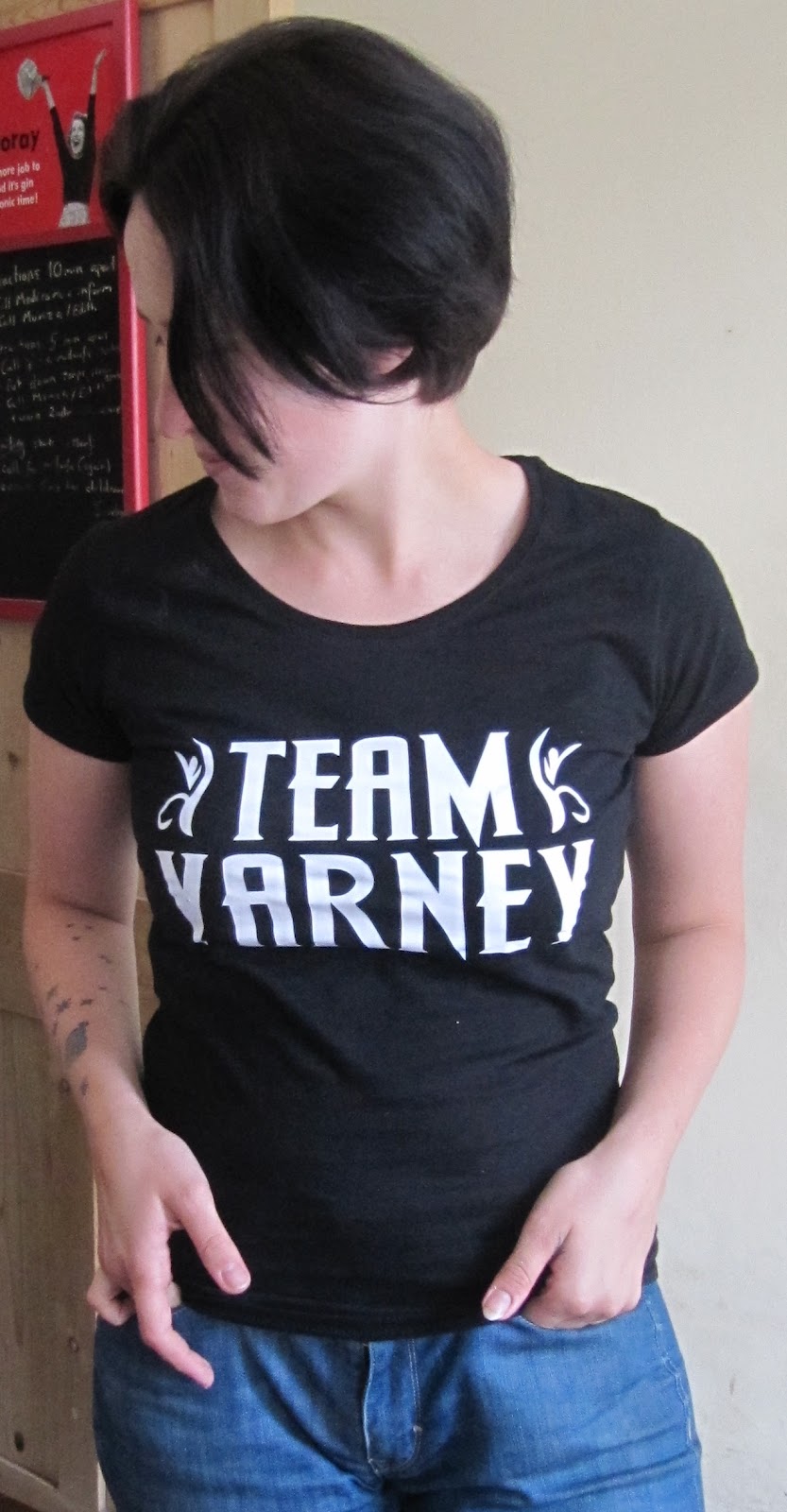
1If you have actually read the whole shebang, then do say so in the comments. We rule. We should have T-shirts. Actually, we do have t-shirts. See?
2Okay, I'll admit it, Sir Francis never actually sparkles, but... blah. Had to nit-pick, didn't you?

Tuesday, 31 May 2011

'Mobilis in Mobili': A Historical Perspective on Submarines, Swashbuckling and Rodents

Hello, my name is Alys and I like 19th Century trash fiction.

There, it's out in the open. My shameful little secret. They say admitting it's the first step.

“But what do you mean by 19th Century trash?” I hear you cry. Well, what I'm doing there is making a statement about 'high' and 'low' art and I'm being deliberately provocative. After all, tell someone you're reading a comic book, and there is a good chance they will look at you as if you are illiterate scum. Tell someone you're reading a novel by Dumas they will probably nod as if it's the most natural thing in the world. Some of them will even say, “how brave of you”.

Idiots.

As a culture, we seem to have a fear of the weighty tomes produced in the last century. Some people say it's the length that intimidates us, others the diction. I'm going to go out on a limb and say the defining factor is time. Give it a century or two and any old 'trash' can become 'literature'.

My intention here is not to criticise the 'trash', but to mock the people drawing the line. There is nothing inferior about a good comic, just as there is nothing inferior about Dumas. It is very easy to forget that, in Shakespeare's day, theatre was considered 'low' art. It is very easy to forget that 'novel' used to be an insult. The reason we forget is that the establishment appropriates these things because they are good. But some of us refuse to forget that, in their day, these things were scorned as appealing to the lowest common denominator.

And that's just what they do. It's why they are so bloody good. In order to grab attention they are fast paced, rip-roaring good yarns. They have wild adventures and exotic locations. They are full of witty dialogue and cheap laughs. They are immensely enjoyable. And, all too often, they have what the current Literary establishment would consider flaws. All the heroes are handsome and strong willed, all the heroines are beautiful, occasionally feisty and generally prone to fainting. These are not novels for the pompous - if you have a problem with so-called Mary-Sues, I might advise avoiding them. They are escapism. Truth be told, they are trash. But that's not an insult; it's one of the best things about them.

So, from an repentant AA type beginning, I find myself becoming an enabler. It's pretty easy to get hold of 19th Century trash – charity shops and second hand book stores are good sources. Do check and see that they're unabridged, though. If you have an e-reader, there is also the wonderful Project Gutenburg (http://www.gutenberg.org) which will give them to you for free.1

But... well. Before you begin, a couple of warnings.

19th Century trash requires a certain selective cultural blindness. There will be words and attitudes espoused by otherwise progressive authors that make any liberal reader wince. The trick is to whisper again and again, “they didn't know it was wrong.” In time, with willpower, the effect diminishes.

Then there's the problem of science. As we are often assured, hindsight is 20/20, and you would not have known any better then but... well, it can get a little tiresome to be assured that the properties of magnets, or electricity, or steam will lead to this, that or the other in the foreseeable future. Likewise, hearing phrenology and physiology described as 'sciences' without a 'pseudo' prefacing it, can strike one as odd. There will also probably be an endless stream of slightly dubious information underlying the plot. Abandon your pedantry all ye who enter here.

Perhaps from my tone you can tell I consider myself an old hand at this game. Still, it's possible to be taken by surprise.

In line with my addiction, I've just read '20,000 Leagues Under the Sea' (Jules Verne.) I had been meaning to read it for a while and I enjoyed it immensely. It had everything I could have desired: some seriously outlandish science (but check out that Nautilus, man!), more slightly dubious info on marine biology than I could ever hope to use, and the kind of anti-hero who can make girls like me go a little bit silly.

What's more, by the standards of the time, it's really quite enlightened. The narrator laments the greed which has endangered the whale, or that viciousness which clubs innocent sea-cubs. In the latter half of the book, Nemo consistently draws attention to mankind's hypocrisy, cruelty and tyranny. But the good Captain cannot stop man's man Ned Land from spending most of his time killing (or thinking about killing) things, nor the narrator for admiring that very characteristic.

Now, as I've said, I'm a seasoned reader of these things. Just as I did not let the word “endangered!” cloud my enjoyment of Hector de Sainte-Hermaine's tiger hunt in 'The Last Cavalier'. I tried not to get too discouraged when stout Ned shoots a sea otter for sport even though the narrator has admitted that they are practically extinct. And so, of course, I tended to read parts that involved Ned Land – or, indeed, any other human interaction with nature - with a fixed, but wry, smile upon my face. “It's just the time it was written” I reminded myself. “They didn't know any better.”

Then I read this:

“for Nature's creative power is far beyond man's instinct for destruction.”

After I'd read it, I stopped, blinked and read it again.

Nope, it was still there. That assertion, no matter what we do to nature, it can always repair itself. Verne's narrator states it as a matter of simple fact, as if it were obvious. Such innocence. Such naïvety.

And I, in my 21st Century way, had been quite cheerfully assigning the label of 'arrogant bloody Victorians' (well, okay, Verne was French and, Victoria only came to the throne in... oh, you know what I mean!) Essentially, I had condemned them as being wilfully wrong-headed and ignorant rather than just lacking the dubious benefit of my experience (over fishing, mass extinction, climate change.)

Essentially, I had become the kind of person that I hate.

Because I get so annoyed when people start talking about the past as though it's not only a foreign country, but another planet. I get fed up of wannabe historians describing all life before the Industrial Revolution as an endless stream of fear, sickness and poverty. Fed up of descriptions of the whole populace huddled around meagre fires in leaking hovels or draughty castles, dressed in rags and warding off starvation with a few handfuls of barley. Fed up of the idea that for whole centuries everyone was mad with superstitious fear and terrified of being burned for saying one wrong word. I'm fed up with people telling me life in the past was so totally different that we can have no conception of the inner life of our ancestors. In short, I'm fed up with stories of Poor Starving Peasants.

Because I read. And the thing is, when you read the literature of these people, hear what survives of their stories and their songs, look at their public buildings (mostly churches, I admit), they stop looking like poor, miserable waifs hanging on for the Enlightenment (and failing that, the Renaissance). They strike you as people, just like you and me, making the most of their time on this planet and asking the kind of questions we would ask about morality, religion and sex.

Still, it's easy to forget how much your environment shapes your assumptions. Still, it's easy to be taken by surprise.

Another thing I've read recently is the reissued first volume of 'The Pan Book of Horror Stories' (2010, Pan Books, first published 1959.)

Horror is another one of my things, and it was another brilliant read. It also illustrates my point perfectly. Most of the stories in there are still so fresh, so contemporary, that it seems implausible they were written over fifty years ago and many of them are earlier than that. One of my favourites was Hazel Heard's Lovecraftian The Horror in the Museum.

By this point, I had forgotten the age of the book, had forgotten the relative age of the story. This, to me, was set in the bustling metropolis of the early 21st Century. The characters were people I might know, the tone was contemporary, ironic, powerful. Then, once again, it happens:

“Rogers had once boasted that – for 'certain reasons' as he said – no mice or insects ever came near the place. That was very curious yet it seemed to be true.”

What? No mice? I should bloody hope not.

Now, I've not been sheltered as far as rodents are concerned. I've known of plenty of people who have mice in their lofts, or rats in their compost heaps, but, correct me if I'm wrong, is it not commonly accepted that most people no longer have rodents living in their wall space? Is not the Tom and Jerry style mouse hole a thing of the past?

The past. Yes.

We share so much common ground but, who, now, would think of mentioning that, “Oh by the way, I live in a rodent free house.” And who, two hundred, a hundred, even sixty years ago, would have bothered to comment upon a few mice. No, it is their absence - “very curious yet it seemed to be true.”

It doesn't occur to us to question our assumptions until someone faces us with something like that, something that seems to be an outright contradiction of good sense – not from the standpoint of bigotry or morality but of normality. Of expectation, even.

Because things have changed, and they continue to change. A couple of weeks ago Ian Birrell, former deputy editor of 'The Independent' described Rwanda's president, Paul Kagame as “despotic and deluded” on Twitter. As he included the necessary @, Kagame was able to reply and did so. In text speak.

In 1999, who could have predicted this? Text speak was a thing known only to those with mobile phones, and the internet was not even that prevalent (at least in my social milieu). Anyway, we were all far too worried that the Millennium bug was going to destroy computers forever to be thinking about such advanced communications technology. That was only twelve years ago. Yet when we think about it, don't we think of ourselves as the same people? Our world as, essentially, the same? Doesn't some part of us insist that nothing has really changed?

But it has done, and society with it. Rather more scary is the thought that, if we succeed in not wiping ourselves out, it will continue to change and that all the vaunted cultural assumptions we have will lose their force. “It was 21st Century” they will whisper. “They didn't know any better.” Perhaps Jules Verne was being more insightful than he knew. It is only by abandoning society and all its trappings that we can see its constructs as beliefs rather than truths. And it is only Captain Nemo who can turn his mirror upon humanity and show us what we are.
1Local copyright laws permitting...

Sunday, 8 May 2011

Semiotics of Hysteria: Cordelia Fine's "Delusions of Gender" and Cameron's gaffe.

To start with some bald facts: on 27th April 2011, David Cameron, the Prime Minister, (Conservative) told Angela Eagles, an MP from the opposition (Labour,) to “calm down, dear” during Prime Minister's Question Time. The resulting furore was predictable. In the midst of this, Samantha Cameron – David's wife – laughed off the criticism saying that she often told her husband to “calm down, dear.”

Now, if we can ignore for a moment the difference in register required by (respectively) a personal tiff and the kind of professional, political contact which is broadcast on national television, we can, perhaps, let the word “dear” fall by the analytical wayside. No, what I want to examine is the assumption that Mrs Cameron makes: that, when a woman say “calm down” to a man, it means the same as when a man says “calm down” to a woman.

What can she mean? Surely this is Political Correctness gone mad? Words are words, whoever says them. The gender of the speakers can't make that much difference, can it? Hmmm. Well. If I may digress for a moment.

A couple of weeks back, I read a very interesting book called Delusions of Gender, (Cordelia Fine, Icon Books, 2010.) In the introduction she quoted one Thomas Gisborne, an 18th Century clergyman, writing on the gender difference as it is called. He describes at length the female virtues and especial abilities “to unbend the brow of the learned, to refresh the over-laboured faculties of the wise, and to diffuse, throughout the family circle, the enlivening and endearing smile of cheerfulness.”

Why, we might even imagine such a paragon saying – to an overwrought husband or rumbustious child, “calm down, dear.”

But surely, times have changed? Women are no longer confined to the family circle, nor, indeed to the caring professions. But, as Fine explores, we still have the lingering spectre of gender difference which lets us know that women aren't better or worse than men just... well, suited to different things. Men, for example, are still considered to have the advantage in maths, sciences and technology – they are still the critical, analytical thinkers, but women have something else. Something called, to use a cultural buzz word, 'emotional intelligence'.

Well, yippee! What is this strange and wonderful thing? I no longer care that my brain is totally unsuited to position of power or responsibility! I have emotional intelligence which allows me to feel empathy. It allows me to interact well with people. It makes me a good communicator. It gives me nigh on telepathic powers of intuition into other people's feelings. This is great! I feel so empowered! What does this great, newly discovered facility allow me to do?

Actually, as Fine points out, it makes me ideally suited to interpersonal engagement, dealing with people – especially the young or the vulnerable. It equips me perfectly for the... er, the caring professions. Or, better still diffusing throughout the family circle the enlivening and endearing smile of cheerfulness. Calm down, dear. Quite.

But who am I to argue with neuroscience? (I'll leave that to Cordelia Fine – and a damned fine job she does of it, too.) What I want to do is come back to is the fact that this idea of emotional intelligence is not new. Fine traces it back to the 18th Century, but I recognise it from my days spent studying Medieval Literature. However far back you go into this Christian patriarchy of ours you will find facts which are intended to uphold the established order. You will be told that men are the thinkers, the reasoners, and that women are handed, as a consolation prize, the ability to feel. We are the mothers (just like the BVM,) we are the listeners (just like Mary Magdalane,) we are the mourners (who knew about the resurrection first?) and we are intuitively faithful. In fact, when we stay in line, listen, don't question authority and are content to feel rather than analyse we become so spiritually enlightened that some of those great theologians sought to emulate femininity in their souls because it was such a privileged position.

Thanks, Bernard of Clairvaux, but all the same, I'd rather have the vote.

Because there is a drawback to this privilege. It is all very well and good to be emotional – to be enlightened by a direct and uncritical interaction with spirituality, but it always leaves the patriarchy with a very powerful weapon. Because when we take it too far, when a woman starts to show what would, in a man, be seen as masculine anger, well, that's just our phlegmatic temperament making us hysterical. You see, that's the problem with emotional spirituality. It makes these poor girls a little bit unstable, prone to the old wandering womb1. Nothing else for it. Calm down, dear.

Which is exactly what happened in during Prime Minister's Question Time on 27th April 2011. Angela Eagles was doing her job, was making her point and arguing as well as she could and David Cameron – consciously or otherwise – felt his masculinity threatened. So he snapped into that old control mechanism which has been reinforced by centuries of theories, from ideas of the humors to neuroscience – that women are better at emotion. And because they are better at emotion, they can get emotional. And, as a fine, upstanding member of that patriarchy what else could David Cameron have said when out manoeuvred by a woman?


1The root of hysteria being womb, as any good dictionary will tell you...