Showing posts with label silliness. Show all posts

Tuesday, 16 June 2015

An Intellectual Snob's Guide to Appreciating Crappy Films.

Used for review purposes
Every now and then you'll be caught in a conversation where you'll be forced to admit you adore a film that is regarded as objectively poor.

Or you may find yourself listening to a self-styled gatekeeper as they give you vague reasons as to why a crap film is not quite so crap as you've been led to believe. You may wonder about what the hell they are blathering.

In both these situations, there is an accepted code:


They Say... They mean...
“It's fun.” Explosions. Eye candy. Don't judge me.
“Schlock” If you didn't like it, you were paying too much attention to the plot.
“Anyway, it's a different beast entirely from the source materiel” Don't judge me.
“It's true to the spirit of...” You're judging me, I can tell.
“It's done with total commitment...” You DO NOT get to judge me.
“I love it unironically” I have chosen this hill, and I will die on it.
The aesthetic is...


...convincing


... handled well


... is astonishingly realised.


I own the soundtrack, but am too embarrassed to tell you.


No, but there some serious eye candy, tho.


Actually, I'll come clean. I have a sexual fantasy that looks like this film.
“I know it's (insert derogatory term) but it has it's moments. Some of the actors are kind of hot.
“Yes, I have a special place in my heart for X.” You mean X?
“I really liked X's performance” Yes. I mean X.
“X is better than the vehicle, certainly.” Damn.
“X's performance felt very true to the book.” Because I fancy the character, too, right?
“Yes. I mean you compare it to Y's interpretation of the role – and I just feel X captured something that Y didn't.” Yeah, totally. And while Y is the more respected actor, I just don't fancy them.
“Very much so. Y's portrayal lacked the energy of X's” It's a no brainer, really.
“X's performance is very much the high point of the film.” That arse.
“And, also, PAUL MCGANN.” And we're totally just talking about his fine acting, right?

Used for review purposes
That fine, fine acting.

Many thanks to Anna V Strauss for the insight. Feel free to leave any more suggestions in the comments.

Wednesday, 31 December 2014

A year in Books: 2014

So, this year has been a rather good year for reading and (!) I've manage to blog between about half and two thirds of my general reading list this year, something that astonishes me. So (mostly) from this list, I shall present you with my pick of 2014 reads, the good, the bad and the downright peculiar. So, what to seek out, what to avoid and what to gaze upon in awe and wonder.


Best Book: Shirley Jackson, We Have Always Live in the Castle

Despite being up against some pretty stiff competition - even in the same week - and a last minute contender of The King in Yellow giving it a run for the finish line, the prize has to go to this neglected classic of murder and neurosis, of the sly ambiguous Merricat and her terrible days.


Worst Book: Margaret Mitchell, Gone With the Wind

This also had some competition from Dan Simmons' horrifically racist, Song of...

No. Wait. There was no competition. Simmons' orientalism is left staggering on the track asking, "Was it a bird? Was it a plane? No! It was a horrifically misogynist novel that makes light of two acts of genocide?"


Best Re-Read: Gabriel García Márquez, One Hundred Years Of Solitude


This prize does not go to a re-read of the, "I'm ill, sod life, I'm climbing into a bath with Howl's Moving Castle" stripe, but rather the, "Jesus, has it been over ten years since I read that? Philistine." kind. One Hundred Years of Solitude is basically the blue-print for that regret. Since he passed away in April this year, I realised how much I had been neglecting his work and felt appropriately awful. Gloriously written, heartbreaking and archetypal, it is one of the most important books for the twentieth century. The sole advantage of leaving it far too long was that it was fresh to me again. Worth every moment of the hype you have read everywhere else. I didn't blog it because I didn't really feel my voice had anything to add. If you haven't yet, put it on your list for next year.


The New Release of JOY! Prize: Paul Cornell, The Severed Streets

Aka, the Justified Fangirling Award. Utterly brilliant magical-police-proceedural/ horror novel from the alway wonderful Mr Paul Cornell. Don't read it quite as fast as I did (or, if you do, reread it afterwards), and check out London Falling first.


The "Neil Who?" award for Writers Who I Now Like: Nick Harkaway, Angelmaker

Remember that moment before you had heard of your favourite writer? When their name meant nothing to you except that it was printed on the jacket of a book you were about to start reading? Remember that feeling when you suddenly realised that this wasn't the only thing they had writen? Or that they had a new book coming out in six months?

Well, the "Neil Who?" is given to writers who capture something of that feeling. It has a few rules - they must still be alive, and the book must be relatively recent (last ten years.) 

So, whilst honourable mention must go to Max Barry's superlative Lexicon, it is Nick Harkaway's back catalogue after which I shall be chasing in the new year. 

And finally....

The Captain Bluebear Award for Appreciable Weirdness goes to Walter Moens for The Thirteen and a Half Lives of Captain Bluebear. If I get a chance to reaward this prize next year, I shall be a very happy pink bear of medium size.

Many thanks to all the wonderful writers who are out there creating fabulous stuff either in the past of present for not volunteering to take part in the Alys Earl Book Awards 2014. To all the non-writers out there: Read more books. 

Happy New Year.

Saturday, 16 February 2013

Some extracts from a Hogwarts Ofstead report.

It came to me, this afternoon, that - if you think about it - Hogwarts is a bit shite.

Don't worry, I'm not going to start criticising Harry Potter. Were I to attempt that, my 13 year old self would leap up my throat and strangle me with a rope woven from pure, fanatical bile. Rest assured, I like the scar headed wizard as much as the next cynical, over-reading, novel-obsessed bitch. But, speaking as a pedagoge, I do have cause for concern.

"Despite inspirational leadership," an Ofstead report for Leadership and Management might go, "senior management appear to struggle to create a cohesive learning environment, or even an atmosphere of basic safety."

Or perhaps, "A deep-seated division regarding best practice and learning strategy appears among both staff and students. Senior management appear to have made no serious attempt to address this issue, a concerning trend if one considers that it dates back almost to the school's foundation."

Or even, "While tradition is to be encouraged, especially in an institution as respected as Hogwarts School for Witchcraft and Wizardry, such tradition should not be maintained if it constitutes a significant threat to the health, safety and well-being of the school's pupils. Hogwarts castle itself is an example of this. A Grade I listed building, its architectural impressiveness and historical importance are beyond doubt; however, it cannot, in conscience, be considered 'fit for purpose' for the education and accomodation of several hundred young people, many of whom will be away from home for the first time in their lives."

How about: "Hogwarts School for Witchcraft and Wizardry is also suffering from a staffing crises bought about by an appointments proceedure that can be characterised as, at best, erratic, if not down-right bloodyminded. Arbitrary decisions regarding a teacher's suitability and frequent interventions from the Board of Governers have done nothing to alleviate this situation. Furthermore, even when a role is proving impossible to fill, Senior Management have refused to appoint internally, even if an existing member of staff is fully qualified."

And: "Time-tabling, too, is a point of contention. At O.W.L level, it seems pupils appear to be given full choice as to the number and content of their options without the consideration of compatibility, despite the fact new subjects frequently clash with core options. Additionally, on-site inspectors feel they should make the recommendation that, while staff have access to devices which allow the progress of time to be reversed, this does not mean that use of such devices should be routine."

Or, you know, Health and Safety: "The record of pupil care presents an equally alarming picture. Injuries, both in curricular and extra curricular activities, are higher than one might expect, whilst risk assessments are non-existent. Although much is made of the stringency of the security arrangements, it should be noted that Senior Management appears unable to provide a closed campus, or even to protect students from its own security staff."

Oh, I've not finished yet. Here are some more.

From the Teaching section: 
"The quality of teaching at Hogwarts School for Witchcraft and Wizardry reflects the lack of unity within the staff, and the lack of reasonable direction from senior management. While in possession of impressive academic accolades, few of the teaching staff are able to supply any evidence of QTS, vocation, or even teaching experience. Many fail even the most routine of background checks. Particular attention must be drawn to one Severus Snape. While it is not in the inspector's role to question management appointment conditions of those with an established criminal record, it is important to note that extended membership of a covert, far-right organisation who have acknowledged links with many acts of assault, terrorism and several unexplained deaths, should be uncovered by even the most cursory CRB check. Furthermore, it is not unreasonable for parents to feel concerned if their children to be taught by an individual known to espouse views which promote violence against an ethnic group who comprise almost 50% of the school's intake. The appointment of such an individual suggest that the senior management have clearly, and alarming, failed in its duty to safeguarding legislation."

"While, as a selective and fee paying academy, Hogwarts School for Witchcraft and Wizadry is not constrained by the National Curriculum, it is somewhat alarming that there is no compulsory aspect of numeracy or literacy continued after the age of eleven, especially as no cohesive alternative curriculum or set of learning goals has been forwarded. No pupil's academic journey appears to be logged, no attempt is made to engage with the material on a personal level and lesson planning is - with a few notable exceptions - entirely absent. Assessment appears as idiosyncratic as the teaching quality itself, with some subjects displaying an unreasonable bias towards either the practical or the theoretical.

Also, despite extensive grounds and resources, few pupils appear to have the opportunity to engage in any P.E. activities. One is forced to wonder, other than referee the occasional inter-house Quidditch match, quite what the dedicated teacher does to earn her pay-cheque."


Sunday, 30 September 2012

Review: Varney the Vampyre, or The Feast of Blood

So that's that, then. For those who have followed me on my epic, twitter sarcasm spree, I stand before you, the only person living who has read the whole of Varney, The Vampyre.

I don't say that lightly. As far as I'm aware, most versions only bother to print up to chapter 96 or so, and just leave the rest of the tome blank. Even the scholarly preface in my edition mentions nothing which occurs after Volume II. Alone. I am alone.1 The rest of you quit weeks ago.

If I'm honest, I can't say I blame you. As a novel, this does not hang together. I guess it's only human to give up when it becomes clear that not even the author had any real clue what was going to happen next, nor, indeed, what had happened previously. It's only human, after all, to want a story with a cohesive plot, a small cast of characters who each have clear goals, drives and motives. There is no place in modern literature for enormous, meandering doorstop tomes that allow themselves to indulge every little whim and silly joke that takes their fancy. Hand on heart, I can see your point entirely.

You fucking lightweights.

It rocks. Once you stop worrying about such trifling concerns as plot, character consistency, or direction it is enormous fun to read. In fact, it is 1166 pages of perfect delight. Let me reiterate. 1166 pages of AWESOME. Plus, the character arc of Sir Francis is fascinating. Okay, I will concede that, like the character arc of the Doctor in the classic series, it does need to be back engineered by a diligent fan, but still...

Actually, classic series Doctor Who is what this most resembles. Take one innovative, brilliant idea, (Time travel, for example, or Vampires) and enigma of a main character (say, The Doctor or Sir Francis) an initial problem (perhaps two schoolteachers getting kidnapped by an irascible time traveller, or an ancient family being stony broke) and GO. It will take you all kinds of places, raise all kinds of issues, have micro-stories within it (some of which have insane loose ends, others of which could do with a bit of pruning) create contradictions, paradoxes, and have the most charming, changeable, quixotic and prevaricating main character you will ever encounter.

Stick with it and you'll come to see the guiding principle, nay, the sheer bloody joy of Varney, the Vampyre has fuck all to do with a novel as we currently understand it. It's not about vampires, not really, it's about people and the silly things we do, and how easy we are to manipulate. And what it does,  in the simplest and purest form is by take every possible permeation of the vampire genre that you have ever encountered and run with it.

That's what I say; there has been nothing original since this. Not ever. Not at any point2.

So, go on, give it one more chance. We can do this together. In the next couple of weeks I'll be posting The Hitch-hiker's Guide to Varney the Vampyre, breaking it down into its distinct episodes in order to encourage and amuse the intrepid Varney reader. It may have many omissions, contain much that is apocryphal, or at least wildly inaccurate, but it will tell you highlights, central cast, genre and all the marvels of this much maligned novel - and all for less than thirty Alterian Dollars a day.

It'll be like Spark Notes, only sweary.

Don't forget your towel.

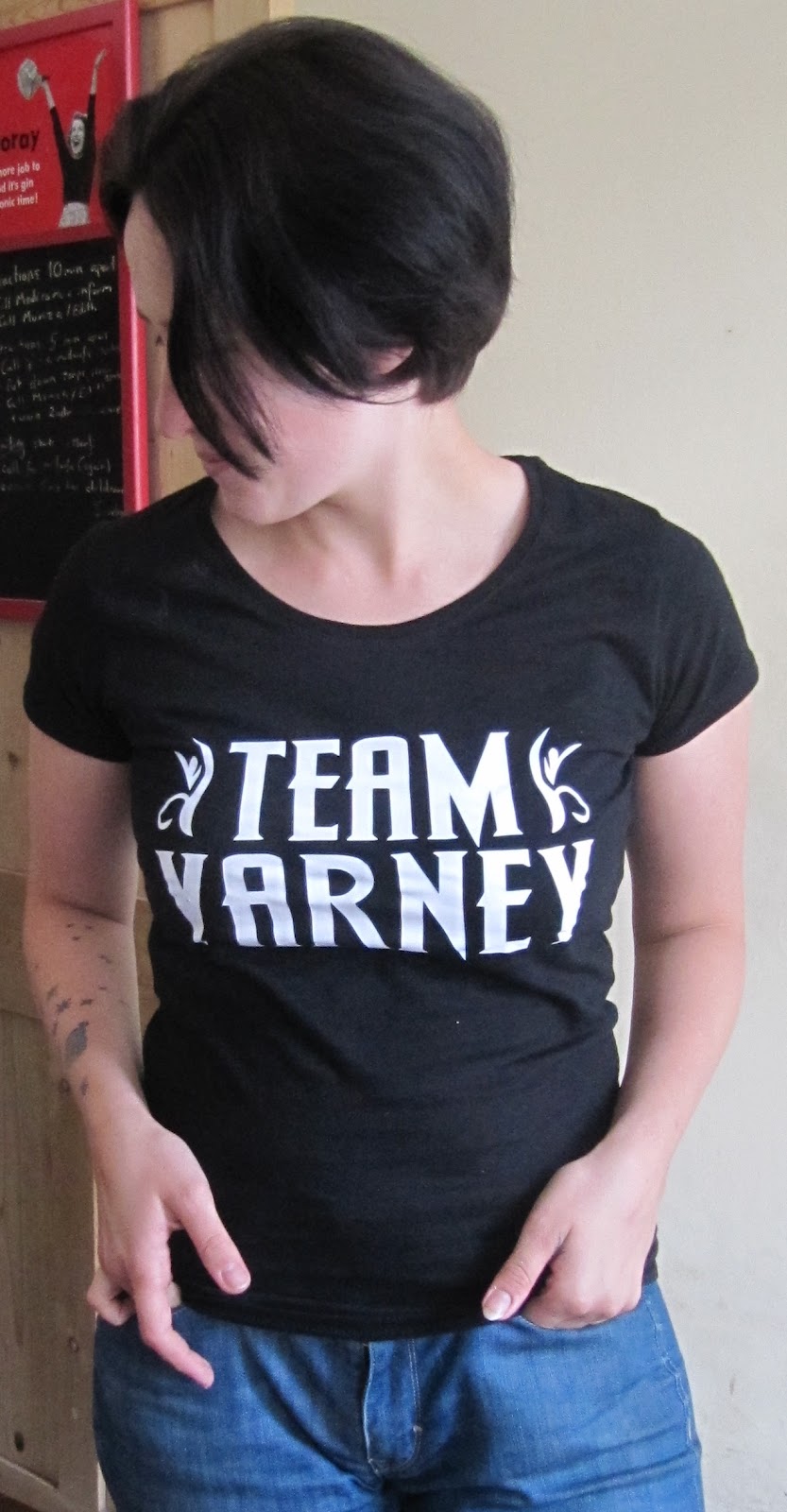
1If you have actually read the whole shebang, then do say so in the comments. We rule. We should have T-shirts. Actually, we do have t-shirts. See?
2Okay, I'll admit it, Sir Francis never actually sparkles, but... blah. Had to nit-pick, didn't you?

Wednesday, 8 August 2012

More Fun and Games with Sir Francis Varney

The vampyre and the plot device
or
Some thoughts on starting Chapter 105 of Varney, The Vampyre after having spent a bit too long reading Edward Lear poems to my daughters.

The Baron and the vampyre took to sea in a couple of stolen boats,
And the Baron got stopped by a fisherman,
Whom he paid with a five-pound note1
The reader looks up to the lights above
And sings, “This is too biazzare,
Oh, James Malcom Rymer
(or else, Thomas Prest)2
What a terrible plot-tease3 you are.
You are,
You are,
What a terrible plot-tease you are.

I hate to intrude on this strange interlude
(a boat chase?4 you're taking the piss!)
But Miss Bannerworth's married,
Chillingworth's plans miscarried
and Varney, the vampyre's been missed.
So, a Quaker defamed, and a Baron (in name5)
Fail to interest me a lot,
If there's no point to this stuff
Then leave off with the guff
And stop trying to string out the plot.
The plot,
The plot,
Stop trying to string out the plot.

“You've established two fiends whose tendency seems
To be biting young girls on the throat;
One's vampiric klout
Has been proved beyond doubt6
But which is still open for votes.
So, bring on a reveal
'cos I'm starting to feel
There's no longer such thing as 'too soon'.
I'll ask once again,
Is Sir Francis insane
Or was he revived by the moon?
The moon, the moon
Was he revived by the moon?"

So, anyway, those are my thoughts.

For those of you who have successfully avoided my Twitter ramblings on the subject, Sir Francis is (probably) not the Bannerworths' ancestor  - that was all a cunning ploy to freak the hell out of them. He still thinks he's a vampyre, though, and I guess Varney, the Slightly Delusional wouldn't sell so many books.

Actually, while we're on the topic, I wanted to include something about the barefaced cheek of calling a novel Varney, The Vampyre and failing to commit to there actually being a vampyre until chapter 104, but I couldn't make it scan. And, for all my bluster, this is still the most entertaining thing I've read in ages. 

Oh, and I still fancy Sir Francis like crazy, but that's a topic for another day, when you have supplied yourself with earplugs.

1No. Seriously. Chapter 105, opening paragraphs.
2Authorship being, as it is, uncertain
3The meaning of this word should be self-evident, but for the terminally slow: A plot-tease is a writer who keeps promising a revelation, explanation, or indeed, event but consistently fails to produce any of the above.
4No. Again. Not kidding. Like James Bond, but slower and more pointless.
5Probably not a Baron, all things considered.
6Well, possibly not, but I'm not even going to go in to that.

Saturday, 16 June 2012

Fun and games with Sir Francis Varney

Bugger, this blog's been a bit neglected, hasn't it? Well, that will change. Can't say when it will change, but it will, at some point. But in the interim, let's have a bit of badly typed silliness.

The thing is, I love my 19th Century vampire fiction so imagine my glee when I received, for my birthday, a copy of the original, the prototype, the penny-dreadful doorstop bloody mess of a vampire novel 'Varney, The Vampyre'. Adore it already! It even has a totally superfluous 'y' in the title! The problem though is the problem I always have - no matter how you dress it up, no matter how ambiguous the ending, Sir Francis is going to lose, isn't he? He will not, alas, get the girl, the house, the treasure that even I've figured out is probably concealed there, and the good guys will win the day because that is what good guys do, especially in 19th Century vampire fiction (except, maybe, in Polidori's 'The Vampyre'.) I, of course, will still be rooting for Sir Francis because championing a lost cause is what I do best.

In fact, I always seem to end up rooting for team vamp. It's not just because they are sexy beasts because tbh, most of them aren't, no. The reason is so much more simple: all too often, the good guys in vampire fiction are just painfully fucking stupid. Part of the problem seems to stem from the fact that the author has to convince us that a group of otherwise rational people have, reluctantly, accepted the existence of vampires as a fact, and have subsequently decided to turn vampire hunter. There are many ways of doing this, but all are based upon the presenting enough evidence to establish said existence beyond all reasonable doubt - the trouble comes with knowing when to stop. Von Klatka, for example, is not only blatantly a vampire from page one, but he is also desperately, sarcastically open about that very fact - when the good guys finally rumble him, I doubt even the original, non-genre savvy audience could entirely suppress a, "well, duh."

'Varney', to my delight, does not trouble itself overmuch with that accumulation of evidence - everyone knows it's a vampire, and that the vamp is Varney from the word go, yet avoiding the most obvious pratfall does not excuse our goodies from monumental levels of idiocy. Therefore, for your delight and delectation, I present a modernisation of Volume One, Chapter 13 - the confrontation between heroic numb-skull Henry Bannerworth and sarcastic vampire Francis Varney - also known as:


Friday, 23 September 2011

Semiotics has no 'off' switch:

I don't know how many of you are familiar with the original 'Thomas the Tank Engine' books, but I will assume that the number is fairly low. Below, I shall detail one of the dangers attendant upon being an ex-Lit student.

A couple of nights ago, I was reading my daughter 'Troublesome Engines', which, as stated above, is a Thomas book. I had got to the third story in the book when I suddenly found myself unable to continue reading with a clean conscience, and the rest of that bedtime story was attended by a certain degree of gloss. This is because, from jaded, adult eyes, eyes well schooled literary criticism, 'Troublesome Engines', goes a little like this:

Having redeployed his key worker, Thomas, to the running of the Branch Line, the Fat Controller attempts to economise and distributes Thomas' workload among his existing work force. Other engines are asked to perform non-contractual tasks which are below their skill-level in addition to their usual workload. In the course of these extra duties, Henry is sent to investigate a blockage which turns out to be an elephant, subjecting him to no little personal danger and humiliation. Furthermore, the Fat Controller refuses to modernise his equipment so that the turntable fails to turn one Tender engine (Gordon) meaning he is forced to run along the Main Line backwards - causing danger to himself and to the Fat Controller's customers.

Angry at these repeated breaches of contract (tender engines do not shunt) and the dangerous experiences in the execution thereof, Henry, James and Gordon go on strike. The Fat Controller takes a confrontational attitude towards his workers, refusing to recognise the validity of the complaint (engines on My Railway do as they are told) and instead goes to the only tender engine not on strike, Edward - hereafter called the Scab. The Scab, it appears, is quite happy to take on extra work in order to gratify his boss, but is quickly disheartened when the other engines remind him his work is non-contractual and, presumably, call him a Scab for good measure.

At this, the Fat Controller begins to see that his position is untenable, and hires from among the readily available workforce a naive, arselick of an engine, an enthusiastic young engine named Percy. Then, he calls Thomas back from his new job, and imprisons the three striking engines. The tank engines (and the Scab) are only too happy to break picket lines in order to undertake skilled labour, presumably at no extra wage, in order to show the tender engines that 'Common Tank Engines' can do the task as well the tender engines can.

After a few days of this, the Fat Controller releases Henry, James and Gordon on the proviso that they return to their old jobs and take no more industrial action. They do so and Thomas, Percy and the Scab are sent to 'play' on the Branch line for a few days. Now, Thomas immediately goes for a ride with his girlfriends, but Percy and the Scab 'play' with some trucks. This following section is a minor incident and is not really essential to the plot. However, if one bears in mind that all these trucks – also often called troublesome – are all female, it is not without relevance.

'“Stop! Stop! Stop!” screamed the trucks as they were pushed into their proper sidings, but the two engines laughed and went on shunting till the trucks were tidily arranged.'

 Letting off steam, indeed.

Everything, you see, has returned to normal. Those willing to undertake unskilled labour (Thomas, Percy, the Scab) have been put to work on the Branch line; less skilled labour, perhaps, but with ample opportunity of harassing, even assaulting, the female workforce. It is, after all, a position of power. Meanwhile, a 'compromise' has been struck with the tender engines; their place at the top of the engine hierarchy has been assured – they are asked only to work upon the Main Line – but they are still required to shunt, even though such work is not in their job description and below their skill set.

The moral of the story, therefore, can be read in one of two ways. It is either divide and conquer, or else it is unionise effectively. Either way, the reading stands; had the tender engines forgotten their snobbery and brought the lower status tank engines into their demand for better working conditions, had the tank engines relinquished their power over the trucks and all three grades shown solidarity, the Fat Controller would have been well and truly shafted.

Which, if I'm honest, is no more than he deserves.