The tide, thank Gods, has finally turned. Twice, twice! in the last two days, my twitter feed has revealed to me people disparaging zombies and the zombie genre. It's overdone! Give it a rest! Too mainstream!
Yippee!
I'll be honest with you: I've never had much time for zombies. If we're going to have revenants emerging grisly from their tombs, I prefer them to be incorporeal. If we're going to have monsters ravening for the flesh of the living, I prefer them to be equipped witty conversation and reasonable dress sense. Between friends, I'm a ghost girl, I'm (and I'm sure this will be a surprise to everyone) a vampire girl.
Zombies. I just don't like 'em.
What? You need reasons from me?
Okay. I think my first reason is the type of surface narrative zombies seem to engender: post-apocalyptic worlds, scratching faceless hordes, heroic (or anti-heroic) types marching round the place toting huge-arsed guns. It's food supplies and water filtration and constant, knife-edged danger. That's... well, that's okay, I suppose. It's not really my scene. I don't, in my escapist moments, imagine myself as some kind of tooled up commando, fighting for survival in a ghost world. I am not hard-bitten and taciturn, I am loquacious and somewhat effete.I know that there are vampire narratives like this, and I don't read those much, either.
Then, there's the second reason. Zombies are, actually, that little bit too scary for me. Perhaps it's just paranoia, but the idea of some huge population disaster that leaves us scrabbling around in the ruins of our civilisation seems just a mite too plausible. As, for that matter, does a worldview that sees a significant chunk of the population as faceless, needlessly destructive, and possible to be killed with a clean conscience. This is the kind of world I dread leaving to my children. I have nightmares about zombies. That this counts as a point against zombies troubles me, but it brings us to reason number three.
Zombies just aren't any fun.
Even the worst, most hackneyed vampire narratives are entertaining to me, whereas bad zombie narratives are just dull. Even good zombie stories only serve to make me jumpy, and while maybe that's part of what they are supposed to do, I just don't get off on that, thank you very much.
Thing is, the function of literature, should always be, to some small extent, to give your reader their jollies. Sure, hurt them; don't pull your punches, kick 'em while they're down, give them nightmares so bad they sleep with the light on for weeks*, or make them feel so sick that they can't eat for three days;** but while you're at it, throw them a fucking bone, won't you?
We escape, we fantasise, we fancy dress. We flinch from crucifixes.
Which brings us to four: from the little I've seen, zombie narratives seem to be more about the survivors. You didn't get bit so you acclimatise yourself to grief, to killing the monsters who wear the faces of your loved ones. You survive at all costs and maybe you lose. You try to live with yourself, with others, with terror, with grief. It is humans put in extremis - the zombies are more of an environmental hazard. And, again, this is too much like life. Vampires stories, ghost stories - these are far more concerned with the monster and that is where my interest lies, especially if we're given a ton of that pesky moral grey.
But... but... but... All this is personal taste. I'm convinced there is some brilliant zombie fiction out there, inspired, intelligent, gripping stuff. There is also a lot of enjoyable dross, and reading is something we do for pleasure, right? Zombie fans, go out and enjoy yourself, gorge yourself on the current glut.
Don't mind me, I'll be lurking with a well thumbed copy of Dracula.
So why the "yippie"?
Well, here's the thing: for the past five years I've heard one heck of a lot of "Vampires, oh God, that is so mainstream and overdone... Zombies, now they're hardcore." I've heard Goths (Goths, for Pete's sake) talk about how vampires have become 'stale' and how they are really pushing the envelope with 'zombie chic' (also, actually, zombie chic? WTF?) and been roundly mocked and condemned for my continuing allegiance to the children of the night.
My point is this: zombies, vampires, ghosts - they are all mainstream, they always have been. One comes to prominence for a bit and everyone jumps on the gravy train until the non-core fanbase get fed up and the wheel turns again. Vamps have had their turn, zombies, take a bow and slip back beneath the ground for a bit. It won't be for long.
So why the "yippie"?
Because you notice the third article on that list?
Come on, Montague Rhodes James!
*or too afraid to turn the light on because then they can see it coming for them...
** I'm looking at you, H.P Lovecraft
Incidentally, if you are a zombie fan, even after my reasons as to why you shouldn't be, check out the Science Museum's Zombie Lab: http://www.sciencemuseum.org.uk/Home/visitmuseum/events/festivals/zombies.aspx
Tuesday, 29 January 2013


Friday, 18 January 2013
Anne Rice: On falling in love with one's characters and 'the iron bar' factor
I have very recently come into
possession of the majority of Anne Rice's 'The Vampire Chronicles'.
So now I've got them all, and I've been reading them. Well, okay, not
Blood and Gold or Mnenoch
the Devil because the person who
gave them to me didn't have those ones. Never mind, eh? Not like I've
missed anything controversial or direction changing about the series
then.
Now, I've always
enjoyed Anne Rice, but, before I begin I will admit to a couple of
pet peeves. There's the small matter of continuity – exactly how
her vampirism works, as well as the physical characteristics and ages
of her changeless vampires are somewhat open to discussion. Is Armand
auburn, or is he strawberry blond? And, curly? Did his hair always
curl? And is this blog really the place for insanely geeky
speculations about relative strengths and telepathic abilities of her
vampires?
I can answer that
last one: No. So, Alys, stop it. Now.
Then
there are the more significant concerns: her pervasive tendency to
preach, whether her ideology of the moment is materialism, secularism
or Catholicism; the absolute, conspicuous consumption of all her main
characters as a way of burning through their obscene, nay, limitless
wealth; her occasional, and irritating lapses of voice; the minor,
subsidiary and unconvincing roles of her female characters; her
bizarre, and frankly patronising, conception of age (especially
annoying in the historical circumstances;) her total, I mean
absolute inability to to write a
convincing English gentleman, and her insistence upon narrating an
entire book from such a vantage point.
The
fact is, Anne Rice is a flawed writer, but I would argue that, in
some measure, it is her flaws which make her lovable; I want to
assure you of that before you come to the conclusion that I'm having
some manner of apoplexy. So, while in several matters or style, taste
and skill Anne Rice is far from perfect, she is still a remarkably
compelling writer. And, for the record, I loved Merrick and
think David Talbot is wonderful – he's not English by any stretch
of the imagination, but he's none the worse for it.
So,
for a quick review: although I found The Vampire Armand
dragged in places, I've never
had that much time for him as a character anyway, it was amusing
enough. Pandora was a
refreshing and thought provoking look at one of her much underused
minor figures. Yes, Merrick stumbled
in places, and Blackwood Farm in
others, but both were well rounded, enjoyable reads – and to be
honest, meeting some new faces was rather pleasant after so long with
the same old crowd. Throughout all of these books there is a
commitment to character and world development in the aftermath of the
events of Mnenoch the Devil;
events of which, I'll admit, I have only the foggiest understanding.
Which
brings us to Blood Canticle. Which
brings us, if I'm honest, to my biggest misgiving about the entire
Vampire Chronicles series,
a misgiving standing – as he so repeatedly tells us – 6 foot tall
with his blond hair, blue eyes1
clad in understated designer clobber or else in velvet, leather and
lace. Yes, dear old Lestat; Lestat, the Brat Prince who breaks down
the fourth wall with all the subtlety of a bulldozer. Lestat, the
demon turned anti-hero turned rock-star turned demi-God turned Saint
turned... no, hang on, I'm a bit lost. Er...
Let's
start again. Without Lestat, there would be no Vampire
Chronicles; okay, we might have
Louis moping into eternity with his irritating but compelling
melancholy, because his Lestat is not our
Lestat.
Without Lestat, it is arguable that the world – and certainly
Rice's fictional universe – would be a duller place. I have no
problem with Lestat. I even have no problem with Lestat being
snatched up into the ether and going on some strange, metaphysical
journey, meeting Saint Veronica, meeting Chris and converting back to
Catholicism. I don't mind
that Lestat wants to be good; on some level, Lestat has always
wanted
to be good. At times, I might argue, he even succeeds.
No,
my problem with Lestat is that he and Anne Rice get a little bit too
close. Always, he has been given too much emphasis, too much power,
too many excuses.
Every
now and then, his voice slips and we see no longer our alluring,
conceited murderer desperate for redemption but a writer who wants
us, who needs us
to believe that Lestat is really okay. That what he did to Louis, or
Claudia, or David, that any of that can be shunted under the carpet;
that really, this being is a consummate charmer, a doomed individual
worthy of our sympathies, of our love.
I can understand why Rice does this; she loves Lestat. From what I
understand of her biography, he is, to an extent, her mirror. When we
love someone, we invariably want the world to focus on their good
characteristics – their flaws must always be seen as forgivable.
When I write, before I get heartily sick of my protagonists and start
being really unpleasant to them, I want the same thing: I want them
understood, nurtured, I want to hand them over to people who will
understand them in all their complexity. And in the intimacy of the
first person, the confessional nature of it, this impulse is very
hard to ignore.
Rice
is lucky, of course. Lestat is very easy to love, if you're into that
kind of thing; mouthy, attractive and impulsive, tortured,
affectionate, sexual – oh, so very sexual – and dangerous, too.
Readers who enjoy her books are generally willing to forgive him –
at least, within the scope of the books themselves. All is well; the
Brat Prince receives the adulation that he so clearly wants, and
which Rice desperately asks. Then... then Mnenoch
the Devil, which
I haven't read.
After
that, a slew of books about other people; Lestat is a minor figure,
comatose and tragic, or else moving slowly and plagued by doubts.
Taken from the limelight we can feel the equal measures of devotion
and scorn which he invokes; and because David loves him, because
David has forgiven him, we love him also. Quin falls in love with him
on sight, and Lestat behaves with a charity suitable to the
capricious and ardent nature we've seen elsewhere. Everywhere, he is
shown to inspire love and to make some effort to be worthy of it.
That's it – Claudia, Louis and David, that poor girl in Tale
of the Body Thief who's
name I've forgotten, all those past betrayals brushed under the
carpet. The massacre of some thousands of men in Queen
of the Damned of
no further import. Impulsive, yes. Mislead, yes, easily mislead, but
evil? Well, only enjoyably so.
On
to Blood
Canticle, and,
as the effusive blurb informs us, “Lestat really is back with a
vengeance”, an expression which will henceforth fill me with as
much enthusiasm as a Doctor Who story entitled 'Insert
appropriate noun of
the Daleks'2.
Yes,
Lestat is back, and Lestat is pissed off that people aren't taking
his redemption seriously. Lestat is back and, however much he might
doubt it, something important
happened
to him, dammit! Lestat is back and Lestat is... whining. He wants us
to understand, wants us to see how important and seminal his
experiences were and how we've no right to speak about him as a
fictional character and complain that his behaviour has become
inconsistent, just because he's changed. “How can I be
inconsistent,” he asks, “when I'm as badass as ever?”
And
this is my complaint: here
he
is inconsistent, here
he
is no longer being badassed. Frankly, Lestat is exactly
the type of Vampire I'd expect to have some massive, spiritual
experience. The image of him soaring up to heaven, plummeting down to
Hell, drinking the blood of Christ himself and stumbling back into
the modern day with an insanely valuable relic is his style
precisely. If he's going to go all 'born again' on us, I wouldn't
expect him to do it in any kind of understated, 'good works and clean
living' kind of way; after all, in Queen
of the Damned he
didn't just bring the Vampires out into the light – he pretty much
brought about their extinction as a species. What I don't expect him
to do is mewl about it; “It's not my fault, it's not fair,” is
the kind of thing Armand, might say, although even he'd say it with
more dignity.
The
whole problem, for me, is summed up in the character of Mona. About a
third of the way through the book, she writes a little essay on what
it means to have become a vampire, having been a committed Catholic
until that point. Written in the style of a first year Lit student,
it's main point seems to be that as Vampires can no longer be
assessed within the human moral framework, she cannot know until she
dies whether they are part of God's plan and can still achieve a form
of salvation, and therefore can but try. All well and good – what
else would a Christian, even a lip-service Christian, be worrying
about after getting turned if not salvation, damnation and one's
altered place in the grand scheme of things. Thing is, this is
nothing new – this is what Rice was getting at in the first four
bloody books. And the sixth. And the seventh. It takes Lestat 200
fucking years,
and
God knows how many pages, to reach the conclusion that 'maybe there
is a God and, if there is, maybe he has a place for me and I'm not
damned after all. I can't be sure though, as the only way to find out
is through snuffing it, which I can't do. Cue existential despair.'
We get it, Anne Rice, we bloody well get it. It sounded better the
first six times.
1Unless
they're purple – I forget.
2This
article was written, obviously, before Asylum of the Daleks,
which, aside from a few minor points, was a marvellous example of
storytelling. Well done, Moff. Keep up the good work.
Monday, 3 December 2012
What the Dickens?
I have a feeling I've written before
about missing the fucking point. Surely it must have come up, at
least once in this blog, that far from being the respectable face of
Literature, Shakespeare was a filthy minded bastard writing for a
group of people who were considered little better than whores? That
theatre, far from being an institution, was something known to
contemporaries as 'The Anti-Christ's lewd hat'1?
This actually hasn't come up?
Nah, it must have done.
So, I shan't bang on about tidying up
the past, about assuming things were simpler and more respectable
than they were2.
I shan't make a fuss about the mistaken concept that those really
pretty clothes confer some kind of moral value upon a time period, I
will simply say that I get it.
Honestly, I do get it, this need to
romanticise the past. I get that if we don't romanticise something
we might as well give up now. On a
day-to-day basis, this ability to imagine is sometimes what makes it
worth getting out of bed in the morning.
So, by
all means – enjoy your fiction about Lords and Ladies, lusty
gamekeepers, great artistic genius, the Golden Age of chivalry or
whatever it is that floats your boat. But two small requests? Bear in mind it had fuck all basis in reality. And,
please, please don't
make my sense of irony jump down my throat and drown me in my own
misspent bile.
This
is particularly relevant when it comes to books, and to writers.
There is a significant and important line between “dreamy eyed fan
fic” and “what is actually going on in the fucking novel”. Of
course, Henry Tilney is the perfect man, and life would be a much so
much duller if I... *ahem*, I mean one... couldn't
indulge in the odd teenage style daydream complete with anachronistic
attitudes to gender and pre-marital sex. However, one really should remember that – while it is about marriage - Northanger
Abbey is far more satire
than romance. Have as many wet dreams as you
like about Fitzwilliam Darcy but do take care to remember that Austen
was an acerbic and potentially cynical woman. And don't buy this.
Please, don't buy this:
http://www.etsy.com/listing/115163054/honoring-jane-austen-this-pillow?ref=v1_other_2
However
that particular travesty of literary interpretation is not the reason
for this little rant. Not even slightly. No, this weekend past I
found myself back in my old stomping ground of North Kent and
managed, somewhat against my intentions, to wander into the centre of
Rochester in the middle of its Dickensian Christmas extravaganza.
Now,
Rochester is very proud
of Dickens and, while he's not my personal cup of tea, I do think
it's nice that a local writer gets the full treatment of adoration
and civic display3.
So, for one weekend only, Rochester turned out into its Victorian
best. Crinolines abounded. The odd Gothic minded young women did a
passable (and potentially inadvertent) impression of a demi-mondaine.
Soldiers wore those terribly impractical but wonderfully smart red
uniforms4,
and one wanker missed the point entirely and turned up with a pair of
goggles on his topper5.
Okay,
there were very few rickets. There was no ostentatious penury, infant
mortality or displays of brutality. There were not even the
plimsolled, soot-faced waifs that frequent May's Sweeps' Festival6.
And, yes, omitting all these is to downplay Dickens' role as a
writer pushing for social reform but, I'll concede that good clean
fun and late 19th
Century conditions of deprivation are perhaps mutually exclusive. Then I saw it. Letters three feet high, blazoned across a refreshment
marquee:
Miss Havisham's Tea Tent.
You...
you don't mean that?
Right?
Wanker with the goggles? Come back. All is forgiven.
1No.
Seriously.
http://yalepress.yale.edu/yupbooks/book.asp?isbn=0300088841
2Or,
indeed, grimier and more miserable.
3Actually,
I'd rather we did it rather more often, only with less of the
attendant nationalism, but you know...
4And
pith helmets, which was a little unexpected outside of the colonies
(and no, it wasn't a Home Service helmet.) but maybe they were
supposed to be on leave.
5Actually,
I love steam-punk, but that is now the OMT for steam-punk garb at an
historical event.
6Well,
it was a bit chilly and certain agencies would complain if the
council pushed historical accuracy to its fullest.
Wednesday, 10 October 2012
Review: Susan Hill, The Various Haunts of Men: Pulling Punches and Killing the Spare.
It's very rare for a book to make me
cry. It's very rare for something even to come close.
Same
goes for films, television, whatever. There are a few things, there
are moments when I get mawkish and sentimental,1
there are the few guaranteed tearjerkers in the world, but when my
contemporaries were sobbing buckets over poor old Cedric Diggory, the
best I could manage was a shrug. “Kill the spare”, splat –
well, quite. If you insist.
In
fact, I've always had a bit of beef with J.K about that whole
business. Sure, she killed Sirius Black, and she killed him totally
unfairly2,
but in the last book she promised us a Weasley. Go on, then, I
thought – she's not going to do for Ron, but Ginny maybe? Or
Arthur. Definitely Arthur.
Fred? You
what?
Okay.
Better Fred than George3.
You whack the Weasley who's got a double? What a bloody cop out.
Now,
this, I'll admit, makes it sound as though I've a vendetta against
everyone's favourite red-headed clan, but I've not. I like the
Weasleys. Sod it, I like Fred. I'm talking about storytelling. From
book four onwards, Harry Potter is filled with a cast of likeable,
entertaining supporting characters who are murdered in the gradually
escalating bloodbath that culminates in the battle for Hogwarts. Not
Harry though. Not Ron, or Hermione or Hagrid. Not even Ginny, or
Neville or Dean. No, it's Cedric, Sirius, Dumbledore, Dobby, Tonks,
Lupin, Fred - everyone
outside our enchanted little circle of main characters and their
immediate friends. Flat-pack tragedy. Kill the spare.
If you
had asked me who my favourite, favourite writer
was when I was twelve years old, my response would have been without
hesitation. Robin Jarvis. No, he's not as good a writer as Garner,
nor as clever as Pullman, but he taught me one very valuable thing
about storytelling.
Don't
kill the spare.
No,
wait, scrap that. Don't just kill
the spare.
For
those of you who aren't acquainted with Jarvis' work and doubt the
veracity of this statement, Jarvis' best known series can be
summarised thus: a faintly mythic bloodbath inhabited by
anthropomorphic animals.
You
got a favourite character? It's dead4.
A favourite place? Razed. A favourite people? Massacred. There was a
kind of glee in it, murder, murder, murder, mayhem, black magic and
death. No, Jarvis wasn't killing his darlings, dear, he was killing
yours. Of course, it
wouldn't have worked if it had just been unremitting blackness5
- he played the heartstrings, but not too much. He pulled no punches.
Sometimes,
though, he pulled something else, though: a fast one.
Which
brings me onto our next point. Fast ones are great. I love fast ones.
The end of The Whitby Series is
one hell of a fast one. In fact, it's a whole sequence of fast ones.
The Alchemist's Cat is
still, to my mind, one of the best fast ones ever pulled. And
sometimes the fast one is the way out – don't just kill the spare,
kill the darling. Then bring them back.
They're
great, fast ones. Every now and then they do stop something turning
into an outright rout. They bring a little bit of lightness, of joy
back to your reader's world. They promise to drive the nail in, to
make the incision, only to pull back at the last minute. It's okay,
chaps. Everything will be just peachy.
Which
is all well and good, but they undermine what I see to be the first
rule of storytelling. Don't try to please
your
reader. You are not a little child, trying to persuade a strict
caregiver to provide sweets. You do not need to pander to their
little whims. You are a writer,
FFS.
Within the little confines of your book, your world, your script,
your whatever, you are GOD, and you do not need to be a nice one.
When you pull a fast one, your readers should feel nothing other than
sheer, bleeding relief. “Thank fuck,” should be what they are
whispering to themselves. “I care. I care. I care.” And to get
that reaction, you cannot pull them all the time6.
That's
the thing about fast ones. They are throwing your reader the sponge,
giving them the sticking plaster. They are kissing them, making it
all better. If you always do it, bring your character to the edge of
jeopardy, and pull them back at the last minute, your readers won't
believe harm can really come to them. Your readers will slip inside a
cosy little fantasy where everything will be okay. You stop being a
cruel and implacable God and become a parent – scooping your reader
up before they get to where the real darkness lives.
Don't
do this. Do not get sentimental, do not make the red jerseys. Simply
kill! Kill! KILL!
Ahem.
Sorry.
Which
brings me to Susan Hill. She knows what its like, the punches are the
things that she does not pull. I was never expecting any tenderness.
About five chapters into The
Various Haunts of Men I
said to myself, “If she does not kill Character X, I am going to be
so disappointed.” Character X was charming, lovable, even.
Character X was engaging, sympathetic, central. Character X was not
the spare.
By
the end of the novel, I was begging for her to pull a fast one. Let X
off, I prayed, just this once.
But
she did not.
And
I nearly cried.
Now
that, my fine friends, is excellent storytelling.
1Branagh's
Love's Labours Lost being a
case in point.
2Not
so much that she killed him, more that she couldn't think of
anything else to do with him first.
3
Would anyone even have noticed had
it been George?
4Except
in the rare instance where it is the traitor who causes everyone
else's death. But there you go.
5Although
I'm not saying he wasn't prepared to give that a try.
6I'm
looking at you, Steven Moffat.
Sunday, 30 September 2012
Review: Varney the Vampyre, or The Feast of Blood
So that's that, then. For those who
have followed me on my epic, twitter sarcasm spree, I stand before
you, the only person living who has read the whole of Varney, The
Vampyre.
I don't say that
lightly. As far as I'm aware, most versions only bother to print up
to chapter 96 or so, and just leave the rest of the tome blank. Even
the scholarly preface in my edition mentions nothing which occurs
after Volume II. Alone. I am alone.1 The rest of you quit weeks ago.
If I'm honest, I
can't say I blame you. As a novel, this does not hang together. I
guess it's only human to give up when it becomes clear that not even
the author had any real clue what was going to happen next, nor,
indeed, what had happened previously. It's only human, after all, to want
a story with a cohesive plot, a small cast of characters who each have clear
goals, drives and motives. There is no
place in modern literature for enormous, meandering
doorstop tomes that allow themselves to indulge every little whim and
silly joke that takes their fancy. Hand on heart, I can see your
point entirely.
You fucking
lightweights.
It rocks. Once you
stop worrying about such trifling concerns as plot, character
consistency, or direction it is enormous fun to read. In fact, it is
1166 pages of perfect delight. Let me reiterate. 1166 pages of
AWESOME. Plus, the character arc of Sir Francis is fascinating. Okay,
I will concede that, like the character arc of the Doctor in the
classic series, it does need to be back engineered by a diligent fan,
but still...
Actually,
classic series Doctor Who is
what this most resembles. Take one innovative, brilliant idea, (Time
travel, for example, or Vampires) and enigma of a main character (say, The Doctor or Sir
Francis) an initial problem (perhaps two schoolteachers getting kidnapped by an irascible time traveller, or an ancient family being stony broke) and GO. It will take you all
kinds of places, raise all kinds of issues, have micro-stories within
it (some of which have insane loose ends, others of which could do with
a bit of pruning) create contradictions, paradoxes, and have the most
charming, changeable, quixotic and prevaricating main character you
will ever encounter.
Stick
with it and you'll come to see the guiding principle, nay, the sheer
bloody joy of Varney, the Vampyre
has fuck all to do with a novel
as we currently understand it. It's not about vampires, not really,
it's about people and the silly things we do, and how easy we are to manipulate. And what it does, in the simplest and purest form is by
take every possible permeation of the vampire genre that
you have ever encountered and run with it.
That's
what I say; there has been nothing original since this. Not ever. Not
at any point2.
So, go
on, give it one more chance. We can do this together. In the next couple of weeks I'll be posting The
Hitch-hiker's Guide to Varney the Vampyre, breaking
it down into its distinct episodes in order to encourage and amuse
the intrepid Varney
reader. It may have many omissions, contain much that is apocryphal, or at least wildly inaccurate, but it will tell you highlights, central cast, genre and all the marvels of this much maligned novel - and all for
less than thirty Alterian Dollars a day.
It'll
be like Spark Notes, only sweary.
Don't
forget your towel.
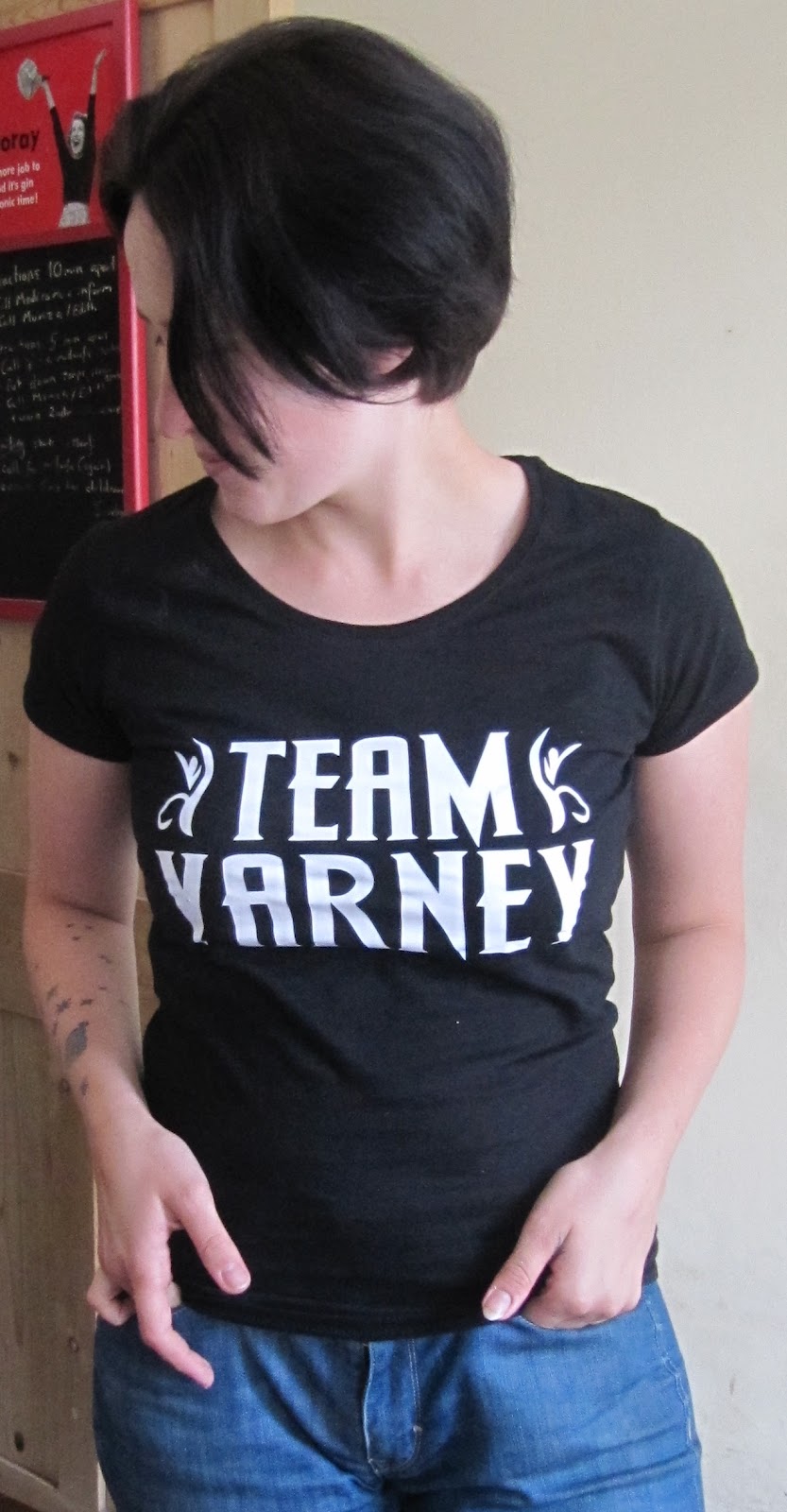
2Okay,
I'll admit it, Sir Francis never actually sparkles,
but... blah. Had to nit-pick, didn't you?
Saturday, 8 September 2012
Boneland: Alan Garner
I would be lying if I were to say this were a review.
This, I promise, is true: Last time I read The Alderley Books, I had an idea for a short story. It would be about Colin. He would have become an academic, and, tied to Alderley, he would search for his lost sister.
A month later, I get news of Boneland.
I exhaled. After all, I could never have done it justice.
In the past, I have waxed lyrical about how rare truly beautiful writing can be (http://alysdragon.blogspot.co.uk/2011/09/little-big-john-crowley-dangers-of.html) and I have iterated my cautious attitude to fangirling (http://alysdragon.blogspot.co.uk/2012/07/review-prisoner-of-heaven-carlos-ruiz.html) but I have answers to both of these points:
This is Alan Garner.
I have been waiting for this book for twelve years.
It's not been twelve years since I read The Moon of Gomrath, no. It's not even been twelve years since I first read The Moon of Gomrath, I was... I don't know. In Primary school. A long time ago. It was twelve years ago, with all the hormones of the menarche screaming around me that I realised what happens at the end of that book, that I understood what Susan does, what Susan feels....
It needed a sequel - but that sequel is called adulthood, and it takes its time in coming.
And Alan Garner?
Let's go back to me at eights year old* - book crazy and myth addled. I always knew, though, the difference between reality and fiction - not for me the banging at the back of wardrobes trying to get passage to Narnia. For a start I knew the books too well: My wardrobe wasn't made from apple wood brought from the creation of Narnia now, was it? The rings were always a more reliable way of travelling between the worlds. But anyway, they were an allegory. Of course I played at Narnia, but I never expected to be whisked away there. Now, Robin Jarvis, he was a bit different. There's a nightmarish quality to his books which made them all too plausible, and sometimes I woke in a cold sweat because of them, but they were fictional. Some part of me always knew that they were fictional.
But The Weirdstone? The Owl Service?
No. No, they weren't fiction at all.
They were landscape. They were myth.
Even that young, I could tell the difference.
As I say, I've waited twelve years for this.
To put it simply, this is what it is:
When we are children, we have an immediacy of connection with that world; we fight alongside dwarfs, we battle witches. The world is bright, fierce and inhabited. There is good and there is evil and we pick our sides and we reap the consequences.
When we reach adolescence, the older magic begins to be unbound in our bodies and our hearts. Terrifying, it defies classification or morality. We yearn, but it races, too fast, too hot, too dangerous. There are no sides, not any more.
Then there is adulthood. We cannot see, cannot even remember that it has a face. We cannot touch it so directly, but it is more powerful, latent in the landscape. The high magic becomes nothing more than futile artifice, its boundaries false, its presence merely fading injunctions. The wild hunt has flown. There is an older magic still, one without words, without personalities, and it has many meanings and no meanings at all. Everything is grey. Everything is bone. Everything is the Earth.
This is not fiction. Not fiction at all. This is landscape. This is myth.
*I'm guessing.
This, I promise, is true: Last time I read The Alderley Books, I had an idea for a short story. It would be about Colin. He would have become an academic, and, tied to Alderley, he would search for his lost sister.
A month later, I get news of Boneland.
I exhaled. After all, I could never have done it justice.
In the past, I have waxed lyrical about how rare truly beautiful writing can be (http://alysdragon.blogspot.co.uk/2011/09/little-big-john-crowley-dangers-of.html) and I have iterated my cautious attitude to fangirling (http://alysdragon.blogspot.co.uk/2012/07/review-prisoner-of-heaven-carlos-ruiz.html) but I have answers to both of these points:
This is Alan Garner.
I have been waiting for this book for twelve years.
It's not been twelve years since I read The Moon of Gomrath, no. It's not even been twelve years since I first read The Moon of Gomrath, I was... I don't know. In Primary school. A long time ago. It was twelve years ago, with all the hormones of the menarche screaming around me that I realised what happens at the end of that book, that I understood what Susan does, what Susan feels....
It needed a sequel - but that sequel is called adulthood, and it takes its time in coming.
And Alan Garner?
Let's go back to me at eights year old* - book crazy and myth addled. I always knew, though, the difference between reality and fiction - not for me the banging at the back of wardrobes trying to get passage to Narnia. For a start I knew the books too well: My wardrobe wasn't made from apple wood brought from the creation of Narnia now, was it? The rings were always a more reliable way of travelling between the worlds. But anyway, they were an allegory. Of course I played at Narnia, but I never expected to be whisked away there. Now, Robin Jarvis, he was a bit different. There's a nightmarish quality to his books which made them all too plausible, and sometimes I woke in a cold sweat because of them, but they were fictional. Some part of me always knew that they were fictional.
But The Weirdstone? The Owl Service?
No. No, they weren't fiction at all.
They were landscape. They were myth.
Even that young, I could tell the difference.
As I say, I've waited twelve years for this.
To put it simply, this is what it is:
When we are children, we have an immediacy of connection with that world; we fight alongside dwarfs, we battle witches. The world is bright, fierce and inhabited. There is good and there is evil and we pick our sides and we reap the consequences.
When we reach adolescence, the older magic begins to be unbound in our bodies and our hearts. Terrifying, it defies classification or morality. We yearn, but it races, too fast, too hot, too dangerous. There are no sides, not any more.
Then there is adulthood. We cannot see, cannot even remember that it has a face. We cannot touch it so directly, but it is more powerful, latent in the landscape. The high magic becomes nothing more than futile artifice, its boundaries false, its presence merely fading injunctions. The wild hunt has flown. There is an older magic still, one without words, without personalities, and it has many meanings and no meanings at all. Everything is grey. Everything is bone. Everything is the Earth.
This is not fiction. Not fiction at all. This is landscape. This is myth.
*I'm guessing.
Wednesday, 5 September 2012
Female characters: What is strong?
So, another year rolls round, and there
is another best-selling book, read mainly by women, that we are
getting told off for enjoying1.
The reasons we are given are plentiful, but familiar: poor writing, slushy plot and a weak female lead.
You know, a silly little bimbo who lets herself get pushed around,
subscribes to a totally self-sacrificing ideal of love and ends up...
Actually, this is just far too boring.
Go and look on any one of a million websites and you'll get some
version of this diatribe in full. In fact, we heard it all last time
anyway. I, for one, can't be bothered. Not getting involved, not
interested. The reason I'm standing well back from it this time round can be traced
to two female protagonists from books that are both acknowledged
Classics2
and can therefore be safely discussed without anyone getting too
vehement.3
So, two names: Jane Eyre and Fanny
Price.
Let's start with the confession, but please, don't
shoot:
I hate Jane Eyre. It is not only the
single set text from an academic course that I have never actually
finished4,
I failed to finish it on two separate occasions and once even
pulled a sickie to get out having to discuss it in a seminar. It's
not that I can't handle 19th Century fiction (I love 19th
Century fiction) it's that it's a turgid, repressive and oppressive wish fulfilment
fantasy related by a main character with the pizazz and inner
strength of an over-boiled turnip. I first studied it at an all
girl's school, and our gushing teacher burbled incessantly about how
virtuous, how committed, how inspirational a
main character was dear, sweet Jane. I could just see them force feeding us this stuff, trying to get us to toe the line, behave in the acceptable way. I called b/s. I'll admit it, I ranted, and I
swore to anyone who would listen and I dissected that
novel to prove my point. I did exactly the kind of thing that
this blog post is complaining about, because it got right under my skin.
Then, a couple of year later, this happened:
I gave myself a
holiday treat by reading all of Austen's novels, and was just about
to start Mansfield Park. My
mum, the consummate Austen fan5,
looked at it and smirked. “Have you started reading that yet?”
She asked.
“No,”
I responded, all innocence.
“Oh,
you are going to love Fanny
Price.”
And
I'll tell you something. I did. I liked Fanny,6
I respected Fanny, I was glad7
Fanny got her man. Okay, she wasn't so much fun
as Austen's other heroines, but she was sincere, committed, and
determined. No matter what might happen, she would not compromise
herself, her beliefs, or her limits; even under pressure, even when there was no hope.
What's more, she got what she wanted. Okay, she could have done better, but, hey, what's so great about giving up what we actually want
based upon some arbitrary value system concerning life choices?
Good
for Fanny Price! Three cheers! An inspiration!
Then I
started reading some literary criticism.
Oh
dear.
Turns
out people were saying of Fanny the same things that I had been
saying about Jane8.
Oppressive. Wish fulfilment. Pizazz and inner strength of an
over-boiled turnip (okay, not in those exact
words...) These people, they had quotes too; they too had dissected the
novel, pulled out bits and pieces to support themselves (“Out of
context!” I cried.) Some of them even compared Fanny negatively to
Jane, for Jane is liberated, has strength of mind, makes her own way
in the world, does not compromise... I'll admit at times, I started to wonder if there had
been some kind of bizarre mix-up in the heads of these people, and
they had got the names the wrong way round.
But
then I started talking to other readers, and reading articles about books and found that people I respect were saying Jane Eyre had moved them, had driven them,
solaced them. People, women, were
saying that Jane had been, on some level, their liberator – or at
least a friend in their struggle. So I tried to read it
again and could still see nothing more than a narrator incapable of
either ducking or dissembling when a man is about to hurt her9.
Then, reader, she marries him – you know, the repulsive, broke one
who kept his last wife in an attic for years.
That
was when the realisation came to me: this is literary criticism,
darlings. We can all be right.
That's
not to say all opinions are equally correct, some after all are
patently wrong. This, though, is usually based upon a misunderstanding . An example of this might be a misapprehension regarding the word 'ejaculate' in that lovey dovey scene
between Jane and Rochester in the garden. Such an interpretation of
that scene would be... interesting... but not exactly worthy of serious attention. Others, while
valid and interesting, take a certain perverse inspiration and a
degree of stubbornness. One is reminded of the four hours I spent
arguing that the events of Dracula are
a collective delusion, and the essay where I stated that the thing of
the Count's that Mina is sucking? It's not blood. Yes, it was
enormously good fun, especially that last one, but really? No,
neither of those are what happen in the novel.
Still,
with an honest reading of something, when we respond naturally to the
characters and get involved with the plot, there is actually no
wrong response. So, something in me didn't get on with Jane Eyre and
still doesn't. Other people can't stand Fanny Price. So what? We each bring to
a book our own set of experiences and values, so that certain things
trigger us in certain ways – certain aversions, certain sympathies.
We all take away something from a book which shapes us and our future
actions.
In
Fanny Price, I saw a young woman who knew what she wanted, however
unobtainable, and would not be swayed from that course by the glamour
of something 'better'. Sometimes, when I face certain people and
decisions, I look to Miss Price10
for her strength and resolution. In Jane Eyre, though, I saw a young
woman who faced bullies and let them hurt her, let them break her.
That will not be me.
Other
people, I appreciate now, feel that should be the other way around. Fair enough - that's their response. I have not changed my mind, but I have stopped hurling the insults. A character is strong in the strength she confers and the characters from whom we draw strength are our own business. If
one11
shy, lonely, unhappy teenage girl looks at Bella Swan and thinks,
“It's okay. Adolescence ends. The things that scare me won't be scary forever,” then surely, for all the problems you personally see in the
book, it can't be all bad.
I'm
not saying don't argue about interpretations of books– for Gods' sakes, that's the fun of lit
crit – what I'm saying is put down the pitchforks.
1No.
I've not read it. I'm not going to. If I want erotica, I have Lost
Girls and the works of Angela
Carter.
2Whatever
that means.
3Lights
blue touch paper, retires.
4Okay,
there is ONE other, but it was by the same author and had more or
less the same main character and plot. (again, the bit about the blue touch paper)
5No,
seriously, she's treasurer for the local branch of the Jane Austen
Society.
6UK
readers especially, please imagine an immature laugh at the end of
each clause in this sentence.
7Double laugh .
8Nope.
Can't help it. Smirk.
9At
least in the first bit of the book there's an element of defiance to
this, but... Jesus Christ. It doesn't get any better once she's been
tamed, does it?
10Ha!
Avoided it.
11Oh,
god, here I go. For all the good it will do me.
Subscribe to:
Posts (Atom)